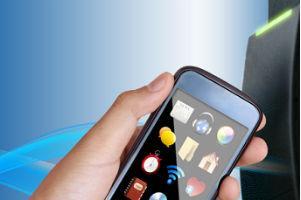
 A new generation of access control technology is about to replace mechanical switches and smart cards, even plastic.
By John Fenske*
It's the age of digital keys and wearable digital identity credentials that can be safely incorporated into smartphones and other mobile devices.
This new access control model will also support additional authentication factors, such as biometrics, which ensures that the person who has the key credential built into the mobile or smartphone is actually the same person to whom the credential was issued.
Several trends are driving the adoption of physical and logical access control from smartphones and other mobile devices. The first was the advent of Near Field Communications (NFC) technology for smartphones, which allows the transfer of access control data between the phone and the reader.
On the other hand, the consumerization of IT and mobility in the deployment of the BYOD (Bring Your Own Device) model are accelerating the increase in the use of smartphones in companies, as employees want to bring their own equipment, making IT departments increasingly aware of the imperative need to control how and when individual BYOD devices can access data and corporate assets.
While the NFC mobile payment model is growing in popularity and driving increased demand for NFC phones, at the same time, there is a growing demand to consolidate multiple applications for physical and logical access control into a single credential, which is even more convenient when the credential can be inserted into a smartphone.
With the mobile access control model, smartphones can be used for various applications, including biometric authentication, cashless sales, to open residential locks, access an online physical access control reader, enter a building protected by an electromechanical lock with NFC, log into a PC and software to generate OTP (one-time password) to access network devices.
The implementation of this new mobile access control model requires a new smart card data structure and an ecosystem of products and services that offer users the security options, including the solutions provided by biometrics for NFC-enabled smartphones.
All transactions between the phone and the readers must take place in a framework that forms a frontier for the secure and reliable delivery of access control solutions for smartphones with NFC technology.
This limit ensures that all parameters, including NFC technology in smartphones, can be validated and transactions between mobile phones, readers and locks are reliable.
Now that a higher level of security is necessary, the use of biometric readers verifies the cardholder's connection data with the same credential, using items that cannot be shared and are carried only by the person to whom the card was issued. In addition to being unique to each individual, biometric data is impossible to forget, lose or be stolen.
Compared to conventional methods of identification, biometric technology offers greater security, which does not depend on passwords, PIN codes or photographic identity and is too complex to be falsified, which creates a strong link between the person and their digital identity.
The next generation of access platforms allows users to implement biometric models on their mobile devices just as they already do with traditional physical credentials, but with the convenience of being able to carry them on their smartphones.
For example, as with a traditional credential, it is possible that credentials on smartphones can safely store biometric templates, such as iris recognition. These credentials can be presented for authentication by simply holding the NFC-enabled smartphone in front of an iris recognition camera.
A variety of biometric models can be stored in the digital credential, including fingerprints, geometry or hand patterns, as well as veins.
The same benefits associated with using biometric data on smart cards also apply to the physical model of mobile access control. The storage of biometric templates transform smartphones into portable databases, which are well suited for multi-site installations.
Storing biometric data in a digital credential also simplifies the system and allows for unlimited user support. It also eliminates cabling requirements for biometric template management, significantly reducing installation costs.
The next generation of NFC technology solutions combined with secure access control for mobile devices will significantly improve the overall security of the system. In this new era, biometric technology will be a key element of mobile access solutions, offering identities with greater security and convenience for the user.
* John Fenske is the Vice President of Product Marketing for HID Global, which is the trusted source of identity security solutions for millions of customers around the world. Recognized for its high quality, innovative designs and industry leadership, HID Global is the supplier of choice for OEMs, system integrators and application developers serving a wide variety of markets. These markets include physical and logical access control, including strong authentication and credential management; card printing and personalization; high identity security solutions for government; as well as identification technologies used in animals, industry and logistics applications. Among the company's main brands are HID®, ActivIdentity®, EasyLobby®, FARGO® and LaserCard®. With corporate offices in Irvine, California, HID Global has around 2,100 employees worldwide and operates through international offices in more than 100 countries. HID Global® is a brand of ASSA ABLOY Group. For more information, please visit http://www.hidglobal.com