
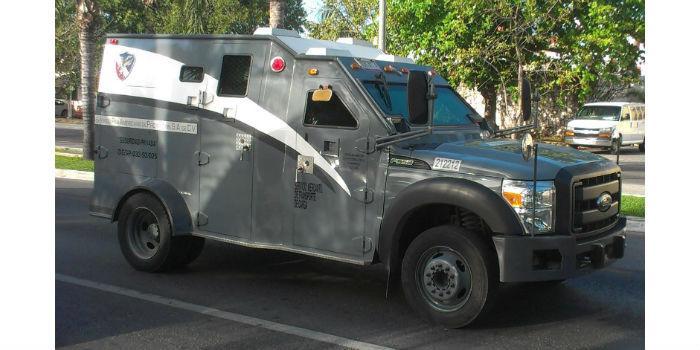
 This branch of security, little analyzed within the industry, has undergone significant changes in recent years.
By Luis González Nogales*
The transport of securities is one of the private security services that perhaps has the least attention in magazines such as this one, which is responsible for the dissemination of private security.
The main reason for this lack of attention is that perhaps there are not a large number of companies in this field, as is the case in the case of electronic security or physical security; rather, it is an industry that in recent years has been tending to be absorbed by large multinationals in the sector of companies with a scope of coverage of country or region.
Some of the characteristics of this service are the high entry costs that investors have to break into the market, since the needs of armored vehicles, the special facilities equipped with high security elements in their electronic security infrastructure and the corresponding physical security that gives attention to the previous elements, as well as the high costs of insurance policies, rigorous selection, thorough verification and staff training, are other costs to consider that become important barriers to entry.
Regardless of the above, the companies established in the different countries have been evolving in a very significant way, both in the conception with which they have been called, going from the term Securities Transfer Company to Securities Administration Company, Securities Management Company, Securities Logistics Company, and other denominations that represent the change that we have mentioned above.
The transfer of values
What is most associated with the transfer of securities is to transport from one point to another securities, mainly cash, either between central banks and parent companies, the latter with their branches and remittances of cash and checks from customers to branches or parent companies so that they are processed.
In addition to this service, the recount of the remittances of the clients can be carried out before delivering them to the bank, to check if what was declared corresponds to what was sent and in this way that the bank makes the credit in the account of the client who sent the remittance in a correct and verified way.
Also carried out in this section are the transport of works of art, titles and securities, precious metals, as well as prototypes or high-tech elements, the latter is the product of technological development in the last decade.
There is another range of services that have been incorporated as financial institutions were offering new products to their customers and the general population. The most important is undoubtedly the Management of ATMs or ATMs, since the use of it implies for companies in the field other additional services that may include:
• Selection of ticket suitable to be dispensed by the cashier.
• Preparation of the cartridges or dispensing boxes of each denomination programmed to be dispensed in national currency or currency.
• Supply to the ATM of dispensing cartridges with the established amounts. And removal of the dispensing cartridges for recount, balancing and subsequent maintenance for their next filling.
• Monitoring of the cash status in each denomination for the programming of its supply to the different ATMs that are attended.
• Dispensing reconciliation with rejected banknotes, non-dispensed banknotes and activities recorded by the cashier and customer complaints to the institutions that own the ATMs.
The preparation and payment of payroll is a service that is carried out in the place of the company that contracts said service, it includes in addition to the visible part of the delivery of the envelope with the payment each person, the preparation of the envelope with its corresponding cash, as well as the withdrawal of the financial institution of said cash duly broken down into different denominations of banknotes and coins. This service, however, is in the process of extinction due to the method of payment through deposits directly into the employee's accounts, so that he himself can withdraw cash at ATM or online payments from his account.
The on-site cashier is a service in the opposite direction to the previous one and consists of the collection of cash at points established by an ATM, mainly from places where multiple people are generated and concluded with cash sales product, such as distributors of mass consumption products, whether they are food, beverages, etc. Subsequently, the counting, consolidation and detailed information is made to the corresponding company and bank for accreditation. With new technologies this can be done in real time, as we will see later.
In recent years, financial institutions have been transferring some of the activities they carried out to securities transfer companies, the most notable being the following:
• The selection of banknotes and their classification ranging from the one suitable to be used in ATM to those that are for destruction process.
• The Administration of Bank Cash and / or Bank Branches is a service in which the company is responsible for maintaining the cash flow necessary for the bank's cash, being mainly the branches those that are managed in this modality, which avoids the existence of a vault with its corresponding costs and associated risks which are transferred to the service.
Evolution from new information technologies: with new information technologies and from the massification of the internet and the availability of data almost globally, new services have been developed, as well as recent needs on the part of financial institutions and broader requirements for customers who make use of the services of transport companies.
• Smart safes: consist of safes with slots for the deposit of cash, keyboard and secure connection of data transmission to the company for the entry of the corresponding data which are received by the carrier and credited to your account immediately, the carrier will choose the most opportune and cost-effective time in its costs to make the withdrawal, recount and verification of deposits, applying a debit or credit to the customer's account if there are differences. This is a variant service of the overnight deposit boxes that banks had and still have in some countries. Likewise, the new generations of ATMs are carrying out this management of deposit admission, verification of the ticket and its accreditation.
• Collection of remittances with online deposits: this service consists of collecting the remittance of a client and by digitizing it on a mobile device, carry out the immediate accreditation to the client regardless of whether the count, verification, debit or credit is subsequently carried out in case of differences.
Conclusions
As we can see, the change from transport nomenclature to logistics is not merely linguistic, but comes from an evolution of transporting managing the quality of the ticket distributing it to users (ATM-Cajas) collecting the deposit counting and verification accreditation of the deposit.
With the online information of all the data and the need for control of their cash flows at the moment by the different businesses or companies, the most important change that companies have to face is on how to adapt their technological systems so that they are aligned with all the parties involved: the depositor (customer), the receiver (collector), the transport company and the banking institution receiving the deposit.
And this alignment not only has to do with the real time of the data, but with the measures of confidentiality of the information, translated into the security regulations dictated by the superintendencies of banks in the different countries.
The client requires that his cash is ready for availability in the shortest possible time and the bank requires the information of his available cash (although it is not necessarily in his vaults physically) and the security of access physically to it at any time that requires it or wishes to audit.
The opportunities in this service are many, the challenges significant and the risks inherent part of the service.
Greetings to all readers.
Luis González Nogales is the Executive President of INCASPRI. If you want to contact him, you can write to the email: [email protected]