 Currently Lima, Panama and Santiago are expanding their metro lines, Bogota is building its first line, and after several decades without building mass transit systems in Mexico, a high-speed train is being built between Mexico City and Toluca.
By Jaime A. Moncada, PE
Many Latin American capitals, 29 to be exact, already have urban rail transport systems, commonly referred to as metro. There are large and old ones, such as mexico City with 200 km in length, almost five million daily users and 50 years of use. There are small and more modern ones, such as the one in Panama City, with 16 km in length, 260,000 daily users and inaugurated in 2015.
Two of the ten fires with the most deaths worldwide, since the beginning of the XXI century have occurred in subways or in passenger trains, fires that we will discuss later and that highlight the importance of fire safety in railway systems. NFPA 130, Standard for Fixed Guideway Transit and Passenger Rail Systems, establishes the criteria for safety against protection in this type of facility.
Fire in daegu Metro
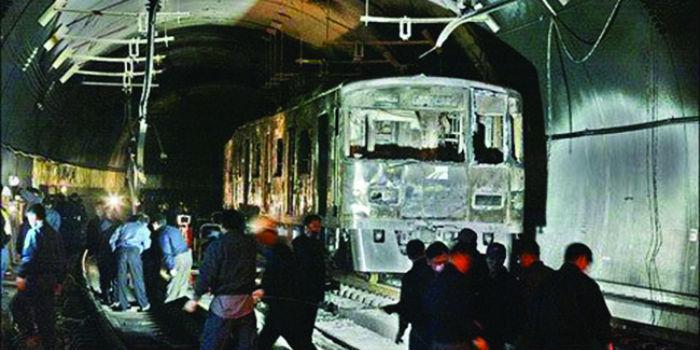
On February 18, 2003, at 9:53 a.m., a mentally ill man tried to commit suicide while traveling as a passenger on the Daegu subway, a subway that serves North Korea's fourth-largest city. This mentally ill man threw part of the contents of a four-liter bottle of gasoline on his body and tried to set himself on fire. The passengers around him tried to avoid this tragedy, but the gasoline that had spilled on the floor caught fire.
Fortunately, at that time the train stopped at Jungagno station, one of the busiest in this city of 2.5 million inhabitants. Most of the train's occupants were able to escape, including the mentally ill. However, the interior finishes of this train, which was composed of five cars, were combustible and the fire spread with great speed. At 9:55 a.m., another train, also with five cars and full of passengers, coming from the opposite direction to the first, stopped at the parallel platform of this station.
The train opened its doors, but the driver seeing that the station was filling with smoke, closed the doors, while calling the central station explaining what was happening and asking for permission to move out of the station. At 9:57 a.m. this second train lost power and was never able to reopen its doors. 79 people died inside the second train.
Jungagno Station is part of Line #1 of the Daegu Metro. The line is almost entirely underground, part of a 23.5 km long tunnel. The two platforms of the station where this fire occurred were located in a third basement. Above the station, and without fire separations, was a two-level shopping center, in basement 1 and 2.
The mall had automatic sprinklers, detection systems, and smoke control systems. However, the subway platforms were not protected with sprinklers or smoke extraction. The fire spread across the platforms and the rest of the mall, through the building's countless openings, eventually claiming the lives of 192 people and injuring 148, one of the biggest tragedies in meters in recent times.
The use of this standard in this fire would have, at a minimum, substantially limited the impact of these fires. For example, the station in Jungagno would have been designed in a much safer way, if Chapter 5 of NFPA 130 had been used. This chapter establishes the criteria for emergency lighting, sprinkler protection, ventilation, hose and fire extinguisher protection, evacuation and interior finishes of the station. But Article 8.4.1 would have had an even more important impact on this fire, as it establishes the criteria for protection against ignition and flammability of the materials contained in a wagon.
Train fire in Kaprún
A few years earlier, on November 11, 2000, at the beginning of the ski season in the Alps, on a train in Kaprún, Austria, with 161 passengers, most of them skiers, a small fire started. At approximately 9:02 a.m., just a few meters after leaving the station, an oil-hydraulic line, passing over a heater, at the back of the train failed, began to drip and caught fire. Passengers in the last car became aware of the fire, but the train had no intercom with the driver's cab, no emergency brake, no smoke detection, no fire extinguishers.
Just two minutes after leaving the station, the train entered a 3.2 km long tunnel with the intention of ascending 1500 m to the top of a ski field. Upon entering the tunnel, passengers lost cell service, preventing them from being able to tell them what was happening to them. At 9:05 a.m., 600 m inside the tunnel, the train stops automatically, due to the loss of the oleo-hydraulic system, but the driver did not understand why this was happening and still did not notice the fire, which continued to grow in the back of the train. Passengers who were near the fire could not evacuate the train because neither the doors or windows of the cars have internal emergency opening levers.
When the train driver finally became aware of the fire, at 9:08 a.m., he almost simultaneously lost communication with the control center. At 9:11 a.m., passengers in the last car were able to break a window of the train, but unfortunately this is too late for the rest of the occupants of the train. Only twelve people, all in this last wagon, survive, evacuating down the tunnel. In total 161 people lost their lives, including two people on a train that had been going down the same tunnel in the opposite direction and a person who was at the mouth of the tunnel, a couple of kilometers above the start of the fire.
The train in Kaprún, if it had been designed according to NFPA 130, would very possibly have resulted in a very different situation. NFPA 130 requires, for example, that any equipment that may pose an ignition risk must be isolated from other combustible materials. NFPA 130 also requires that each wagon have two evacuation routes, and that these evacuation routes can be operated internally without special tools. Had any of these requirements, as well as many others included in this NFPA standard, been met, this tragedy could have been avoided.
Regulatory Requirements
NFPA 130 establishes design criteria for the design of stations, the train line, and tunnels. It establishes criteria for the evacuation system, fire extinguishing systems, detection and alarm systems, extraction systems and smoke management, among others. The standard gives the possibility that the design of the wagons follows pre-established prescriptive criteria, where the combustibility of the wagon and its contents have been limited, following specific laboratory tests. However, the standard allows for engineering analysis, i.e. using performance-based or performance-based design, rather than following prescriptive requirements. This possibility, increasingly common in NFPA regulations, creates very complex problems, specifically in wagons, for the competent authority. It is complicated because it requires those who run the reviews to have experience and expertise in fire protection engineering, and for the designer to document the design-by-performance process very well.
Third Party Review
In cases where the competent authority requires it, due to the complexity of the design, the NFPA regulation allows the Third Party Review. Under this methodology, the design can be acceptable as long as it goes through a review by a third party, specifically another fire protection engineering firm, outside the design process, which due to its experience and expertise can carry out a much more accurate review than the one that could be carried out by the competent authority. We must remember that these types of projects are very rarely carried out in the same jurisdiction, so the local authority does not have specialists who can review this type of project. Specifically, the evacuation system, smoke extraction and the combustibility of the wagons are issues that are difficult to review.
Fire Fighting Systems in Wagons
The main source of fires are passenger cars. In existing meters, it is very difficult to comply with the reference regulations so a possible strategy is to limit the fire, and therefore the production of smoke, installing active suppression systems in the wagons. For example, in the Madrid Metro and on several trains in the U.S., the cars have been protected with water mist systems.
We might think, for example, that the installation of an automatic fire suppression system inside the wagon in Daegu would have limited the impact of the fire. However, it is very easy to say, but very complex to implement. Any fire suppression system in a train car has to be self-contained, and this creates complex and costly implementation problems. Gas-based suppression systems have the problem that when the wagon doors will have been, the gas can escape and there could be reignition. Automatic sprinklers would extinguish without any problem the type of fires that could occur in a wagon, but their size and weight would make them almost impossible to implement.
The water mist system, however, uses water at very high pressure, discharged to the fire through automatic nozzles with very small holes that "nebulize" the water. Consequently, the amount of water required to extinguish the fire is much less than with an automatic sprinkler system. Needing a small water tank and pipe of reduced diameters, it becomes an optimal choice for this type of vehicle. By the way, the design standard for these systems is NFPA 750, Standard for Water Mist Fire Protection Systems.
Conclusions
Fires like Kaprún and Daegu offer important lessons from which we can learn and improve, but it is fire safety standards, such as NFPA 130, that have meticulously established minimally acceptable criteria so that tragedies like these do not recur. These types of projects bring significant challenges not only for the designers, but for the competent authority. Third-party review offers a pragmatic solution to this problem.
*Jaime A. Moncada, PE is a director of International Fire Safety Consulting (IFSC), a fire protection engineering consulting firm based in Washington, DC. and with offices in Latin America. He is a fire protection engineer graduated from the University of Maryland, co-editor of the NFPA Fire Protection Manual, former vice president of the Society of Fire Protection Engineers (SFPE), who for 15 years directed NFPA's professional development programs in Latin America. Moncada's email address is [email protected].