
 Smoke is inherent in all fires. In turn, it is extremely risky for the occupants of the building, and is harmful to the property of the building.
By Jaime A. Moncada*
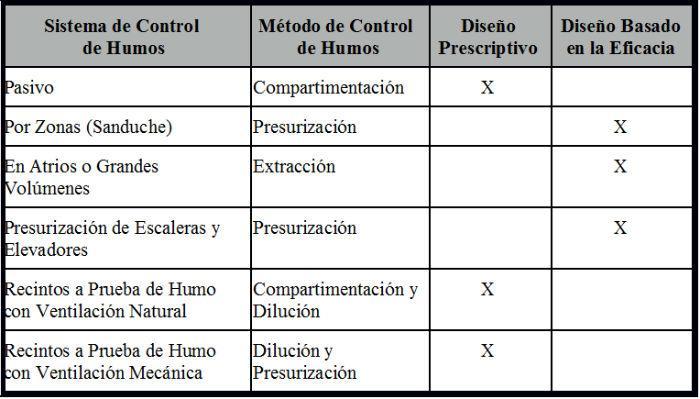
The smoke can be so dense that it can obscure internal visibility, making it difficult for firefighters to work. Except for the over-used pressurization of stairs, smoke control is a virtually unknown topic in our region. The concepts of smoke movement in buildings follow scientific criteria and in more and more cases, use design methodologies based on efficiency (Performance-Based Design), which require the participation of a qualified and experienced fire protection engineer (see box Annex at the end).
Pressurization: Contrary to popular convention, deeply rooted in Latin American building codes, NFPA does not require the pressurization of stairs in any type of building. However, stair pressurization can be used to reduce "type of construction" requirements in high-rise buildings protected with automatic sprinklers (NFPA 5000: Art. 33.1.3). For example, in buildings over 36.6 m high, the type of construction can be reduced to Type II (222) Type I (332), and in buildings less than 36.6 m high Type II (222) can be reduced to Type II (111). By the way, the numbers in parentheses in the types of construction establish the fire resistance in hours of the structure in the following order (exterior load-bearing walls, main structural framework, construction of the floor). I suggest that to deepen this topic, the NFPA 220 standard, Types of Construction in Buildings, be revised. On the other hand, I have used the pressurization of the stairs, together with the pressurization of the elevator shaft, as part of an equivalence to cover some deficiency in the fire safety of the building, such as in existing buildings with a single evacuation route. This example should not be taken as a solution that can be used without a fire engineering analysis of every building.
I have seen that in many Latin American countries simple design methods are used for the pressurization of stairs that are based on the speed of air through an open door, instead of the recognized methodology in fire engineering that is based on pressure differences. If the design of a pressurization system is carried out in stairs or elevators I suggest that a fire engineer with experience in the use of fire models be in charge of executing the design. CONTAM, a network modeling program, originally designed for the analysis of air quality in buildings, is today the most widely used program for the analysis of pressurization-based smoke control systems.
Large Volume Smoke Control: Generally speaking, NFPA may require the evaluation of smoke control in atriums, shopping centers over two floors, and large structures with open architecture such as museums, convention centers, airports, and indoor stadiums. Originally, the NFPA suggested that six air changes per hour be performed to remove smoke from a large space. Some authorities began using "smoke bombs" requiring that the smoke control system should allow visibility in less than 10 minutes. To pass this criterion, many designers used 10 to 12 air changes per hour. Then it was found that this was impractical and not representative of reality. Today, the designs of these systems are based on NFPA 92, Standard on Smoke Control Systems, which since 2012 joins NFPA standards 92A and 92B. This standard states that acceptance criteria are based on measurements of pressure differences rather than "smoke bomb" testing. The design requires a fire engineering analysis where it must be proven that the smoke layer can be maintained 1.8 m above the higher surface used during evacuation for a period of 1.5 times the calculated evacuation time or for 20 minutes, whichever is longer than the two.
Large shopping malls, atriums in hotels and office buildings, closed sports arenas and large exhibition sites require motion analysis and smoke extraction, today performed exclusively by fire engineers using computational fluid dynamics (CFD) models.
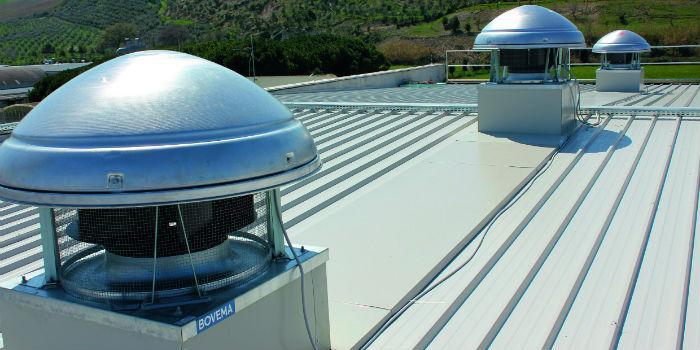
Natural Ventilation: The concept of natural ventilation today has an application almost limited to industrial uses and yet its use is very sporadic. Care should be taken when natural ventilation is used in plants protected with automatic sprinklers, as the simultaneous operation of ventilation openings and sprinklers can be counterproductive. It is uncommon to see a solution to the requirements of smoke control in buildings with natural ventilation, being generally used, in these cases, mechanical ventilation systems. When using these types of systems, the design bases are found in NFPA 204, Standard for Smoke and Heat Ventilation.
Other Uses of Smoke Control: In the design of tunnels for cars (NFPA 502) or for trains (NFPA 130) the movement of smoke must be directed. The idea is that the smoke in a fire inside the tunnel runs in the opposite direction to the evacuation direction. In cavern (underwater) power generation plants, smoke extraction after a fire should also be evaluated (NFPA 851). In telecommunications facilities, the evaluation of either the zoning of the smoke or its extraction is also required (NFPA 76).
Final Comments: With the advances in fire protection obtained by automatic sprinklers, the fire can be localized, but in some cases, for example, in large volumes, suppression systems will not be very effective. The smoke will travel where the air flows take it or its buoyancy allows it. The smoke is additionally highly toxic and tends to damage what it touches. The complexity of modern architectures, coupled with temperature differences between the interior of the building and the exterior, pressure differences induced by the ventilation and air conditioning system and smoke stratification, make active and mechanical smoke control systems the only option.
However, the effectiveness of a smoke control system begins with an analysis of the use of space and an evaluation of its contents. Here the size of the fire and its rate of smoke production are defined. Underestimating the energy of the contents or their combustion rate can lead to a system that may be unable to extract enough smoke and thus obtain a space with a sustainable environment. Overestimating the energy of the contents or their combustion rate can lead to a complex, excessively expensive and energy-intensive system. The calculation criteria set forth in NFPA 92, for example, work well for simple geometries, but for modern architecture, computational fluid dynamics (CFD) models are imperative. All this points to the fact that these types of designs are exclusively applicable to fire engineers with experience and expertise.
*Jaime A. Moncada, PE is a director of International Fire Safety Consulting (IFSC), a fire protection engineering consulting firm based in Washington, DC. and with offices in Latin America. He is a fire protection engineer graduated from the University of Maryland, co-editor of the NFPA Fire Protection Manual, Vice President of the Society of Fire Protection Engineers (SFPE). Moncada's email address is [email protected].