 In my first column in this magazine ("How Serious is the Problem of Fire Protection in Latin America", Vol. 17, No. 5), I mentioned that from my point of view our future has to revolve around the adoption and adaptation of the NFPA regulations, as has already been seen in several countries in the region.
By Jaime A. Moncada, P.E.*
On that occasion I also mentioned that effective and efficient fire safety cannot be obtained by decree. It is obtained when the user understands that fire safety is important. It is obtained when there is a group of ethical, trained designers and installers who offer quality as their final product. It is obtained when there is a serious and trained competent authority. Once these factors are present, we can then hope for a lasting solution to our current situation.
My first lesson on how to modernize a fire prevention standard in Latin America occurred at a meeting in San Juan de Puerto in mid-2006, invited by the Puerto Rico Fire Department's Prevention Department. "Everyone here uses NFPA -- so how do we adopt a fire prevention code that is based on NFPA standards."
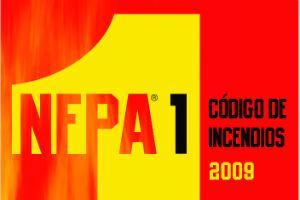
Following that question, we had a second meeting, but this time in the NFPA offices, where experts from the NFPA engineering department recommended adopting NFPA 1, Fire Code, as they explained to us that this also included the adoption of NFPA 101, Life Safety Code and administrative guidelines necessary for the functionality of a local ordinance.
How Fire Prevention Ordinances Have Been Developed: Many of our countries tend to draw up their own technical regulations locally, and that is where I think we have gone wrong. In the most typical process, the regulatory body of a Latin American country establishes a committee for the purpose of drawing up technical fire regulations.
This committee develops these standards, usually on the basis of what the NFPA has already developed. Sometimes these committees interpret NFPA standards well, but sometimes they do not. adding personal opinions and criteria, or prescriptions that only have anecdotal or commercial backing.
We must accept that in Latin America, in the current state of our development in fire protection engineering, it is rare the case where we can provide a technical prescription that is more appropriate and with a better cost benefit than what is already in an NFPA standard.
Therefore, during the elaboration of the standard, we run the risk that groups of manufacturers who seek to introduce products and systems of a particular origin, or guilds, who want to lower the protection requirements, modify the objective of the standard, without a democratic and consensual participation of all sectors of the community.
But the most serious thing is that these committees are generally temporary and the regulatory body in our countries does not have an infrastructure in place to answer interpretative questions, and to amend the standard and constantly update it. outdated and often incorrect, when our goal should be to achieve standards that are technically correct, coherent, concordant, and that are supported by each other.
What is the Scope of a Fire Prevention Ordinance: The scope of an ordinance includes establishing minimum acceptable fire safety criteria, of high cost benefit and proven effectiveness, for any type of building.
This scope can be summarized in three main objectives that are (depending on the occupation, in different order of priority): human security, protection of property and continuity of productive operations.
NFPA 101 is primarily concerned with human safety and NFPA 1 with the other two objectives. As I have written earlier in this journal, the first step in the process of evaluating the fire safety of a building is to establish "what to protect" and with "what means to protect it"1. Generically, these criteria are found in NFPA standards 1 and 101. The second step includes "how to protect it", i.e. the definition of effective methods of design, installation, maintenance, testing and reception.
I am referring to NFPA technical standards such as NFPA 13 (automatic sprinklers), NFPA 72 (detection and alarm), NFPA 20 (fire pumps) and the like that define fire protection systems.
In the hope of establishing a strategy for legislators in Latin America, my recommendation is that a local Human Safety and Fire Protection Ordinance be based on a direct adoption of NFPA 1. This standard adopts NFPA 101 entirely, requiring that "the means of evacuation of any new or existing building must comply with this standard as well as with NFPA 101" (NFPA 1-2009, Art 14.1).
However, and this is very important, I prefer that local authorities amend Chapter 1 (Administration) of NFPA 1. Each municipality or country should have the opportunity to confirm or redefine "what protects" and if necessary, ask for more and better protection gradually over time. It should also define who and how. the use of this ordinance will be legislated. Therefore my preference is that the following points be defined locally, through the modification of this first Chapter of NFPA 1:
1. Scope: What uses this Ordinance covers and which would be excluded.
2. Application: What type of existing buildings must comply with this standard and what time they will have to adapt to the new Ordinance.
3. Conflicts: How conflicts are handled with other national norms.
4. Modifications: How this standard is modified in the future.
5. Competent Authority: Who is the Competent Authority. Who visas plans and who inspects properties.
6. Compliance: As the Competent Authority will carry out compliance with this standard.
7. Duties, Competences and Responsibilities of the Chief of Municipal Fire Prevention or the Fire Department.
8. Competencies of designers, installers and maintainers: What role CEPI Certification and NFPA courses could play.
9. Board of Appeals: Who could interpret this Ordinance and resolve a registered appeal against a decision of the Competent Authority.
10. Fees and Charges: How much does a review, inspection, etc. cost.
11. Records and Reports: Which documents are required and where they should be kept.
12. Permits and Authorizations: What type of permits and authorizations are necessary.
13. Certificate of Aptitude: Which operations require aptitude permits.
14. Review of Plans: What they must include and how they are reviewed.
15. Violations and Penalties: Establish fines.
16. Technical Assistance: The Competent Authority may require review by a third party in very complex buildings.
In those cases where a jurisdiction adopts, as part of its Ordinance, NFPA 1 in its extension, modifying only Article 1, the NFPA may support, offering use without payment of royalties and ceding the copyright of NFPA 1. NFPA could also support with the training of inspectors of the Department of Fire Prevention of the Municipality or of Firefighters.
Fire Resistance Criteria: An additional issue is that neither NFPA 1 nor 101 fully establish the fire resistance criteria that a building should meet. This issue is difficult to comply with in our countries because there is very little information on the fire resistance of most local construction methods. However, I suggest that the Ordinance should use portions, by reference, of Chapter 7 of NFPA 5000-2012, Building Construction and Safety Code. This chapter contains the heights and areas permitted for any type of building, That is, a building with a structure with good fire resistance can have many floors and a large built area, while a building with little resistance is limited in height and area.
Conclusion: We must accept what is already happening in every project that is being carried out in Latin America. At the regional level, NFPA standards are used as a reference base in every construction project that has a fire protection component. Moreover, in those projects where a local technical standard must be complied with, it is almost a general rule that compliance with the equivalent NFPA standard is also included, so why not resist the temptation to develop more local technical standards and instead we must channel those efforts into the development of a progressive and modern Human Safety and Fire Protection Ordinance, such as direct adoption to NFPA 1, with the modifications suggested above.
*Jaime A. Moncada, PE is a director of International Fire Safety Consulting (IFSC), a fire protection engineering consulting firm based in Washington, DC. with offices in Latin America. He is a fire protection engineer graduated from the University of Maryland, co-editor of the NFPA Fire Protection Handbook, Vice President of the Society of Fire Protection Engineers (SFPE) and directs NFPA professional development programs in Latin America. Moncada's email address is [email protected].