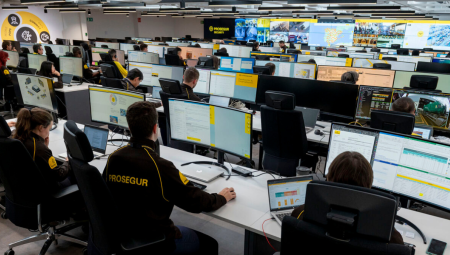
Crowdsourcing, the mass collaboration via the Internet, is becoming the most powerful and controversial tool on the internet.
By Sergio Jara Román / América EconomíaGeneral Electric executives know the friendly side of mass collaboration. Looking for ideas to fill its pipeline of projects on sustainable energy, the company organized the "Ecoimagination Challenge" program, an open competition via the Internet to collect ideas from ordinary citizens from all over the world.
...
Crowdsourcing, the mass collaboration via the Internet, is becoming the most powerful and controversial tool on the internet.
By Sergio Jara Román / América EconomíaGeneral Electric executives know the friendly side of mass collaboration. Looking for ideas to fill its pipeline of sustainable energy projects, the company organized the "Ecoimagination Challenge" program, a contest open via the Internet to collect ideas from ordinary citizens around the world. The company has already received 4,800 ideas, of which 200 come from Latin America. In fact, GE has a $200 million fund from venture capital firms to fund the best ones.
It is a system of collaboration that has already become popular as crowdsourcing: the mass as a service provider. "Crowdsourcing allows you to reach a mass audience quickly, expeditiously and at a lower cost, while capturing on the same platform the visions, experiences and needs of people in different parts of the world," says Argentine Cecilia Albuixech, manager of corporate communications for Chile, Peru and Argentina at GE.
There are specialized portals that bring these models to companies. This is the case of Worth1000.com, in which a bag of creatives competes with their proposals in competitions proposed by organizations that seek to solve design problems. Innocentive.com is a similar scheme, but to bring together chemical, physical and engineering knowledge. In both, companies must offer a cash prize to the winning proposal.
For computer scientists, crowdsourcing is not a new concept. They popularized it in the late 90s through online collaboration models to develop free software. Many programmers dedicated free hours of work connected to the internet to collaborate in the creation of the Linux operating system. With this, many new program packages were completed in record time and at low cost. The novelty is that this same logic is being taken to new applications and functionalities not without generating controversy.
"Solutions are not sought only within the organization," says Argentine Lisandro Sosa, general manager of SQL Consultora, based in Buenos Aires. "Here it is about innovating by incorporating many ordinary people who have shown that we still have the ability to solve complex problems that even the most advanced algorithms have not been able to face."
Artificial artificial intelligence. The new applications of crowdsourcing precisely seek to put the human intellect where computing fails. A group of hackers called The Extraordinaries created one of the most successful online applications to find people after the earthquake in Haiti: in the epicenter of the earthquake, hundreds of photos of people found were uploaded to an online site, while others uploaded photos of people they were looking for. Internet-connected users around the world were checking these files and marking matches. Thousands of people dedicated their time to help this task totally free. This use of human criteria in tasks that were initially thought to be done by computers (the identification of faces in different images) is already known as Artificial Artificial Intelligence.
The problem is that goals are not always so noble. Iran's government, for example, created an app on the portal www.gerdab.ir to identify people participating in protests in Tehran based on data they had in their citizen records. A small monetary benefit offered to iders helped each user become "a support for national security," as the government portal said.
A different example is what Samasource.org does, a platform created by a non-profit organization that seeks to provide work in populated countries, with high unemployment and a sufficient park of internet connections. For example, people in India or Iraq check photos on their mobile phones, marking whether the content is offensive or appropriate. Sometimes the user in India must add in words whether the picture is about a dog, a tiger or a car. Likewise, the person from his cell phone can read a content and see if he uses inappropriate language and makes editing proposals. For every response sent you receive a few cents. Foolish? Thousands of people doing the same is what allows large portals in the style of LInkedin and Ask.com to edit and protect many of the content created by social networks. Crowdsourcing as content editors.
However, crowdsourcing and social media don't always create virtuous circles. A major controversy arose in the United States when it was discovered that a group of insurers paid thousands of users on social networks to actively participate in online debates criticizing the Obama administration's health reform. The funny thing is that they did not pay in dollars, but in virtual currencies to be used in games like Farmville. Today there are established portals such as Speak.org.uk and Subvertandprofit.com that help organize mass protests for certain causes, either in the real world or on the internet. With the advent of this type of practice that facilitates collective participation, it will not be possible to distinguish the honesty or true motivation of its participants.
"Crowdsourcing generates a very strong challenge for the institutionality that arises from the internet, because in collective collaboration, many do not understand the type of process they are participating in or the ultimate goal of their work," says American Jonathan Zittrain, a Harvard law professor who has specialized in the legal challenges of the Internet. His recent book The Future of the Internet and How to stop it develops some of the challenges that crowdsourcing pushes. "In a crowdsourcing model, a group of experts could be collaborating to weaponize a nuclear weapon, without knowing it."
But from crowdsourcing come invaluable opportunities. Liveops.com, for example, is a cloud call center. If a user is on the go and requires additional weights, then they can register on the site, download the Liveops app, and become a call center telephonist. The cost advantages offered by a solution like this to companies that require light phone service are the same as those that GE seeks when launching its competition for sustainable energy projects. The next challenge is how to hold the masses accountable for what they do.
Source: TendenciaDigital