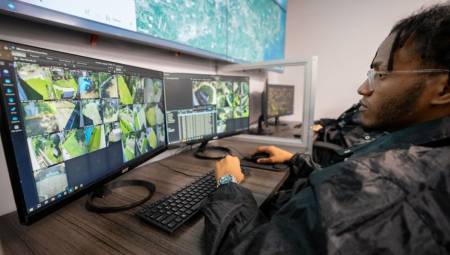
In Argentina, teleworking is a modality that gained greater momentum just a few years ago. In 2003, the Ministry of Labour, Employment and Social Security (MTEySS) created the Telework Commission that promoted the Pilot Program for Monitoring and Promotion of Telework in Private Companies (Propet) to advise and contain companies in the process of incorporating remote work and advise on Information Technologies (ICTs).
Although there are no official statistics, the consultancy specialized in the subject Jobing indicates that in the country the number of teleworkers would be around 1.6 million people and that the activity is growing at the rate of 20% per year. However, the lack of a regulatory system that regulates the activity, added to the uncertainty about the possible risks in terms of security are variables that weigh when deciding between distance or face-to-face contracting conditions.
For companies
The professor of Computer Security at the National University of Buenos Aires, Rodolfo Baader, explains that "there are several risks related to teleworking. From some intruder, who obtains the access credentials to the remote system and manages to impersonate the legitimate user until he takes control of the workstation that the worker uses to connect to the company.
Fortunately, for the corporate environment, the portfolio of SOLUTIONS IN THE FIELD OF IT security is growing. Among the most used tools are Security Appliances, antivirus, firewalls and intrusion detection systems. However, computer security analysts agree on the importance of adding to the medicine cabinet "management and education policies for their teleworkers". Management of permissions, security perimeters, access controls, secure areas or robust authentication systems are some of the measures that must be added to the awareness and training of staff regarding information security issues, highlights Marcelo Rivero, IT Security Consultant and founder of the site InfoSpyware.com.
Among the technologies recommended by Cristian Borghello, director of the Site Segu-Info, is a VPN (virtual private network) with access and transfer of encrypted data so that all information is kept confidential; the management of specific permissions to each worker, according to the tasks to be developed and the encryption of the information stored on the user's computer, with the possibility of limiting access times. The expenses vary and are proportional to the risk faced by each one. In cases where it is necessary to install critical systems, the investment will be greater since it will be necessary to acquire equipment and systems of greater magnitude.
For telecommuters
According to the sources, safety and hygiene conditions must be given to protect the psychophysical integrity of workers and, if the country wants to promote this type of labor relations, it is necessary to prevent certain occupational risks and accidents.
In a dialogue with IT Business, Viviana Laura Díaz, coordinator of the Telework Commission of the MTEySS, highlights the importance of the containment and advice framework they provide to Propet companies and employees. Within an institution, safety conditions are given and controlled, but many times, the environment chosen by the teleworker does not meet the safety requirements. This situation is contemplated by Propet, therefore, the companies that participate in it should deliver to their employees from a laptop, to an ergonomic chair, a first aid kit and a fire extinguisher and a guide prepared by its ART on how to prevent and act in situations of risk.
Protect privacy
One of the points of strong debate is the one referring to the surveillance systems, implemented by the contracting companies. In Argentina, the Telework Commission encourages the incorporation of devices that do not involve interference in the employee's life. What is intended is to limit the possibility of the employer entering the private lives of its employees, for example through an Internet camera. We don't want the experience of telecommuting to become a kind of 'Big Brother', says Díaz. Installing a web cam in the environment of a remote worker would imply the interference of his boss in his family life.
Options that do not invade private life are monitoring with software that verifies the fulfillment of labor duties without access to the personal data of the contractor, as well as the establishment and fulfillment of work goals, are some examples.
For its part, privacy is not a matter that concerns only people, but also the institution. By keeping users working remotely, the risks within the company grow, as new communication channels must be enabled between the corporate network and the Internet. In this sense, it is essential to have security systems that make it impossible to access confidential information of the organization through the channels available to communicate with remote users, warns Borghello.
Access to corporate information by people outside the company and the consequent leakage of the same, many times, leave economic consequences to recover or repair the damages caused. Prevention barriers such as encryption programs, passwords and firewalls against attacks from the Network can prevent more than one headache.
Federico Pacheco, Education and Research Manager for ESET Latin America, explains that the problem lies in the fact that the company cannot guarantee security on the client side, especially if it is the home PC. In general, it is chosen to use a company notebook, which has the necessary controls for the organization, depending on its corporate policy.
There are even security solutions for mobile devices (smartphones, notebooks, netbooks, tablets) that, for example, in case of theft or loss, allow you to delete the important data that is stored in it.
Unofficial indicators predict that the growth of teleworking will continue. From the Government, Díaz assures: "The companies that are part of Propet plan to incorporate, in 2011, about 600 teleworkers. Thus, the program started during 2007, with only YPF and 40 remote workers, today, already has companies such as Cisco and Telecom and an approximate number of 2,000 employees.
In addition, the official expects that the adhesion of companies to Propet will increase. In part, because of the economic incentives they provide and, on the other hand, because of the training programs in information technologies aimed, mainly, at including people over 45 years of age and with disabilities in the labor system. Two proposals to tempt companies that wish to experiment with teleworking, supported by economic incentives and competent workers.
Source: Cronista