Select your language

Why can Clarín spread malicious code?

Today we have received several questions related to the incident in which the website of the newspaper Clarín was detected by Google as a possible harmful site for spreading malicious software.

In fact, for several hours today, when entering the site from Firefox or Chrome, you could see a red screen with the aforementioned message (click to enlarge):

Why did this happen and can it happen again?

The reason is very simple: one of the sites linked by Clarín, effectively c... Today we have received several questions related to the incident in which the website of the newspaper Clarín was detected by Google as a possible harmful site for spreading malicious software.

In fact, for several hours today, when entering the site from Firefox or Chrome, you could see a red screen with the aforementioned message (click to enlarge):

Why did this happen and can it happen again?

The reason is very simple: one of the sites linked by Clarín, effectively contained references to harmful sites that download malware to the user's computer. That is to say that a third party, for example, can include advertising within any popular website and in said advertising contain links, banners or harmful scripts , so that any user who enters will be infected, without knowing it. This practice is very common among criminals and is called Drive-by-Download and the more popular the website, the more effective the technique is because more users are infected.

Clarín reported through Twitter but the "error" they mention there is not entirely real because if the banner downloads to the user's computer and the harmful site is active (which in this case still happens), the user can be infected. This is not a mistake, it is a sought and intentional action by a criminal, who was able to include the harmful banner without Clarín verifying it previously.

Google, every time it crawls and indexes a site, checks the content and outbound links in such a way and blocks sites that contain harmful links. If you check the links of Clarín, you can still see that what is described does indeed happen and you can also know which were the harmful sites (click to enlarge):


As you can see, in the last 90 days links to site ennykille[REMOVED].in and cartmanbanne[REMOVED].in have been included, both active and harmful (DO NOT enter!).

Can anything be done to prevent it?

From the point of view of who offers a web service, it can indeed be checked that no harmful links and scripts are inserted into the website and also each advertisement should be checked before inserting it on the page.
If Google can detect a script and a harmful site, the site owner should also be able to do so if they were responsible enough to care about the safety of their users.
- Publicidad -

In this case I assume (I can't verify) that Clarín simply removed the harmful banner from their site but this is a reactive action, after thousands of users had already entered the site and could possibly be affected.

Undoubtedly, a lesson that Clarín and many other popular sites must learn soon.

Update 23:59:Fabio thinks that Google takes too many attributions when blocking the site, which could be used to cause for example a DDoS attack, an idea that I share in part but from my point of view that is not an excuse for Clarín not to take the measures of the case.

Cristian from the Segu-Info Newsroom

See original.

No comments

• If you're already registered, please log in first. Your email will not be published.

Comments are closed

The comments for this content are closed.

Investing in Access Controllers: Why Eliminating Them Can Be a Strategic Mistake

Investing in Access Controllers: Why Eliminating Them Can Be a Strategic Mistake

Thanks to technological evolution, today there are smart readers with the capacity to process credentials, store information and even operate locks autonomously. This has led many organizations to...

Case study: How did a retail chain in Costa Rica reduce fraud by 18%?

Case study: How did a retail chain in Costa Rica reduce fraud by 18%?

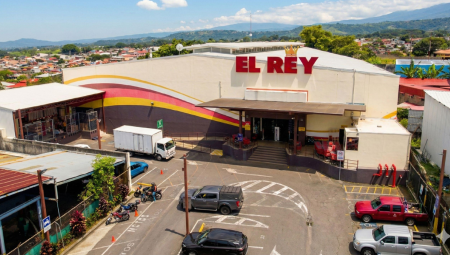
Almacenes El Rey is a rapidly expanding department store, with 18 branches nationwide and more than one million customers each year. Thanks to the Avigilon Unity Video solution, the retail chain...

Is storing video no longer enough? Milestone's Sales Director for Latam speaks

Is storing video no longer enough? Milestone's Sales Director for Latam speaks

Latin America. Johana Arias, an executive at Milestone Systems, discusses how the integration of AI, natural language, and open platforms are transforming video into actionable insights for...

Anti-intrusion system described as one of Ajax's largest in South America

Anti-intrusion system described as one of Ajax's largest in South America

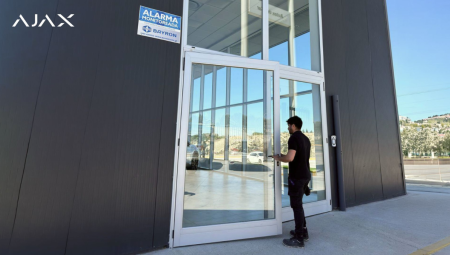
Argentina. The Bayron company installed a protection system with more than 85 Ajax wireless devices in the new branch of Autos del Sur S.A., Toyota's official dealership in the country.

Interview with Manuel Carlos, Senior Sales Director for Mexico at Hanwha Vision

Interview with Manuel Carlos, Senior Sales Director for Mexico at Hanwha Vision

Mexico. Manuel Carlos, an executive at Hanwha Vision, details how the company is revolutionizing electronic security by consolidating generative artificial intelligence and processing at the edge.

Prosegur presents new capabilities in cybersecurity and automation

Prosegur presents new capabilities in cybersecurity and automation

International. Prosegur Security has created two new modules, xCope and xEcute, which aim to provide companies and organizations with a new corporate digital surveillance service and another for...

Access and video platform

Access and video platform

Johnson Controls Designed to take the complexity out of legacy systems, the latest version of C•CURE IQ helps organizations achieve faster response, simplify workflows, and turn safety data into...

SIA presents the new directives of its International Relations Committee

SIA presents the new directives of its International Relations Committee

Latin America. Mariana Ramírez is the new president of the International Relations Committee of the Security Industry Association (SIA), while Vanesa Cabral assumed the role of vice president.

Access management and security in stadiums during the World Cup

Access management and security in stadiums during the World Cup

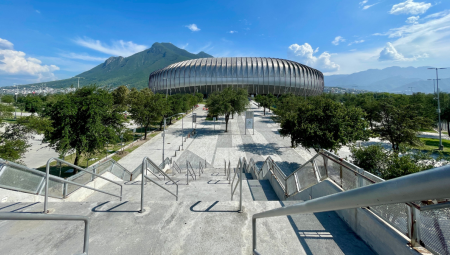
International. With the World Cup underway, stadium operation and the management of credentials and critical assets become key factors in ensuring security in high-demand environments.

Jovicard modernizes its headquarters with HID access control technology

Jovicard modernizes its headquarters with HID access control technology

Brazil. Jovicard, which specializes in physical access control, secure identity, biometrics and integrated electronic security, completed the modernization of its corporate headquarters with trusted...

Suscribase Gratis
Remember Me
SUBSCRIBE TO OUR ENGLISH NEWSLETTER
DO YOU NEED A SERVICE OR PRODUCT QUOTE?
LATEST INTERVIEWS
SITE SPONSORS


LATEST NEWSLETTER
Latest Newsletter