
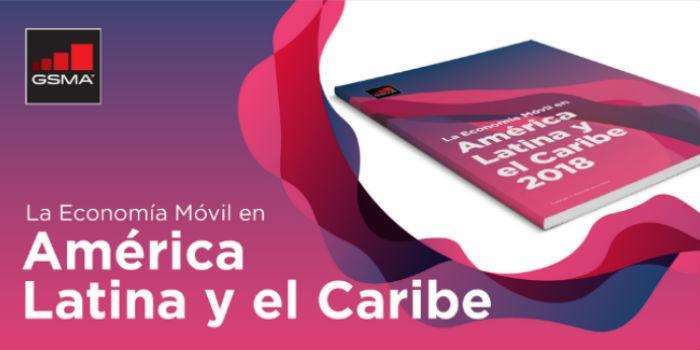
 Latin America. 4G will overtake 3G as Latin America's dominant technology by the end of 2018 according to the new GSMA report published at the Mobile 360 Series – Latin America event in Buenos Aires.
The study – 'The Mobile Economy: Latin America and the Caribbean 2018' – highlights that 4G networks will account for 38 percent of the region's total connections by the end of the year, a considerable increase from 8 percent three years ago.
With 4G also reaching critical mass in terms of coverage (82 percent of the population), operators will be making large investments in network upgrades to support the acceleration of smartphone and data use, setting the course for the 5G era. 4G is projected to account for nearly two-thirds of total connections by 2025, by which time the first 5G networks will have already been deployed in major markets such as Brazil and Mexico, accounting for 8 percent of the region's total connections.
"Latin American users today are rapidly migrating to 4G services, driven by video consumption and heavy use of social media. Traffic growth requires increased investments in networks to support new and existing digital services," said Michael O'Hara, Chief Marketing Officer, GSMA. "Mobile operators in the region are expected to invest nearly $47 billion (capex) between 2018 and 2020 in network upgrades before moving to 5G. However, future success will largely depend on a flexible policy environment that incentivises operators' continued investment in networks and enables users to access the benefits of high-quality mobile connectivity."
Subscriptions grow but policy incentives are still needed to close the digital divide
More than two-thirds of the region's population is now connected to a mobile network. By mid-2018, there were 442 million unique mobile subscribers across Latin America and the Caribbean (68 percent of the population), a figure that is projected to rise to 517 million (74 percent) by 2025. However, there is wide variation in subscriber penetration levels; some countries such as Argentina, Chile and Uruguay are reaching the level of total penetration; while others, including Guatemala, Honduras and Nicaragua, still have significant room for growth going forward.
"Currently almost half of the region's population is connected to mobile internet and is estimated to increase to 65 percent by 2025; but that means work remains to be done to ensure that millions of citizens are digitally included and access the socio-economic benefits of being online," O'Hara added. "It is therefore vitally important that the mobile industry can work together with governments and other stakeholders to address barriers to mobile internet adoption, such as tax burdens and excessive fees that have a negative impact on affordability and access."
A great contribution to the economy
Last year, mobile technologies and services generated 5 percent of Latin America's GDP, a contribution that represented USD 280 billion in added economic value. The contribution is expected to increase to USD 330 billion (5.2 percent of GDP) by 2022. The region's mobile ecosystem also generated more than 1.6 million jobs (direct and indirect) in 2017 and made a significant contribution to the public sector coffers, having contributed approximately USD 36 billion between general taxes and sector-specific charges.
Mobile technology promotes innovation and contributes to social welfare
The mobile ecosystem is a catalyst for a wave of innovations across the region, driven by new technologies, services and use cases. For example, mobile operators are making a significant contribution to the Internet of Things (IoT) market; the number of IoT connections in the region is projected to triple between 2017 and 2025, reaching 1.3 billion, transforming both the consumer and industrial segments.
The report cites examples of how innovation based on mobile services is having a positive impact, contributing to the achievement of the United Nations Sustainable Development Goals (SDGs). In Córdoba, Argentina, Claro created a partnership for the development of an IoT solution that connects machines and field animals with sensors, allowing the traceability of products. In La Guajira, Colombia, Telefónica and the Food and Agriculture Organization of the United Nations (FAO) are using mobile big data to measure how climate change affects the displacement and internal movement of citizens. This initiative, part of the GSMA's Big Data for Social Good (BD4SG) programme, aims to provide governments and organisations with the knowledge needed to make more informed decisions and make targeted policy interventions to help vulnerable populations.