
 Latin America. Ignacio Saez, Managing Director of Fujitsu in Mexico, says that today, thanks to online shopping, companies in the retail sector can count on a deep and rich vision of the needs, preferences and buying habits of their customers. Physical stores find it more difficult to understand user behavior.
Currently, new intelligent systems using Internet of Things (IoT) sensors, Big Data and advanced analytics help these companies gain new insights, improving traffic and transactions in a way that is difficult to conceive of a few years ago.
At the recent ExpoANTAD 2018 it was presented as a year of great opportunities and challenges for Latin American retail. The sector increased its revenues by 8.2% in 2017, reaching a total of 632 billion pesos. In Mexico, the retail market consists of 106 chains and 55,000 stores, a little more than 28 million square meters of sales.
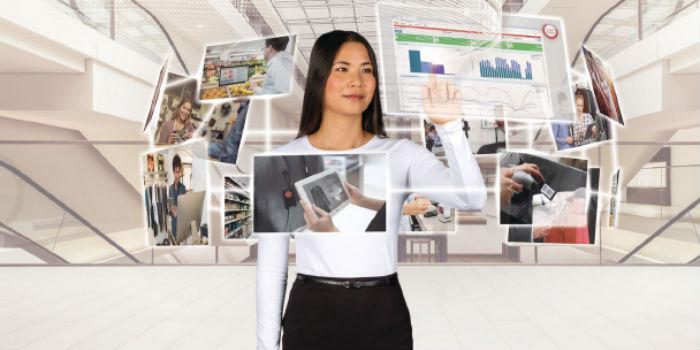
Fujitsu has a name for the future of this sector: hyper-connected businesses. In retail, the real-time information provided by hyperconnectivity can boost the productivity of establishments, reduce waste and losses, improve cash management and understanding customer habits. It also leads to optimizing customer experiences, increased brand loyalty, new sales opportunities, and expanded business growth.
Hyper-connected business solutions will be vital to help retailers face multiple challenges in the future. Increasingly, customers expect seamless shopping experiences from one channel to another, online and physically. They are also buying more with smartphones and tablets, which requires companies to adopt new digital transformation strategies, to adapt to these habits. While brick-and-mortar stores are working to improve the utilization of customer data across the various channels, they will also need to find innovative ways to be more than just "showrooms" for online competition.
One way to do this will be through social media and other technologies to provide a more personalized service. A new generation of solutions is being implemented by retailers facing such challenges. Fujitsu is helping these companies connect the front office, back office, logistics and channels to deliver the seamless experiences shoppers are looking for. These solutions are proving their value, enabling stores to become more efficient and ready for a smarter, hyper-connected business future. The successful future comes from satisfying customers in all the ways they expect. And it's what we call connected retail.
The current reality is that many physical stores have not changed in decades. Certainly, in-store point-of-sale systems, nowadays, can be digital. And staff are able to help customers purchase items through the company's website if they're not available on the shelves. But the basic principles have not changed. In these establishments, customers enter for a variety of reasons and wander around, randomly exploring the products, or head straight to a particular area to find specific items they already have in mind. Unless a salesperson targets customers and asks, the store won't know much about why they're there and what they're looking for, let alone who they are, how often they've visited the site, and how much they've spent there over the years.
On the contrary, businesses that are focused on e-commerce, analyze megabytes and gigabytes of information, which they obtain about the visitors of their sites. Using its advanced customer DNA databases, businesses can understand the online shopping and browsing behavior of multiple family members, even if they all use a single account.
This disparity between the two types of companies in the retail sector can be solved by working on the management of IT infrastructure together with smartphones, network cameras, WiFi access points or radio frequency identification tags (RFID) to track, analyze, understand and personalize the experience of a buyer in the physical store. In addition, these systems can help connect digital and in-store preferences, stories, and details, with that person's permission, of course, to create an enhanced, easier, smoother, and hyper-connected shopping experience, whether online or physically.
Emergence of the hyper-connected store
For example, Fujitsu deployed in a retail store a variety of internal sensors, smartphones and wearable devices, used by staff, to gain new insights into shopper behavior and sales. Analyzing the data collected by such devices, the company found that it was understaffed during peak hours on weekends, and that high-performing marketers weren't in the best locations to better engage with customers. In response, the company changed the way it trained and scheduled staff, increasing by 10% over sales figures compared to the previous year and by 18% in customer engagement rates.
The next stage of hyper-connected retail can already be glimpsed in experiments like AmazonGo, the online giant's new foray into automatic shopping. Currently, it operates as a test in Seattle. AmazonGo is a cashierless grocery store, where sensors and computers track every item users buy. All customers – before buying – must scan an application at the entrance. After leaving the store, Amazon automatically bills for the items they selected. This is a test that is enabling completely new business models in the sector, in which physical stores can remain relevant and competitive, even in an increasingly mobile and online world.
In conclusion, there are advanced hyper-connectivity solutions that could help retailers eliminate many of the industry's typical drawbacks, which undermine their competitiveness: crowded aisles, sold out products, and long lines to pay for items. At the same time, companies could maximize the elements that traditionally attract more customers in stores: face-to-face assistance, makeovers, and the opportunity to touch or try merchandise before purchasing. In every way, this is really about putting the focus on service and customer experience.
Getting to such a point, however, will require companies to implement the right mix of technologies that work, based on their plans and goals, without seeming intrusive to customers. To do this, retailers will need to work with service providers and partners who understand such technologies and have the knowledge and experience to ensure their implementations are successful.