International. The general increase in uncertainty and the massification of technologies such as the Internet of Things would be some of the factors causing the growth of the sector.
A recent study by the consulting firm Grand View Research concluded that the global market for video surveillance solutions will reach US$81.36 billion in the next seven years, thanks to a compound annual growth rate estimated at 10.7%.
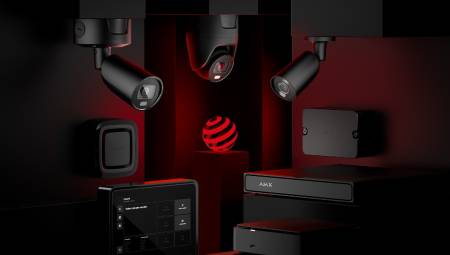
Analysts believe that the continued evolution of camera technology, coupled with innovations in artificial intelligence, video analytics and cutting-edge computing, will allow manufacturers to deliver more advanced functionality and capabilities to cities that will become increasingly smarter.
The study further forecasts that ultra-high definition (UHD) (4K) will emerge as the fastest-growing segment during the forecast period. In terms of end users, it is stated that the industrial sector will be the one that most demands this type of solution.
What AI and 5G bring to the table
Integrating AI into video surveillance facilitates real-time analysis of audio and images to quickly identify people, vehicles, objects, events, and behaviors.
Implementing AI in video surveillance systems improves their overall quality, accuracy, and usability. In addition, the application of AI in surveillance cameras offers a significant advantage, as it can be designed to fit various types of devices, including thermal cameras, infrared cameras, and outdoor cameras.
Meanwhile, 5G offers benefits such as reduced latency and improved data speeds. Its expanded bandwidth capacity makes it ideal for video surveillance applications in residential, commercial, and industrial environments, as its ability to dramatically improve image resolution and support various surveillance requirements.
In addition, with the ultra-fast data transfer speeds of 5G networks, surveillance cameras can capture and transmit high-definition footage seamlessly, providing clearer and more detailed images for improved situational awareness.
Considering these features, the demand for surveillance cameras with technologies such as AI and 5G is expected to increase during the forecast period.
Covid-19 helped drive demand
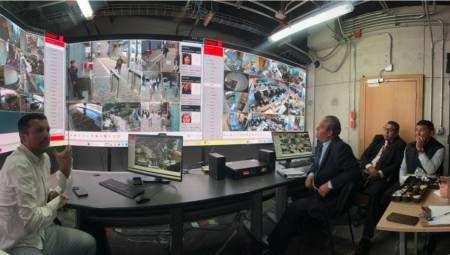
The preference for remote monitoring capabilities in surveillance camera systems gained significant momentum in the wake of the outbreak of the Covid-19 pandemic. According to Grand View Research, Inc., the emphasis on remote access to live video streams and recorded material will continue in the coming years.