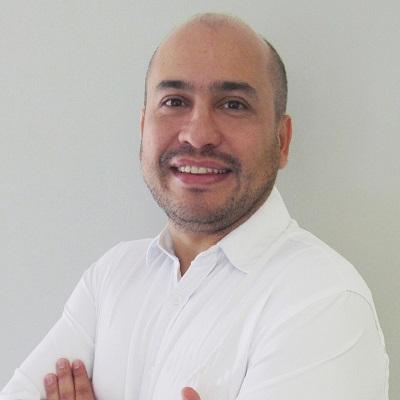

 Latin America. The security landscape is changing to the tune of new technologies, and with it, security services. Therefore, many companies that do not adapt to this environment are disappearing. This is stated by Daniel Banda, CEO of SoftGuard Tech Corporation of the USA, who, in an interview granted to S News of Italy, affirms that the main focus to which security and monitoring services should be directed are the smartphones of customers.
How does SoftGuard see this time of profound changes in technologies and ways to use them in security?
We are living in an era of technological Darwinism and this invades all system-based services so telesorveglianza does not escape it. Whoever does not adapt to change will disappear. Recall that Kodak had 175,000 employees in 1998 and 3 years later photos stopped being revealed to paper around the world. The largest hotel company in the world, AIRBNB does not own a single room. The largest taxi fleet on the planet does not own a single taxi.
SoftGuard is defined as the comprehensive alarm and video monitoring software . What services does the company offer exactly?
SoftGuard Tech Corporation is an American company with a presence in 40 countries. It currently exceeds 7,000 licenses covering the segment of central receivers of private security companies, public security agencies and in the corporate range of banking, finance, retail and condominiums. Our services include the provision of comprehensive management software for the reception and processing of events of fixed objectives, mobile and human, in modalities of perpetual license, renting and SaaS cloud.
How is it and how will telesorveglianza evolve in Italy?
We are in a scenario of stagnation without much innovation because software, the heart of telesorveglianza in surveillance institutes, is almost monopolized by a local supplier with almost 70% of the systems. To be more precise, the innovation of the market leader is diluted among 70% of the providers and no one takes competitive advantage. Diversity is needed and to achieve it SoftGuard has firm proposals for Italy as an option.
The company was founded in 2002. How has it evolved from its birth to the present day?
SoftGuard's corporate DNA defines it as a primarily dynamic company, changing with technological advances more quickly than its competitors. This industry is defined by its technological level and, therefore, a centralization and event management software cannot be divorced from the latest generation equipment, so we are dynamic as a direct consequence of the market and we are always creating paths to new services and benefits, which in the case of private security companies, create new recurring revenue streams.
 Although we are still in a crisis environment, especially in the security market, what do you think the future of SoftGuard and the sector in which it operates at a general level will look like?
We are convinced that the crisis in the sector occurs only to companies that do not adapt or that do not introduce changes in their benefits to reverse this situation. The amesetamiento or fall of monitoring services for example, that if seen in a portion of companies in Latin America, can not be reversed with conventional recipes, with more sales force or with low costs, but demand mental and business agility to run the axis of customer negativity. You have to correct the whole sales and offer process, you have to change the chip.
What commercial objectives does the company have for this year 2018?
The goals for 2018 are set at a growth of the installed base of licenses of ten percent, that is, more than 700 new customers, and we are surpassing the count last quarter. Our main focus is on the sale of smartphone apps , especially SmartPanics, which already exceeds 700,000 in less than three years. The Italian end user is ready for a portable and assisted security of new generation on his cell phone, all day with him and his family.
Why has the U.S.-based company developed so strongly in Latin America and Spain?
Obviously, it has weighed the nationality and the previous knowledge of the Latin markets that most of the directors of the group had. Although our company forces us to think as citizens of the world and understand that business cannot be dissociated from cultures, and therefore, each region has its own rules, we have focused first on developing the southern cone of America and from there start towards a global vision.
SoftGuard operates in several markets, specifically in the European and American panoramas. What is the company's strategy in the security market?
Change the monitor's chip, show you that the world changes faster than your ability to adapt and invite you to trust that the management and centralization soft can guide you on that growth path while adapting to the permanent change of scenario. Change, here, is the only constant.
It is worrying to go through new contacts in expos or even in visits to their companies and see that the services they do not provide, the benefits they do not give, are a consequence of not having the tools for it. One must choose what it offers as a service to make money and grow and adapt and choose the right tools to do it, and well.
It is also worrying to see the number of companies that merge or sell because they have stagnated and run out of growth for years.
As for alarm management, where do you think the traditional monitoring of Alarm Receiving Centers is currently going with the insertion of Human Monitoring in the business?
Undoubtedly, the changes that are taking place are foundational of a new monitoring, totally different from the one known. While in the industry there have been profound changes, such as microprocessed alarms, the insertion of the IP world and networks in monitoring, video verification and others, here we are talking about something that mutates the DNA of the business completely, a change of forms and methods and a multiplication of no less than eight times the size of the market. In the world there are as many cell lines as inhabitants, more than seven billion, and by 2018 50 percent of them globally will be smartphones. What are you going to sell them to improve their security?
So what and how should CRA to surf this new change in the best way?
We are seeing companies that are able to shed hard models, mandates of "as it should be, because it was always like this" triumph in this transition. The Uber thought, the Whatsapp thought, totally lateral, the language change of the business. People no longer want to buy alarms or cameras, nor are they interested in hearing about it. Families want to hear proposals of closeness, longevity, presence, well-being. We have to go out and sell well-being.
However, companies see all this as something distant. Is this distance real?
This question is the answer to why they are falling. They have not yet understood that if the security service is not on the customer's smartphone , it is no longer a business. It's simple to understand. Do you still have a GPS in your car? Do you watch the movies on your Bluray/DVD player? Do you go to the bank to ask for a balance from your account? Do you call on the phone to reserve a table?
So where do we not understand that what we are selling, the customer no longer wants it that way?
Why do companies lose monitoring accounts?
Essentially, because they have moved away in what they provide, from what the user really needs. It has not been possible to sniff, in general, of course, not all, as it would migrate the demand and it has not been known to create demand in other ways.
Of course, the alarm panels with self-monitoring from an app have taken accounts away from the market and will continue to do so, but any sales strategy thought 20 minutes will be able to reverse several of its shortcomings as a system. Video systems with an app for the client to self-control also subtract accounts, but can the individual spend hours watching their cameras from the football game or at their break? Do you know and are you in a position to ask for help from the public force in the nervous breakdown of an event?
The market generates many self-excuses, but in reality, the first step to get ahead reconverted is to accept what we have done wrong. The train passes and does not forgive. It drops you off at the station.
Taking into account all this, what growth models exist for Alarm Receiving Plants in this new scenario? What technology trends are following?
Undoubtedly, aim for services that do not go over that small percentage of potential users that the segment has today. The limits are set by the values charged and the benefits that are given.
A service that protects you only inside your home or in your car, is no longer enough. Misfortunes happen everywhere and at all times. The 15 or 20 percent of the wealthiest population in each country is already a very small market for the number of service providers. It is necessary to enlarge the pie, and this is achieved by generating many more varied levels of services, with costs adjusted to the possibilities of each segment.
We must think about home automation, the Internet of Things, the permanent connection to the Alarm Receiving Center. This is all place, every time, and you have to think about customer loyalty, raising the barriers of your exit from our service, so that it is not simple to lose many good benefits.
In short, alarm management has undergone an evolution and modernization in recent years. What do you think your future will look like?
The future in this sector is something that is not difficult to visualize. In fact, within our client portfolio, we have companies with a drastically different level in their evolution. Making a cut today, we see many companies that are transiting the future at the forefront of technology and openness, and many others that are not, that are in previous stages. The most backward ones can find their way and evolve or they can disappear or stagnate without growing. Our role is always to advise them, show them concrete success stories, give them tools. The final decision and bet is always of each of them.