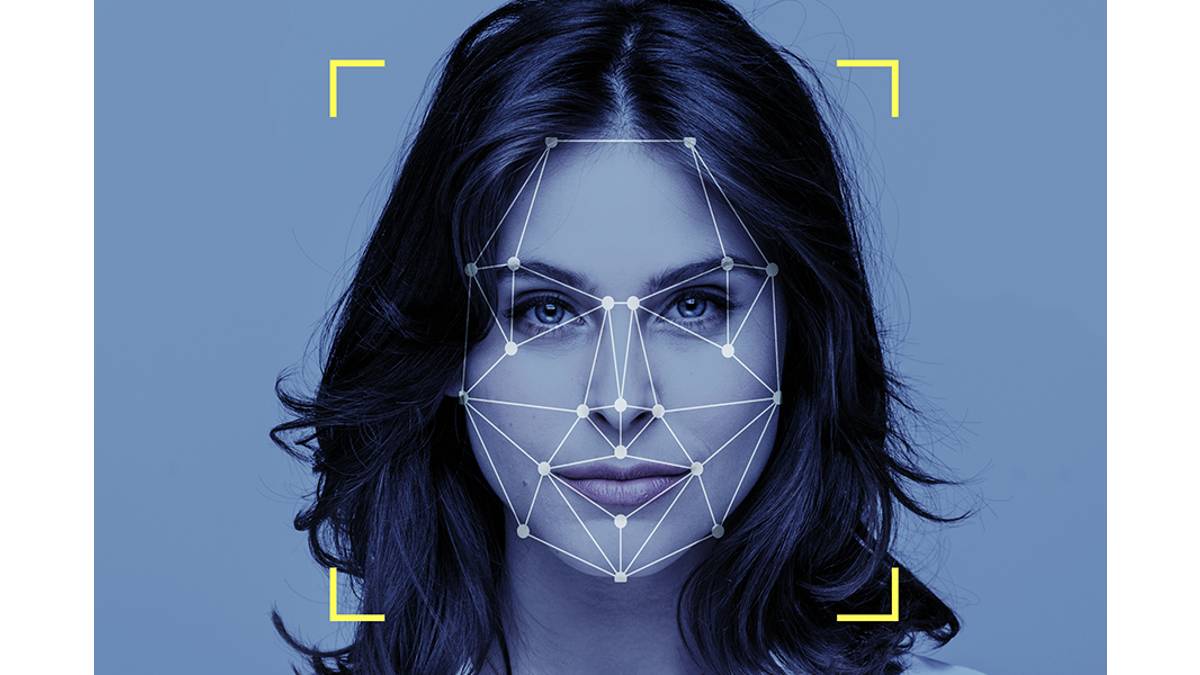
United States. When artificial intelligence is tasked with visually identifying objects and faces, it assigns specific components of its network to face recognition, just like the human brain.
Neuroscientists at MIT's McGovern Institute for Brain Research found that a computer network trained to identify faces and other objects uncovers a surprisingly brain-like strategy for classifying them all.
The finding, recently published in Science Advances, suggests that the millions of years of evolution that have shaped the circuits of the human brain have optimized our system for facial recognition.
"The human brain's solution is to segregate face processing from object processing," explains Katharina Dobs, who led the study as a postdoc in the lab of McGovern researcher Nancy Kanwisher, the Walter A. Rosenblith Professor of Cognitive Neuroscience at MIT. The artificial network she trained did the same. "And that's the same solution that we hypothesized would find that any system that is trained to recognize faces and categorize objects would find," he adds.
"These two completely different systems have figured out what is a good solution, if not the best. And that feels very deep," Kanwisher says.
Functionally specific brain regions
More than 20 years ago, Kanwisher and his colleagues discovered a small dot in the brain's temporal lobe that responds specifically to faces. This region, which they called the fusiform area of the face, is one of many brain regions that Kanwisher and others have discovered are dedicated to specific tasks, such as detecting written words, perceiving vocal songs, and understanding language.
Kanwisher says that as he has explored how the human brain is organized, he has always been curious about the reasons for that organization. Does the brain really need special machinery for facial recognition and other functions? "The 'why' questions are very difficult in science," she says. But with a sophisticated type of machine learning called a deep neural network, your team could at least figure out how a different system would handle a similar task.
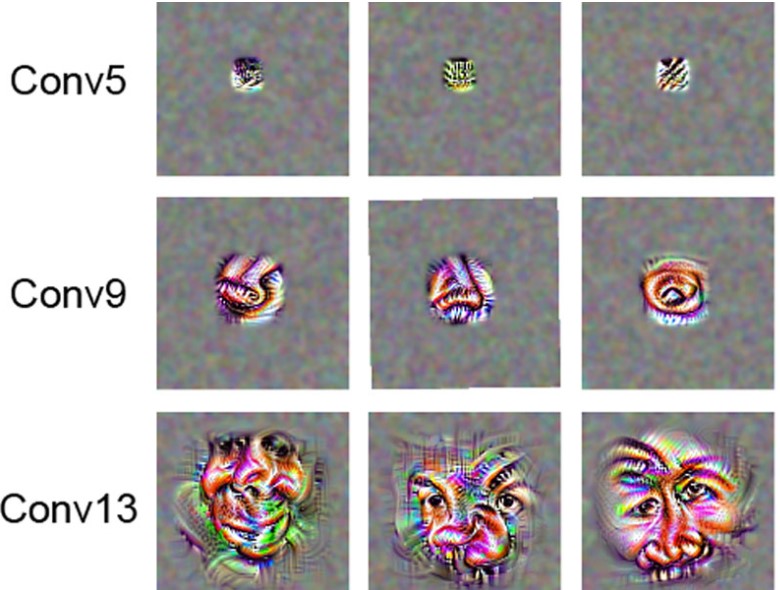
Dobs, who is now the leader of a research group at justus Liebig University of Giessen in Germany, gathered hundreds of thousands of images with which to train a deep neural network in the recognition of faces and objects. The collection included the faces of more than 1,700 different people and hundreds of different types of objects, from chairs to cheeseburgers. All of these were presented to the network, with no clues as to which was which. "We never told the system that some of those are faces and some are objects. So it's basically just a big task," Dobs says. "You need to recognize a facial identity, as well as a bicycle or a pen."
As the program learned to identify objects and faces, it was organized into an information processing network that included units specifically dedicated to face recognition. Like the brain, this specialization occurred during the later stages of image processing. In both the brain and the artificial network, the first steps in facial recognition involve a more general vision processing machinery, and the final stages are based on components dedicated to the face.
It's not known how the face-processing machinery emerges in a developing brain, but based on their findings, Kanwisher and Dobs say networks don't necessarily require an innate face-processing mechanism to acquire that specialization. "We don't build anything superficial in our network," Kanwisher says. "The networks managed to segregate without receiving a specific push for the face."
Kanwisher says it was exciting to see the deep neural network segregated into separate parts for recognition of faces and objects. "That's what we've been observing in the brain for about 20 years," he says. "Why do we have a separate system for facial recognition in the brain? This tells me it's because that's what an optimized solution looks like."
Now, she's eager to use deep neural networks to ask similar questions about why other brain functions are organized the way they are. "We have a new way of asking why the brain is organized the way it is," she says. "How much of the structure we see in human brains will arise spontaneously when training networks to perform comparable tasks?"
Source: MIT.