
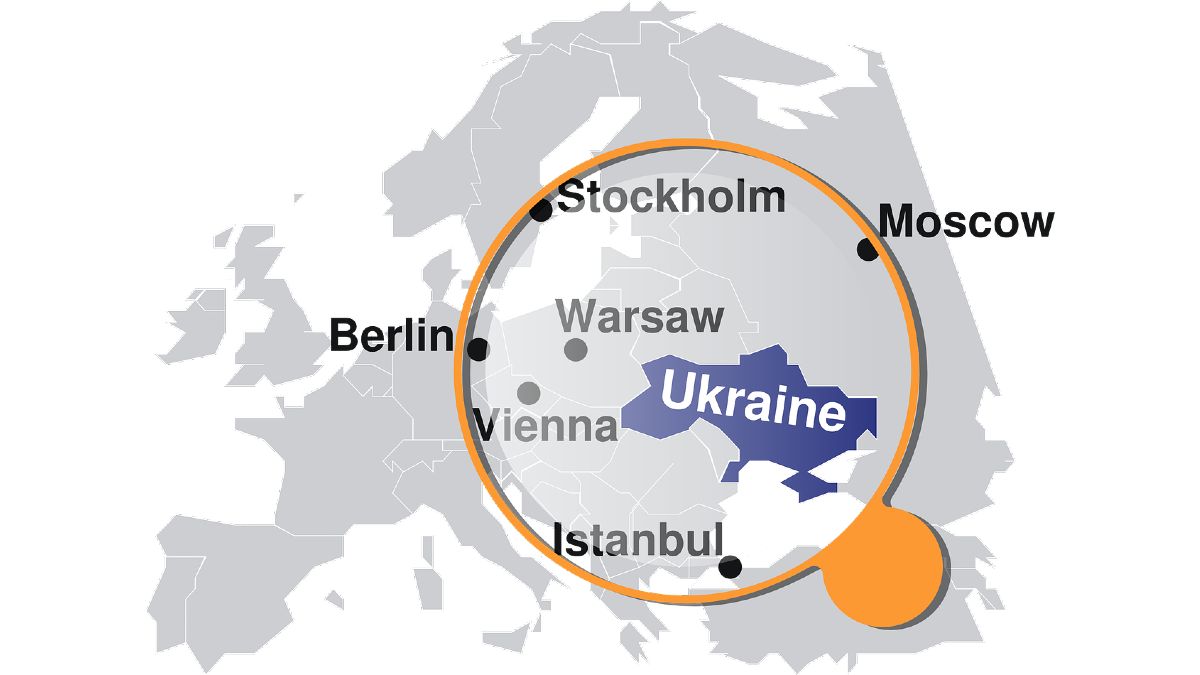
International. The recent war between Russia and Ukraine, in addition to the social and economic impact it generates in that territory and in global dynamics, has had antecedents at the level of cybersecurity, which suggest a displacement of the war conflict to virtual spaces.
Considering that confrontations take place in both the physical and virtual worlds is consequential, especially if one takes into account the large amount of information stored by governments on their servers, as well as the integrated use of communication through virtual channels. It is not free that most countries have intelligence agencies that are responsible for investigating, understanding and using malware, ransomware and Trojans, among others.
An important starting point is given in December 2015, when an attack on several plants and generators in Ukraine happened, the first successful hack in history against an electricity grid, carried out with a Trojan that was called BlackEnergy. The incident did not raise alerts until a part of the country was left without lighting. Russian authorities denied involvement, but admitted the possibility of a hypothetical "cyberwar" between the two countries.
In June 2017 a cyberattack called NotPetya affected the websites of Ukrainian institutions and companies, it was soon established that, although it had a ransomware façade, it could not generate ransom of the information, because in reality it was designed to eliminate it. In this regard, both the Security Service of Ukraine (SBU) and the British government pointed to Russia as the author of the facts, which soon spread to other countries in the world, especially the European Union.
That same year, the United States indicted and filed criminal charges against six Russian military intelligence officers for that incident, known as the most destructive and costly in history, which paralyzed the operations of Maersk, a leading company in the maritime transport of containers worldwide, which estimated losses between 200 and 300 million dollars.
By 2018 the issue of cyberattacks resonated again, as the US imposed additional sanctions against five Russian entities, including one under the command of the Russian Federal Security Service, as well as three others. This is because of the NotPetya, but also because of the alleged intrusions into the American energy grid.
In mid-January of this year (2022), Ukraine denounced a massive cyberattack against more than 70 government websites, including the page of the Ministry of Foreign Affairs where a threatening message was left in Russian, Polish and Ukrainian, which claimed there was a breach of the personal data of Ukrainian citizens who would be exposed. In that event, the Ukrainian Center for Strategic Communications and Computer Security assured the existence of a "Russian footprint" in the attack, although apparently the aggression was based on Poland.
Hours before Russia's declaration of war (Wednesday, February 23) another series of attacks were committed against Ukraine's computer security, resulting in several websites of banks and government departments being disabled. According to Mykhaylo Fedorov, the country's Minister of Digital Transformation, they were DdoS attacks.
Finally, the global hacker network Anonymous declared cyber war on Russia on its official Twitter account (Thursday, February 24). A few hours later, thanks to the attacks suspected to be of the DdoS type, the official websites of the Kremlin and the Russian Defense Ministry were left without access.
Nuclear risk
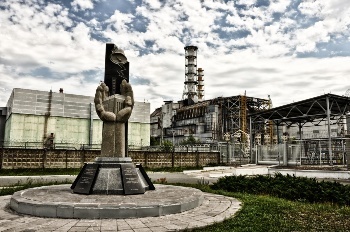
To the global concern, stirred by the statements of the president of the United States, Joe Biden, about his intervention in the conflict, it is added that Chernobyl, a city known for the nuclear disaster of 1986, was taken last Thursday (February 24) by the Russian military forces. In response, Volodymyr Zelensky, President of Ukraine, mentioned on his Twitter account that this occupation is a "declaration of war against all of Europe."
This space is viewed with fear by the international community due to the radioactive material that is there, so much so that in 2016 a new sarcophagus was installed, with a cost of 1,500 million euros that were financed by 28 countries and the European Bank for Reconstruction and Development, to protect the remains of reactor 4, which was where the incident occurred. Simply put, it is recognized as a dangerous zone. In conclusion, the use of nuclear weapons by the actors of the conflict or their allies and, in addition, the inadequate manipulation of the security of this area is topical of discomfort.
Historical background
Ukraine achieved its independence in 1991 and by 1994 Russia signed an agreement pledging to respect its independence and sovereignty, but since then several border conflicts have occurred. Part of this war arises because Russia is concerned that Ukraine will become a member of the North Atlantic Treaty Organization (NATO) and that, consequently, it will allow access to troops and arsenals of the other members of the organization.
Because although the nature of this alliance is the defense of its members against any attack they receive, it cannot be ignored that its initial objective, when it was created in 1942, was to face the expansion of the Soviet Union. Moreover, most of the countries that joined NATO since 1997 are closer to Russian territory, an issue that had already generated conflicts and demands for the withdrawal of military advances in western Europe by Vladimir Putin, Russian president. It is noteworthy that Ukraine is a partner but not a member, but this means that it could officially join in the future.
Another characteristic of this conflict is that both the fall of the USSR and the Warsaw Pact and other historical events have moved the borders, which has generated great unrest among pro-Russian separatists and Ukrainian nationalists, where each group indicates to feel akin to different political visions and fight for their vision, of how the territory should be administratively distributed, become a reality. To this is added that precisely Moscow recognized the independence of Luhansk and Donestk, territories on the border of Ukraine.