 International. Critical infrastructure security is one of the most important aspects of the physical security market, as these assets are subject to intrusions, theft, and terrorism threats. Governments around the world are expanding their security measures in an effort to protect critical infrastructure such as oil and gas refineries, power plants, water utilities and smart grids from potential intruders.
Among these measures, CCTV cameras are considered a favorable option. Expanding to a healthy CAGR, the CCTV camera market would create around double the revenue by 2029.
The Future Market Insights (FMI) study presents the following global scenario on CCTV solutions.
The global CCTV camera market will surpass the $10 billion mark by 2022.
- The market is expected to expand at a CAGR of more than 6% during the forecast period (2019-2029), driven primarily by large-scale spending on public safety and surveillance.
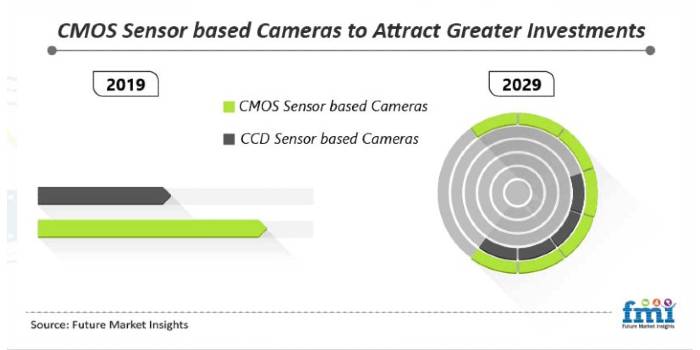
- The preference for cameras based on CMOS sensors remains intact; CAMERAS based on CCD sensors can witness a noticeable drop in their deployment.
- IP/network based CCTV systems continue to attract the attention of stakeholders; analog CCTV systems have been declining markedly.
- The commercial and government sectors would be key end users of CCTV cameras; the residential sector represents possible avenues of growth.
- North America maintains its supremacy in the global CCTV camera market, Latin America offer new revenue lines.
Key CCTV Market Factors
- The rise of CCTV cameras based on thermal imaging technology stimulates the growth of the market
Thermal cameras do not need light and are based on subtle temperature differences, called heat signatures. Thermal imaging cameras create a sharp image and can also see through light, fog and smoke. These cameras also overcome surveillance issues involving camouflage of natural scenes. Normal cameras can be fooled by landscapes, in which similar colors or patterns hide objects of interest, increasing the chance that something will go unnoticed.
In addition, a thermal camera can also detect elevated body temperatures in public and private spaces, which can alert security and health care teams to the need to evaluate scanned subjects for a disease that does not decrease the flow of foot traffic.
- Growing demand for security in various industries drives the growth of ccTV cameras market
The demand for security and surveillance equipment is increasing across all verticals, given the growing awareness among customers about security. The CCTV market for network cameras is growing rapidly, as businesses, small and medium-sized businesses, and end customers look to increase perimeter security for critical infrastructure. In addition, existing CCTV cameras combined with the latest video analytics software can be used as sophisticated IoT sensors with audio and video data, to help with everything from traffic management to public safety. This growing demand in various verticals across the globe is expected to create further growth opportunity for the global CCTV camera market.
The global economic order is currently facing a damaging situation due to the coronavirus (COVID-19) pandemic, which disrupts the supply chain and logistics operations of video surveillance system providers. In the recent past, the global CCTV camera market has grown by almost 6% annually. In 2019, the market valued around US$9 billion. Given the COVID-19 pandemic, the demand for video surveillance has increased in the first quarter of 2020, and the trend will continue in the second quarter of 2020. This is expected to be driven by the growing demand for public video surveillance for security monitoring amid nationwide lockdowns.
- Increasing adoption of IP/network based CCTV cameras
IP network cameras often require little power and have advanced thermal efficiency, multiple sensors, and two-way audio communications. IP cameras are gaining traction as they offer cost-effectiveness and convenience to the end user. In addition, network-based CCTV systems provide numerous benefits to users, such as remote monitoring, improved work productivity, theft protection, traffic management, and also support in gathering evidence in legal cases. Thus, IP/network based CCTV cameras will create potential growth opportunities for the CCTV camera market.
Source: Future Market Insights.