 International. Microsoft wants Congress to regulate facial recognition technology as concerns grow that it could be used to invade privacy and improperly monitor people.
Some civil liberties groups and employees called on tech companies to restrict the use of facial recognition, but Microsoft President Brad Smith wrote in a lengthy post that the "only way" to manage and regulate the controversial technology is for the government to do that.
Employees at Microsoft, Google and Amazon have pressed each of their companies in recent weeks to cut ties with some government agencies they believe are violating civil liberties.
Some Microsoft workers questioned whether the company was providing its facial recognition technology, Face API, to Immigration and Customs Enforcement (ICE) amid public outcry over the agency separating children from their migrant parents at the border. That's not happening, Smith wrote on his blog, echoing the company's earlier claim that its contract with ICE involves supporting email and calendar systems.
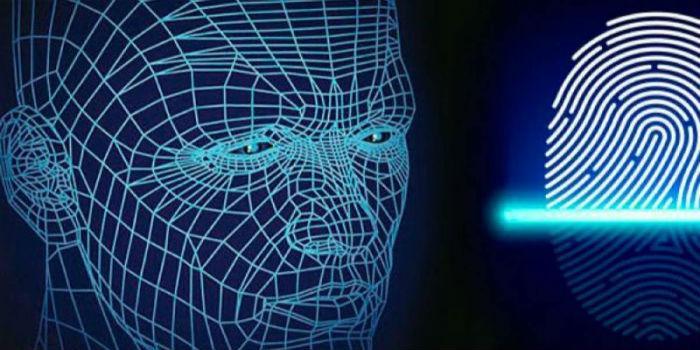
Facial recognition technology, enabled by ubiquitous cameras and increasingly accurate image analysis software, has rapidly risen in public awareness and become a top digital privacy concern. The technology has spurred concerns that it could be used by governments to extensively monitor people without their knowledge or consent.
Many people, including some employees, have called on companies developing the technology to place restrictions on its use. But that's not the place of tech companies, Smith wrote.
"While we appreciate that some people today are asking tech companies to make these decisions, and we recognize a clear need for our own exercise of accountability, as discussed below, we believe this is an inadequate substitute for decision-making by the public and their representatives in a democratic republic," he wrote.
Tech companies have been inventing new systems and services faster than the government can anticipate and regulate them. That often means services are quite mature and widely adopted before the government steps in. Even then, tech companies often resist attempts to regulate their products and services.
Some believe the industry needs to accept more responsibility for its inventions. Atti Riazi, the United Nations' chief information technology officer, told Bloomberg this spring that tech companies had a duty to consider unintended consequences. "You can't just create and innovate without thinking," he said.
Smith's post addressed some things the company is doing to ensure facial recognition is accurate and ethical, including "slowing down" as the technology is deployed.
"Fast forward and break things" became something of a mantra in Silicon Valley earlier this decade," Smith wrote. But if we move too fast with facial recognition, we may find that people's fundamental rights are being broken."
Microsoft has rejected some customer requests for the service where it found there could be "increased human rights risks," Smith said.
Microsoft has also established an internal and external ethics panel for artificial intelligence, and published a short book with guidelines and goals for AI earlier this year.
Facial recognition technology has been developed by several companies and is used in everyday applications, such as photo organizers on phones, to sort images by people, or to suggest who to tag in a Facebook post. It is also beginning to be used by law enforcement agencies to catch criminals and find missing persons.
That police use came under fire in late May when the Civil Liberties Union criticized Amazon for selling its technology, Rekognition, to government entities, saying it could violate people's civil liberties and easily be abused.
"People should be able to walk down the street without being surveilled by the government," the ACLU wrote in a letter to Amazon CEO Jeff Bezos.
Surveillance concerns are not unfounded. In China, facial recognition technology is widely used to identify people who have committed crimes. It is also used to show the faces of jaywalkers on large outdoor screens to embarrass them.
Barry Friedman, a professor at New York University School of Law, said the use of facial recognition is exactly the kind of tool the government should regulate because of the "controversial and complicated" nature of the technology. Friedman serves as director of the school's Police Project, which encourages police departments to be transparent and work with communities to formulate policy.
"This is one of those situations where if we don't manage it, it will be difficult to put the toothpaste back into the tube," he said.
To complicate concerns, technology is far from perfect and can misidentify people. Errors are especially severe when technology identifies people of color. Microsoft acknowledged this bias last month and said it had made improvements to its system, but still had a long way to go before the technology could identify women with darker skin with the same accuracy as men with lighter skin.
Employees of tech companies have been the most prominent when it comes to political and human rights issues, such as the rights of immigrants and LGBTQ people. Now they're talking about the technology their colleagues help develop.
In addition to Microsoft employees asking the company to sever its ties with ICE, some Amazon employees asked the company last month to stop selling Rekognition to law enforcement groups. Google employees pressured the company to end its artificial intelligence contract with the Pentagon, until the tech giant announced it would not renew the deal.
If Congress takes over the regulation of facial recognition, it will likely need help from the tech industry, said Eileen Donahoe, an adjunct professor at Stanford University and executive director of the university's Global Digital Policy Incubator, which studies the technology's impact on human rights.
"The consequences of this technology for social democracy, for the freedoms of citizens are simply gigantic," he said. "In a democracy, governments are the representatives of the people and must be held accountable."
But the federal government hasn't shown a great understanding of the technology as a whole, he said, and tech companies will have to be part of the conversation.