 International. Monica Wang, in the 2018 IHS White Paper, highlights that in last year's edition of her annual trends report, she stated that the biggest challenge to the mass adoption of deep learning was the possibility of demonstrating its benefits in terms of security or business intelligence in the numerous surveillance situations that may arise.
During the year 2017 there was a huge progress in the market, they observed a transition from the preliminary testing of deep learning algorithms to the offer of video surveillance products with this technology, as well as a whole range of new participants in AI auxiliary integrated circuit offerings. Since the concept of this technology has already been subjected to verification tests, future success will depend on the ability to demonstrate a return on investment of the different applications.
Driven by R&D investment from chip vendors, emerging software companies, and major video surveillance vendors, deep learning video analytics algorithms have been transformed into fully deployable products with easy-to-use interfaces and solutions focused on practical applications. For example, deep learning algorithms for facial recognition are already available in search engine-like applications, designed to find missing people from video footage.
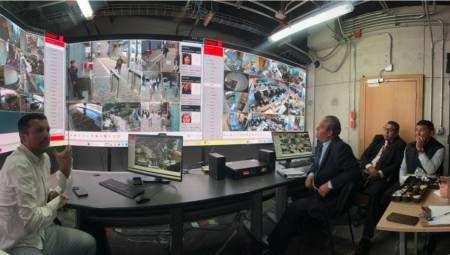
Transitions like these are evident in the Chinese market and in products showcased at the recent China International Public Security Expo (CPSE 2017). The deep learning products on display were software-based applications with deep learning hardware or video surveillance equipment with embedded algorithms. Faced with the increasing number of vendors developing deep learning algorithms, several software startups have also developed their own deep learning video surveillance hardware to consolidate their position in the market.
Transforming into deep learning cameras
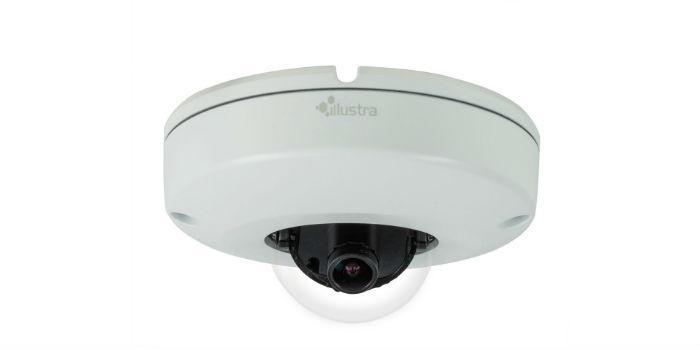
After the transition from analog cameras to network cameras, the next stage will likely be a massive shift of the market towards deep learning-enabled cameras. During the transition to network cameras, growth in shipments accelerated due to large price drops. The global average price of network cameras in 2016 was about a quarter of that of 2010. A similar trend of drastic declining prices can also be expected to catalyze a rapid increase in unit shipments for future generations of deep learning cameras.
So far, most of the deep learning cameras sold have been for safe city projects run by police departments in China. In these projects the price affects less on the probability of purchase of the products than in the rest of the market, where the average price is still too high for the end users. The cost of semiconductors that allow deep learning algorithms to run on cameras is a critical component of camera pricing. Following the launch of deep learning cameras with Nvidia and Movidius chip solutions at CPSE 2016, more semiconductor vendors (including some from the mobile device market) also exhibited at CPSE .
2017, highlighting its intentions to venture into the video surveillance market. Some of these vendors include XILINX, DeepHi Tech, Intel, Vimicro, and Qualcomm. These new chip vendors entering this market are increasing the number of options available for the deep learning ecosystem and, more importantly, increasing price pressure. This will allow a rapid reduction in the average price of cameras with deep learning.
Perspectives
Deep learning and AI are buzzwords that are already a bit more ingrained, particularly in China. Market education regarding this technology continues to increase. End users are becoming increasingly familiar with real-world product implementations, not simply prototype demonstrations of an algorithm. Chinese suppliers have begun to promote their deep learning products in the rest of the world. In 2018 this trend will continue with an increase in sales of Chinese suppliers outside the Chinese market and more successful cases of installations outside China.
This year we will also see a greater differentiation of video analytics products based on a greater number of auxiliary integrated circuits (chipsets) from semiconductor vendors. In addition to initial projects in the surveillance and urban transport sector, it is very likely that more installations in commercial and retail buildings will be the next to adopt the use of deep learning technology. As we've seen in the broader video surveillance market, a focus on specific vertical markets is likely to be a common strategy. Vendors that market deep learning applications focused on specific vertical markets aligned with their own portfolios are likely to have good growth opportunities.