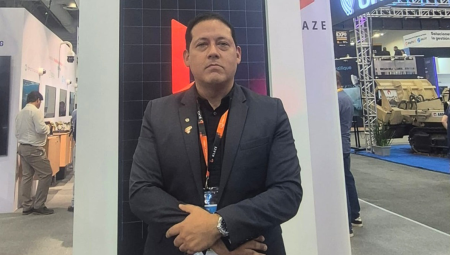

 Latin America. Francisco Ramírez, Country Manager for Mexico Central America and the Caribbean, points out that traditionally, in Mexican corporations there is a tendency to analyze the total amount of a system based only on the initial investment.
It is not a practice exclusive to the security sector, but has been detected in many CTP (Total Cost of Ownership Analysis) studies of various sectors. A report this year on the value of mobile devices in enterprises, conducted by Wandera, concluded that the actual total cost was 116% higher than SYSTEMS managers believed. The main explanation for this difference was that buyers looked mainly at the initial price of the equipment, the data plan and significantly underestimated the rest; for example, services and security.
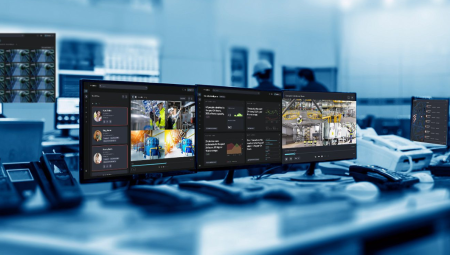
Imagine that you are responsible for an urban security project and you are asked to implement a video surveillance system. Where would it start? How would you evaluate the offers? How would you take into account upfront versus long-term operating costs? What parts of the system would you focus on to optimize the total lifecycle? These are just a few of the questions a CTO will need to ask themselves to reduce risk and avoid unpleasant surprises once the solution has been implemented.
Specifically, leaders need to focus on calculating how costs are divided between different parts of the system and at different phases throughout the technology's ten-year lifecycle. Also analyze certain factors that are left out, such as business costs related to downtime. Finally, look at how camera technology and equipment reliability significantly influence the total amount of ownership.
The reality is that when included in a financial analysis, a CTP offers a business reference to determine the total economic value of an investment. It can also be used as a product or process comparison tool. It is important to note that there is no single uniform CTP model that fits any project. On the contrary, each one presents a unique cost distribution and each team has to decide what factors it should take into account and how to evaluate the economic aspects of each element. In addition, in each sector of the economy there will be significant differences. For example, at an airport or critical infrastructure facility, the consequences of downtime are very different from those of a school institution. Another example is duration: in urban surveillance, it can be assumed that one system will be in the same place without experiencing modifications for years, while in others, such as in a retail environment, cameras will be relocated and the system will be updated on a regular basis.
On the other hand, maintenance and repair are fundamental in any CTP. The importance of product reliability is often underestimated when assessing the cost of maintaining and operating a system. That the product is of high quality is, logically, a crucial aspect to reduce repair costs as much as possible.
What are the results of Axis Communications' CTP study?
Axis has presented the results of an exhaustive CTP study carried out in 2015, which allowed to obtain a model with 40 costs that refer to the different components and phases of the system.
The model is completed with the example of a large-scale urban surveillance project with 1,500 cameras, with data obtained from interviews and comparative reports of the surveillance sector. The CTP is based on equipment prices, labor and maintenance. The result shows, among other conclusions, that approximately 50% of the total cost is due to investments in physical devices and software, and that another 50% is allocated to the installation, maintenance, operation and dismantling of the system.
In addition, the CTP was used to simulate the implementation of cameras with Axis Zipstream, which offers storage and bandwidth savings in video surveillance applications without sacrificing image quality, and it was concluded that this technology saves about 3% of the costs of the total CTP. To emphasize the importance of product reliability, the CTP was used to simulate a situation where the breakdown rate of the device would be multiplied by four. The conclusion is that the additional costs would have a very negative impact on the CTP, since the expense of breakdowns would increase from 5% to 13% of the total cost.
In conclusion, a CTP can be a very useful tool to perform the calculations of a project or analyze offers. It shows examples of the amounts that can be expected during the life cycle of a system and indicates which areas to focus on to reduce costs and improve the quality of the surveillance solution.