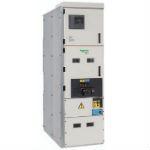
 Colombia. Schneider Electric highlights the importance of energy distribution boards as a key point in the encounter between the source that provides electricity as a service and the real use that each family or business makes of it.
The importance of the board lies in allowing energy to flow safely and efficiently to any device, machinery or appliance that needs it.
According to Oscar Gaitán, Retail Marketing Manager of Schneider Electric, "the energy distribution boards are actually the energy charging centers, because in them the breakers are housed and all the connections that allow the distribution of energy are detached, offering the protection and security necessary for this task".
For this reason, it is necessary to take into account some recommendations to make proper use, maintenance and management throughout its useful life.
"A board is a robust structure, usually built with metal sheets, which give it mechanical rigidity and must be coated inside and outside with electrostatic paint, which allows it to be isolated as an energy conductor," says Oscar Gaitán, Retail Marketing Manager at Schneider Electric. "Also, it must have the warning symbol of energy passage, which is a yellow triangle with a black border, with a black ray inside, have a factory guarantee and comply with the requirements of the Retie regulation that covers all electrical installations nationwide."
First of all, according to Engineer Quiñones, it is important to locate the board in a place that is easily accessible to anyone. "It is not recommended, for example, that a distribution board be located in the main room of a house. It is necessary that in case of an emergency the board can be accessed quickly and in a timely manner, for this reason, on one of the walls of the entrance or in the kitchen, the board can be located, "says Quiñones.
On the wall where the board is located, there should be no moisture or water leaks that put the board and its electrical distribution system at risk. "The board must be kept dry, clean and free of dust or any other residue. This prevents wear or damage both in the structure of the same board and in that of the equipment it houses, such as breakers and wiring, while removing other risks such as the access of pests to the board that can also damage the electrical system, "says Gaitán.
Other practices that should be avoided are painting the board or hiding it. The structure of the board allows it to fulfill its insulating and protective function of the systems and a vital component of this structure is the electrostatic paint that covers both the inside and outside of the board, in order to prevent electric shocks and system failures. "By painting it, so that it "combines" with its environment puts the function of the board at risk because it loses its ability to prevent electrical energy from flowing through its structure and allows the environment and the elements to accelerate the corrosion of its components," says Quiñones. "another unfavorable practice is to "hide" the board. Placing it behind the refrigerator, a piece of furniture or covering it with a painting, prevents it from being easily located in an emergency and this can cause major damage to electrical and electronic equipment, appliances and appliances that you want to protect, or even generate fatal fires for the home, the premises or the business in which the board is located, " recommends Oscar Gaitán of Schneider Electric.
Finally, as part of the technical recommendations suggested by the Schneider Electric expert, it is recommended to avail yourself of the Technical Regulation of Electrical Installations, RETIE, in order to install, operate and manipulate the panels. "One of the most important points is that the board has enough capacity to handle all connections and prevents failures properly and that the correct components are installed for each space. In Colombia it is very common to install oversized breakers and this practice is very dangerous because at the time of an electrical failure the system will not respond adequately and will not protect either the network or the devices. "
According to the technical regulations, the boards must be prepared to expand or cover new network requirements. "If the board is adjusted and new Breakers cannot be added, for example, there is a risk of overheating the existing system and not generating adequate energy management for the installation," says Oscar Gaitán, Retail Marketing Manager at Schneider Electric.
Similarly, it is necessary to correctly identify which area, space or device each breaker installed on the board covers in order to proceed in a timely manner in the face of a risk.