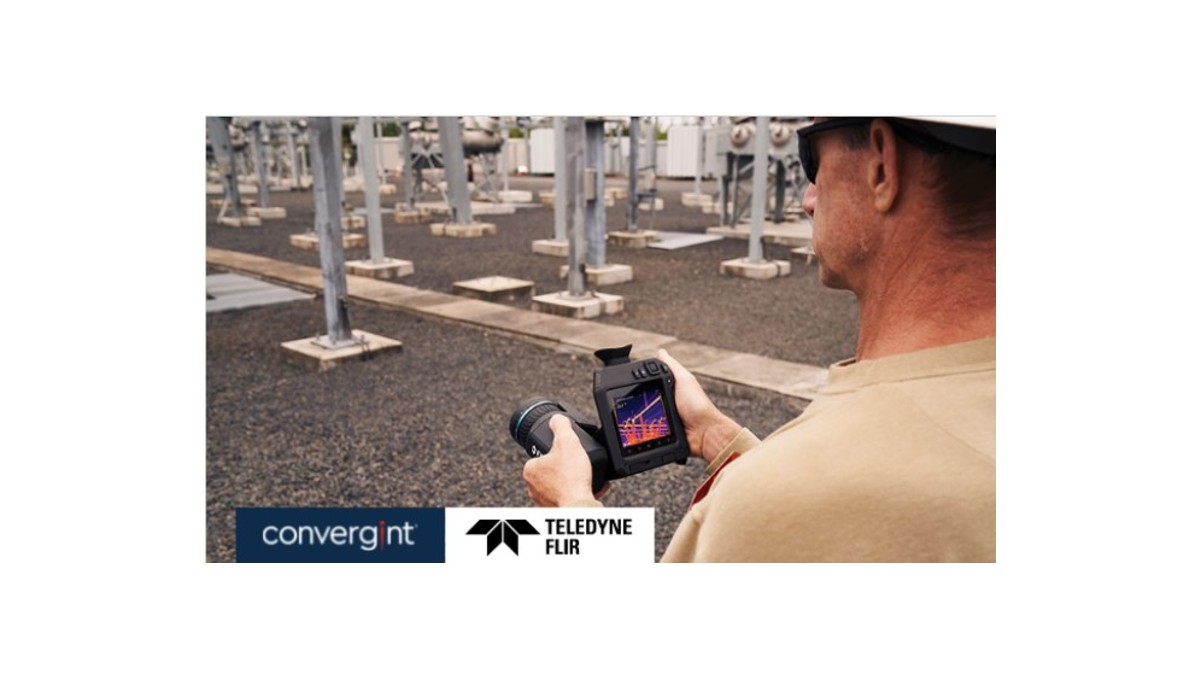
International. Convergint announced its work with Teledyne FLIR to help diagnose potential problems before they become costly failures using thermal imaging, gas detection and test equipment.
The electric utility industry relies on mission-critical equipment and facilities to ensure successful operations. Any equipment failure can result in considerable challenge. For example, a loose or hot electrical connection can lead to heat buildup which, in turn, can cause circuit failure and a power outage, resulting in system downtime, business disruption, and financial losses. This maximizes the need to detect problems before failure and take advantage of technologies that keep systems running smoothly.
Subsequently, electrical utility teams are using thermal cameras for building diagnostics, equipment sustainability, and preventive maintenance to proactively detect and resolve potential problems. By implementing thermal cameras for condition monitoring, process control, and fire prevention applications, plant managers can maximize operational uptime and avoid catastrophic events.
Extend monitoring with thermal cameras
Thermal cameras are a non-contact detection tool that allows inspectors to monitor energized equipment, such as active electrical components, from a safer distance. If the equipment exceeds a specific temperature threshold, a thermal automation camera sends an alarm or triggers an action to reduce the situation. By generating detailed images, thermal cameras offer an immediate and complete view of the problem.
Within the electric utility industry, facility and equipment problems, such as a carbon dioxide leak or an overloaded circuit, may not be visible to the naked eye, but can be clearly visualized with thermal technology. Condition monitoring can be used in a variety of applications, including electrical power generation, substation, transmission, and distribution inspections.
Condition Monitoring Results
Condition monitoring is more than maintaining equipment: it's a critical task that can ensure that power keeps flowing, machines keep running, equipment lasts longer, and businesses avoid breakdowns.
- Extend the life of machines and systems
- Minimize energy costs
- Reduce the time needed for maintenance
- Optimize maintenance programs
- Avoid unplanned outages and unexpected downtime
- Improve asset management decisions