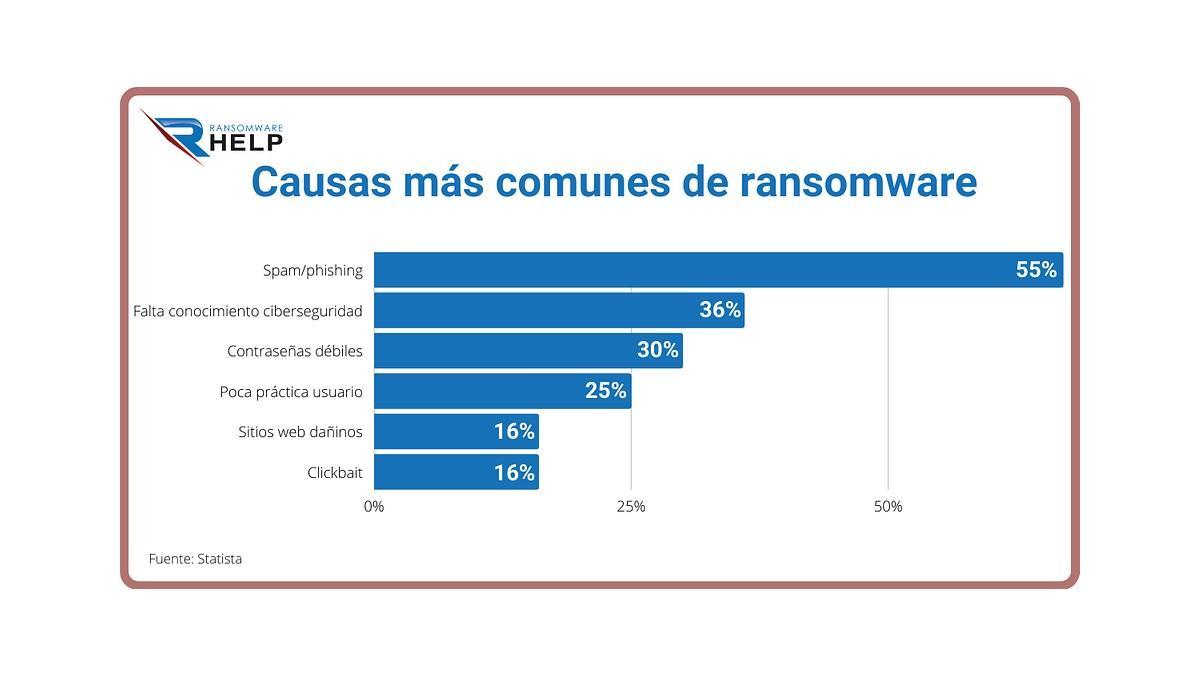
 International. An analysis by Help Ransomware found that electronic spam, at 55%, is the most produced, followed by a lack of knowledge in cybersecurity, at 36%.
Being a victim of a ransomware attack is concerning. In many cases, it can affect a business. And this makes it impossible to operate due to encrypted or locked files. Ransomware succeeds when companies neglect security.
Organizations that lack data security policies and procedures will have an increased risk of ransomware attacks.
Help Ransomware has put together a guide on how to restore files encrypted by ransomware.
Ways files are encrypted
There are three common ways in which files are encrypted or locked:
1. Open Remote Desktop Protocol (RDP) ports.
2. Phishing attacks.
3. Shared passwords.
Phishing or electronic spam is the one that occurs the most, with 55%. Followed by lack of cybersecurity knowledge (36%) and weak passwords (30%).
Options for ransomware recovery
There are four options to restore encrypted ransomware files:
1. Recover files using a backup.
2. Recreate the data.
3. Stop ransomware encryption.
4. Pay the ransom to decrypt the ransomware files.
If paying the ransom is the only option, the pros and cons must be understood, before considering moving forward. A ransomware attack makes it impossible for users and businesses to access their files. Ransomware succeeds when companies or individuals neglect security.