 United States. FLIR Systems conducted a survey of more than 2,000 people who overwhelmingly favor requiring thermal temperature control to enter many semi-public and private locations to help slow the spread of COVID-19.
The survey also found that thermal temperature detection makes people feel more comfortable at airports, the workplace, events such as sports and concerts, hospitals and doctors' offices.
The FLIR poll shows that Americans support temperature screening to protect public health despite potential concerns about personal freedoms. The vast majority (82 percent) of respondents say thermal temperature detection "is worth it for the sake of public health" versus only 18 percent who see the process as a "violation of personal freedom." More than any other group, Americans 65 and older say the thermal imaging test would make them more likely to attend activities by an average of 5 to 10 percentage points compared to other age groups.
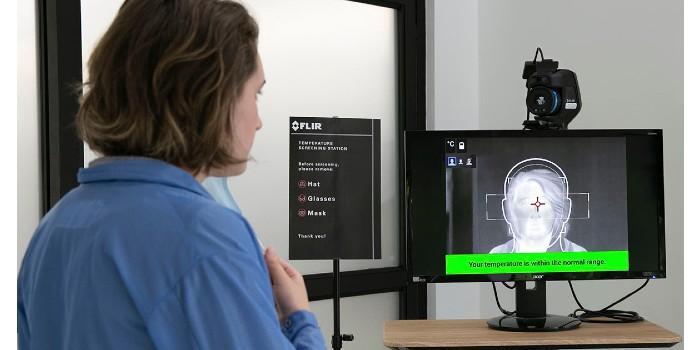
"This recent survey shows that the general public recognizes how thermal imaging detection can help improve public health and safety," said Chris Bainter, vice president of business development, solutions business at FLIR. "When used correctly and with the right equipment, thermal imaging detection can quickly and safely identify people at risk for more."
The new FLIR poll echoes the results of an earlier Harris Poll poll conducted between March 28 and 30, where a large majority of Americans (84 percent) said they would support a required health screening before anyone could enter certain crowded public spaces and (77 percent) in businesses such as restaurants. offices and cinemas.
However, respondents cited the accuracy of temperature detection as a top concern. When asked if readings "may not always be accurate," 41 percent said this is a major concern, and 59 percent said it's a minor concern or not a concern at all. Respondents also cite potentially longer lines (31 percent) and personal data privacy (34 percent) as a "big concern."
"Thermal temperature detection does not require the collection of any personally identifiable information to be an effective solution as part of a broader health and safety program," Bainter said. "Thermography offers a quick method to examine people, with an accuracy of a fraction of a degree, while allowing operators and subjects to maintain the recommended social distances."