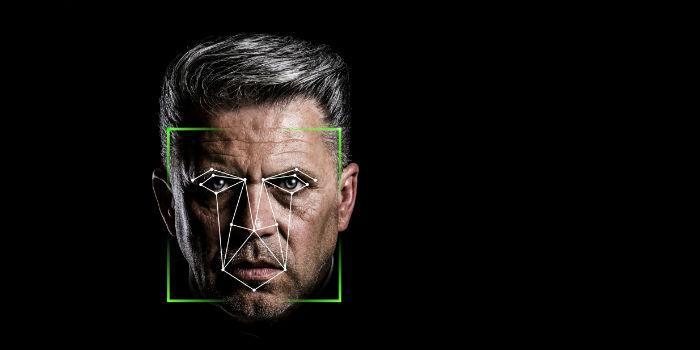
 International. Due to technologies such as facial recognition, especially its application in public areas, the issue of privacy has generated controversy among those who defend the use of this technology and those who do not.
According to a May 2018 report, the FBI alone has access to 412 million facial images for search.
To address this problem, according to a draft of the leaked white paper from the European Commission (a European Union institution) on Artificial Intelligence obtained by Euractiv, the European Union is considering a temporary ban on the use of facial recognition technology with exceptions for research and security projects.
The temporary ban on facial recognition technology will be considered in public places such as train stations, sports stadiums and shopping malls for fear of progressive surveillance of European citizens.
According to the draft, the ban on facial recognition technology will last between 3 and 5 years. At this timestamp, regulators must figure out how to prevent both government and businesses from abusing facial recognition and estimate impacts and potential risk management measures.
The document stated that "the use of facial recognition technology by private or public actors in public spaces would be prohibited for a defined period (e.g., 3 to 5 years) during which a robust methodology for assessing the impacts of this technology and possible risk management measures could be identified and developed."
The white paper also presents five regulatory options for AI across the EU, including voluntary labelling, sectoral requirements for public administration and facial recognition, mandatory risk-based requirements for high-risk applications, security and accountability, and governance.
The Commission says its preference for regulating AI is regulatory options 3 combined with 4 and 5, i.e. mandatory risk-based requirements for developers that could result in some mandatory criteria, combined with relevant adjustments to existing safety and product liability legislation, and an overall governance framework.
Under the proposal, a new regulatory framework for artificial intelligence could include a limited-time ban on the use of facial recognition technology in public spaces.
The draft document notes that, according to the general data protection regulation, EU citizens should not be subject to a decision based solely on automated processing, including profiling.
According to a spokesperson: "To maximise the benefits and address the challenges of artificial intelligence, Europe must act as one and define its own path, a human path. Technology has to serve a purpose and people. The trust and security of EU citizens will therefore be at the heart of the EU strategy."
The final version of the document will be published at the end of February as part of a broader review of the regulation of artificial intelligence. However, the report adds that if the plans are implemented, several current AI projects proposed by European Union countries could be left off course.
These include that the German government plans to implement facial recognition technology at 134 railway stations and 14 airports after a successful trial in Berlin.
France will become the first EU country to allow its citizens to access secure government websites using such software. In July, the French parliament recommended a new regulatory framework to allow experimentation.
The proposals come amid calls from politicians and activists in the UK for police to stop using live facial recognition for public surveillance. More recently, Kings Cross status found itself at the centre of controversy when it was revealed that its owners were using facial recognition without telling the public.
Source: Techgrabyte.