 Colombia. Although in Colombia there are still more than 20 million people without access to the Internet, the national government is still in the effort to prepare the way for the adoption of 5G technology, which is 100 times faster than the current 4G, and will definitely change the usability experience of personal mobile devices, but above all it will mark the beginning of a new era for all information technologies at the corporate and industrial level.
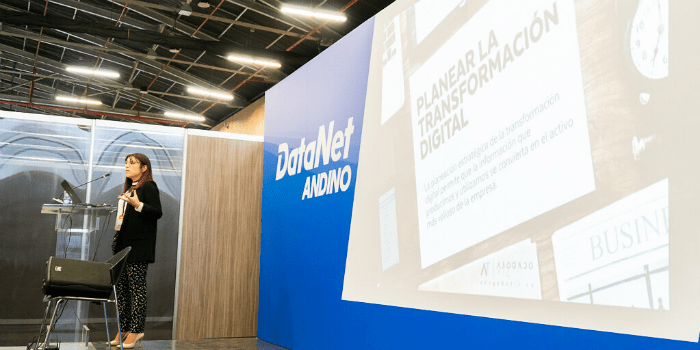
For Alejandra García, Project Manager of DataNet Andino, a fair specialized in the topics of networks, voice and data, which will be held in October in Bogotá, "the Ministry of Information and Communications Technologies, MinTIC, foresees that in 2022 the country should have adopted 5G networks, aligning with this global trend that, in turn, it will generate the development of increasingly powerful devices and allow technologies such as the Internet of Things, Cloud Computing and Artificial Intelligence, among others, to be strengthened."
If this projection occurs, this would mean that, in just three years, an average person in Colombia, for example, can enjoy great advantages such as a reduction in latency in the use of their cell phone, that is, the response time of one device when transmitting signal, data or information to another is reduced.
"With its arrival, sooner or later in the country, this new technology will also help multiply smart homes with efficiency and security and with the possibility of simultaneously and with total immediacy, smart lights, electric locks, air conditioning, windows, surveillance cameras, video screens and sound systems among many other devices, connected and controllable through the cell phone," says Garcia.
Now, these functionalities are just one example of the advantages that 5G can provide to an ordinary person, because the real challenges are much greater such as implementing smart cities, which although they are still a utopia for the country, in the future will be made up of fully automated buildings in the middle of streets equipped with digitized traffic lights, intelligent lighting and management of water, garbage, energy and prepared to coexist in harmony with smart cars.
These vehicles, connected to high-speed networks, will be able to receive and emit traffic, traffic light and other automotive data, in order to avoid traffic jams and accidents on the roads and will be able to connect with public transport, whose drivers and operators will be able to obtain updated information on the best routes and traffic to reduce waiting time and offer a better service for users.
This topic, as well as trends in networks, voice and data, will be an important part of the Academic Congress of Expo DataNet Andino, an event that will be held from October 23 to 25 at the Gran Salón de Corferias in Bogotá and that will bring together manufacturers, designers, installers, integrators and end users of the IT sector.
For more information, visit: https://colombia.expodatanet.com/