 Latin America. All is not lost and we still have time to make positive changes with the help of technology and companies such as Axis – market leader in network video systems – which makes use of technological innovation to support the rescue of animals in danger of survival such as the golden eagle and the rhinoceros.
"At Axis Communications we are very excited to be part of this great work to preserve our wildlife. We are very committed to this type of action and we hope that our technology can support the reduction of endangered species," says Francisco Ramírez, General Director of Axis Communications for Mexico, Central America and the Caribbean; and adds: "Today we participate in projects for the protection of the golden eagle in Mexico and the rhinoceros in South Africa with the implementation of video surveillance and monitoring systems, which seek to bring a smarter and safer world also to the animal kingdom."
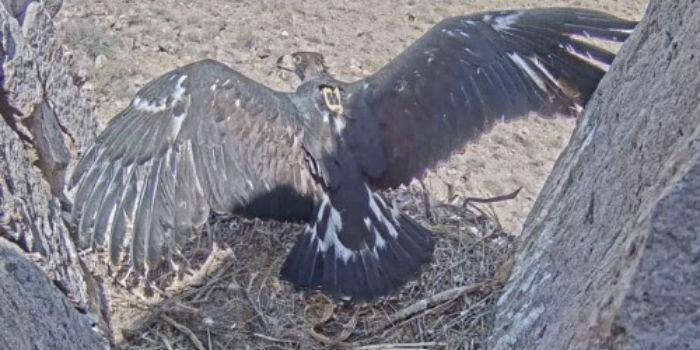
For the conservation of the golden eagle, a project created by the Mexican Fund for the Conservation of Nature A.C, and in which Axis has been involved, has been involved for more than 3 years. In this project the company donated the cameras that have been placed in the nests in the Rancho los Ángeles owned by the Autonomous Agrarian University of Antonio Narro; currently 4 nests and more than 3,024 hours of recorded material are being monitored, which has allowed documenting for the first time in Mexico the development of a chick from three weeks of life until it undertook its first flight.
The good results achieved in 2016 made it possible to manage the placement of additional cameras in subsequent years. In addition to generating scientific information on the behavior of the species, the cameras have brought the Mexican public closer to the problems faced by the golden eagle in Mexico, which puts at risk its permanence in the long term.
"The use of technology in actions for the protection of the environment, allows to bring the advantages that the business world has, to groups and entities oriented to meet the challenges that climate change presents today, such as visually verifying what is happening before taking a relevant action and providing information to improve safety and new strategies in favor of nature conservation", Ramirez reiterates.
The number of specimens in wildlife in Mexico is unknown; however, to date 156 nesting territories have been identified, each potentially harboring a breeding pair of the species. This innovative project seeks to contribute to the recovery and conservation of wild populations of golden eagles and their habitat in Mexico, as well as mitigate the human impact on the populations of the species.
Moreover, in recent years, rhino poaching in South Africa has increased because of the value of their horns. One of the organizations that is trying to stop this, and to make sure rhinos can continue to exist in the wild, is the Rhino Pride Foundation Sanctuary in Limpopo, South Africa's northernmost province.
Providing a safe, yet natural, free-roaming habitat for endangered rhinos, the sanctuary oversees and protects more than 40 animals. To avoid poachers, the sanctuary has invested in security measures such as double fencing and 24/7 security patrols with dogs, as well as a solar-powered Axis video surveillance system that can pick up movement up to 300 meters away, even in total darkness, and issue alarms as soon as any suspicious behavior is detected. Combined with network speakers to deter potential intruders, this makes it a crucial first line of defense and ensures park rangers are always one step ahead of poachers at all times.
Social responsibility is part of axis' strategic pillars and they continuously make chamber donations to non-profit associations to help the conservation of species, society, etc.
"We have different intelligent video surveillance systems that complement each other according to the needs of each company, business, organization and homes. We also provide support and protection to species in danger of extinction and that are part of a life cycle where we all have to see, "concludes Francisco.