
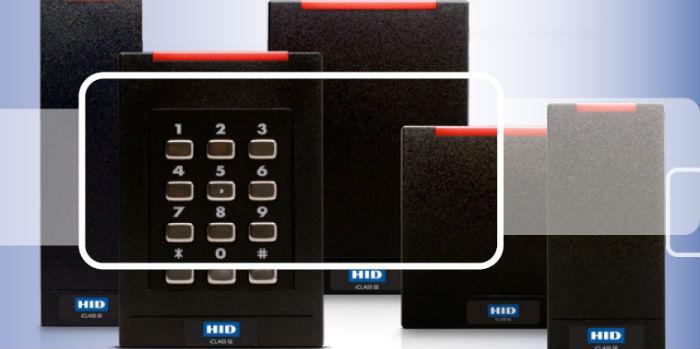
 Latin America. Tyco Security Products now offers HID mobile-optimized Mobile Access multiCLASS SE and iCLASS SE readers for mobile devices with the option to use The Supervised Open Device Protocol (OSDP) for integration with Software House's C•CURE 9000 v.2.50 event management platform.
This ensures that customers have access to the latest line of access control readers on the market, so users can use secure smartphone credentials.
The integration between Software House's C•CURE 9000 v2.50 and hid readers optimized for mobile devices gives customers more options when choosing which type of reader they want to deploy. Users can open a door with their smartphone by bringing their device closer to the reader or using HID's patented "twist and go" technology, which allows doors to be opened at a greater distance by quickly turning the cell phone at 90 degrees. HID readers with the SE platform allow secure access to a door through a mobile device with Android or iOS operating system.
For areas that require a higher level of security authentication, the readers support OSDP v2.1.6. These specifications developed by third parties define the communication protocol between physical access control systems, such as communications between the reader and the panel.
"With the introduction of HID's Mobile Access iCLASS SE and multiCLASS SE readers, our customers have more options when choosing a reader and can open doors using their mobile devices, an element that people carry with them wherever they go," said Luis Carlos Delcampo, Marketing Manager of Access Control Products at Tyco Security Products in Latin America. "In addition, the option of OSPD compliance is important for those projects where a higher level of security is required."
Both iCLASS SE and multiCLASS SE readers are compatible with various technologies, including iCLASS Seos, iCLASS standard, iCLASS SE, MIFARE, MIFARE DESFire and HID Prox. The iCLASS SE platform features multi-layered security through its Secure Identity Object (SIO) model, which ensures protection against sabotage of key and cryptography operations.