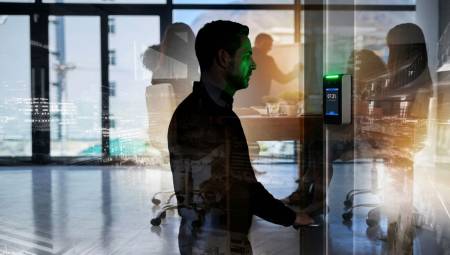

 United States. The biometric security industry in the U.S. The U.S. Government seeks to obtain more corporate customers that adopt this technology for access to offices, manufacturing plants, medical and financial archives, and computer networks.
The biometrics industry is expected to grow 20 percent annually, according to spokespeople for 3M Co., which launched a stock offering in early September of Cogent Inc., one of the largest U.S. biometric engineering companies. U.S. $943 million worth of U.S.
Much of the industry's potential will depend on winning over people who associate fingerprints with criminals and worry about invasion of privacy. One example is the 24 Hour Fitness gym chain, which chose a biometric system from Safran, assuring members that the new digital scanners did not record their fingerprints but only measured "the distance between particular points that are unique to each person."
Countries such as India are considering implementing biometric systems in ID cards. In the U.S. In the U.S., the issuance of Social Security biometric cards to job applicants has been proposed, with the idea of identifying illegal immigrants, but the private sector could offer the industry an important counterweight to these types of government clients.