
by Ana María Restrepo
In the nineteenth century Western civilization began to implement other forms of recognition of people through what is called "photographic memory", but in 1883 the head of the photographic department of the Paris Police, developed the anthropometric system (also known later as Bertillonage), which allowed the identification of criminals by accurately measuring some lengths, as well as widths of the head and body, as well as recording individual marks such as tattoos and scars. This system was adopted in the West until some problems related to the measurement systems of the different countries appeared. Years later, police forces began using the fingerprint as a recognition pattern.
Today, biometrics has expanded its patterns of recognition of human beings through different methods of identification and authentication, through unique physiological and behavioral characteristics of people. Within these methods are the physiological features: hand geometry, iris, retina, easy recognition, DNA, fingerprint, recognition by the veins of the hand; and those of behavior: signature, voice, dynamic keyboard and movement.
In a biometric identification system, the individual records one or more of their physical or behavioral characteristics, they are processed by a numerical algorithm and entered into a database; by means of a comparison with the pattern already saved, the individual is identified at the time of accessing a place, allowing or not his entry.
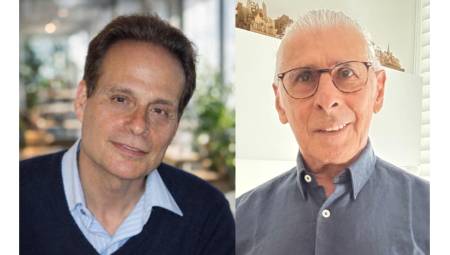
Biometrics is a protection technology that day by day has been positioned in the electronic security industry, gaining followers in all parts of the world, because it not only fulfills the functions for which it was implemented, but also allows to improve internal processes of organizations. Also, due to advances in the industry, there are various forms of biometric identification, some more implemented than others, but all with a high margin of safety, as explained by the three experts that SECURITY SALES interviewed to make this article.
Biometric Privacy
Biometric identification systems have a very high recognition potential, allowing few flaws in the security process; however, over the years some concerns related to privacy and identity theft have been raised.
For many people, the theft of a person's physical or behavioral traits is as or more important than the damage caused by the theft of a credit card, as criminals could access personal or business information and financial accounts by obtaining important information and using it improperly. In the same way there is the concern that biometrics can be used to reduce the freedoms of people, because the database could include data such as name, address, work history, studies, religion, health insurance, or reproductive history; as with the computerized chip card residence control systems in Shenzhen, China.
However, this situation has not yet arisen or has not been known, in such a way that the use of biometrics in industries, health centers, commercial and residential places, hotels, sports centers, ATMs, among others, is further promoted.
Recognition of identity
With the advancement of technology, different methods of identification have been established, however some are not implemented due to their high costs.
To this day, the newest biometric processes are, according to Jesús Montero,
Director of Kimaldi de Mexico, fingerprint, iris, facial recognition, and vein recognition. "At present, although biometric technology in global percentage is little used, the most used is fingerprint, for its price range and for its non-invasive methodology," he says.
For his part, Karim Hala, sales manager of Impuls ID Systems, considers that the newest thing is the reading of the retina and voice, but affirms that, from his point of view, fingerprint identification is what sells the most.
For his part, Héctor Amavizca, regional sales manager for Latin America, Security and Safety of Ingersoll Rand, shares the opinion of his colleagues, but asserts that facial recognition (measurement of the dimensions of the bones of the face, the width and height of the face and the forehead), is one of the most innovative systems along with three-dimensional hand recognition biometrics, which captures the individual's hand in width, length and thickness.
Security and reliability
These biometric solutions are based on the unique morphological characteristics that human beings have to differentiate us from each other, which allows these systems to have an interesting degree of reliability that optimizes security systems in the places where they are implemented. It should be noted that there will always be a margin of error with any method, although it is much greater in some.
For Hala, fingerprint readers today are very reliable, as it is a system that has some time on the market, which has made it possible to advance and develop.
The characteristics of the solution must also be taken into account, within the margin of error of a biometric solution, because according to Montero, the degree of reliability of these methods is very high, but "it depends on the technology used by each manufacturer and the recognition algorithm, that unfortunately in some manufacturers are not optimal, that is why the most advisable thing is that the customer tests directly to ensure their reliability".
Likewise, Amavizca assures that it obeys the type of biometric technology that is used, since it explains that for example, "there are certain types of fingerprints that can be copied, which eliminates security. The other thing is that within the fingerprint technology there is the wear and tear of it and that can make reading uncomfortable." It also states that for other systems such as hand recognition it does not matter if the hand is worn, fatter or skinnier, because the identification remains the same.
According to some studies, biometrics can be applied to 99.9 percent of the world's population, since in certain cases it is impossible to use it due to defects in people or habits that modify their physical characteristics.
Many experts consider that physical features can rarely be falsified, one hand will never be the same as another and rarely when it is possible to falsify features are accurate to the original; in addition, the difficulty in creating the copy must be taken into account. For these reasons, some biometric systems have tried to include life detection when verifying identity.
The new biometric identification systems have become fashionable, so to speak, as a result of various unencouraging circumstances such as the increase in organized crime or terrorism, which is why developments in the security industry have been presented with more force.
We could say that most organizations, both large and small or medium,000, have implemented some security system, in most of them many use systems that allow access control to facilities and restricted areas, however not all have the economic capacity to apply the newest technologies, so Karim says that reading the fingerprint is the simplest and most economical than a retina reader.
For Héctor, fingerprint technology is also the most economical and the most common, along with handheld technology; however, he believes that voice recognition has been adopted a lot for cell phones. Like his colleagues, the director of Kimaldi de México, thinks that the fingerprint is the most implemented for its wide range of applications, from access and presence control, to validation of internal processes, where it is used by the user as an approval signature.
The eye, unique and unrepeatable
Today iris recognition is one of the most popular biometric systems, but not the most implemented due to its high costs.
About 20 years ago, this technology could only be seen in fiction movies, but since 1995 this could begin to be a reality, after the studies carried out by the nuclear defense agency to test and to deliver a prototype unit, which was completed thanks to the combined efforts of the doctors. Flom, Safir, and Daugman.
This method offers a very modern system and greater fidelity than the others, in addition its precision is not perfect, because there are some drawbacks that can alter the identification and authentication of the individual through this system, such as optical diseases, when people have difficulties with the cornea or by the particular characteristics of certain ethnic groups who have less than half of their iris in sight.
Iris recognition is the process of recognizing a person by analyzing the random pattern of the iris. The iris develops during prenatal growth with a strict process of formation and folding of the thin tissue membrane. Before birth, degeneration occurs, resulting in the opening of the pupil and the unique and random patterns of the iris. Although genetically identical, an individual's irises are unique and structurally distinct, allowing it to be used for recognition purposes. (taken from www.biometria.gov.ar)
As we have already mentioned, biometrics is perhaps one of the easiest and most convenient ways to provide security to an organization, regardless of whether or not it is the newest and most expensive on the market.
Access and personnel control
Like other security systems such as access control cards with or without a chip, biometric systems allow not only to identify the person but to authenticate their job and their entry into restricted places, although it is worth noting that biometrics, being unique to the human being, it is inviolable, that is, employees cannot give their credentials to their colleagues to carry out attendance control for them or to access prohibited areas.
As a control of attendance and time, biometrics is infallible and allows to cross the security information with that of the personnel department facilitating the tasks of this, because thanks to the control of the work time of the employees, the number of hours worked normally and the overtime can be determined.
In Latin America, most of the companies that implement biometrics and that have achieved effective management, both of the security and protection of their facilities and the control of their personnel, are in different sectors such as government, commercial, industrial, health and financial.
For Héctor, the fingerprint reader is the most used system in Latin American countries such as Mexico, Brazil, Argentina, Ecuador, Peru, Guatemala, Costa Rica, Dominican Republic, Panama, Colombia, Peru and Venezuela; in government entities, in hospitals, flower crops and in quick service restaurants.
In the same way Jesus thinks, although he adds Chile as another friendly country to the use of biometrics for security.
Karim Hala shares what his colleagues think and comments that in Central America and the Caribbean, especially in Guatemala, El Salvador and Panama, biometric solutions are strongly used mostly for attendance control.
Biometric future
The future of biometric technologies is not the most predictable, since over the years, in addition to the advances of the security sector, new needs and methods of protection for assets and people arise.
According to Amavizca, biometrics will be a leader for security reasons with respect to other access control technologies, because as said above it avoids the crossing of credentials or cards and forces people to be present at the time of access.
This is also how Jesús Montero thinks, because this is a sector with a wide potential. "The market is gradually assimilating this technology, which allows the sale more easily than years ago. The security in it, as well as the costs and the number of applications that have been developed around biometrics are allowing the penetration in the sector of this technology".