 The number of megapixels is much more than a number, it also implies new capabilities and features that add value to the customer's specifications.
by Johnson Controls
For system integrators, it's not enough to sell just megapixels (MP). The number is certainly important, but ultimately, end users want to know the value proposition and understand how the camera will help them solve security challenges, protection challenges or other issues in their facilities. Users want to focus on specific areas using technology that allows them to solve problems or deal with risk-prone environments. In addition, they often look for a solution that can be handled as an operating expense (OpEx), rather than a large capital expenditure (CapEx) that can take months or even years to budget.
The good news is that the higher resolutions and image quality and clarity offered by megapixel cameras are accompanied by other benefits and capabilities that translate into a lower total cost of ownership, better business intelligence, and other valuable services that system integrators can provide customers through these surveillance devices.
Evolution in action
The R&D evolution of HD and megapixel cameras has resulted in higher resolutions, superior image quality, and the ability to apply the latest compression codecs for more efficient use of bandwidth in streaming and storage, as well as cloud computing. Of course, having greater definition is fantastic, but what really matters to system integrators and users is what that means for new deployments: currently, the market offers a wide variety of interesting and popular features that system installers can take advantage of for customer applications.
For system integrators, whether they're working with one of those 2-5MP units that are so popular today or with the latest 4K camera, it's not simply about selecting the right number of pixels and evaluating the aspect ratio for quality and clarity in the image, it's about creating a holistic ecosystem designed for the specific challenge and vertical market: a unified, integrated and automated solution that incorporates cybersecurity functionalities and takes advantage of the advantages of the cloud.
First of all, it is worth clarifying that the resolution and quality of the image are two very different things. You can have a high-resolution product and still get a low-quality image if the end-to-end solution does not have the right compression options, cabling, monitors, servers, streaming, PC graphics cards, etc. In the same way, you can have a 12 MP camera whose image quality at the other end is transformed into 1 MP – which is practically useless – if you have not properly planned the entire ecosystem, from one end to the other going through everything in between.
The benefits of better-resolution technology have had a significant and pervasive impact on the system integration pipeline and while high-quality imaging has become the norm, system integrators want to know the value-added features they can provide to differentiate their offerings and bring even greater value (both perceived and real) to the end user. in order to make you a more compliant and possibly more loyal customer.
It's hard to believe that it's been almost 25 years since the first IP network camera was invented; and today, according to the analysis company IHS Markit, the market for network cameras has surpassed that of analog cameras: two-thirds of the total cameras sold globally in 2018 were network cameras. Since the creation of the network camera, a steady move towards a higher number of megapixels has been observed, and with this advancement a set of features has emerged, including functionality in very low light conditions, wide intelligent dynamic range, distributed or built-in analytics, and new compression capabilities and reduction of bandwidth usage.
Benefit and impact of technology
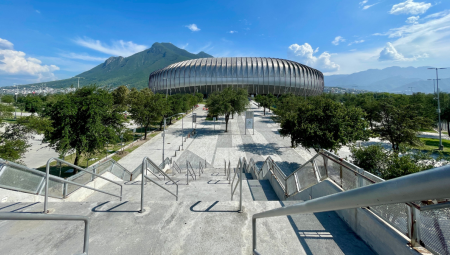
Megapixel technology provides a higher resolution to see more details, covers a large area and helps to better define objects. These advances can be effectively implemented with live imaging, where a high-resolution camera can cover the same visual area that two or three lower-resolution cameras cover. For example, in applications such as sports stadiums or large arenas, surveillance personnel can identify individuals at greater distances with exceptional clarity. Playback is also higher when cameras have higher resolutions, as there are more pixels to take advantage of in the image. This way, if an incident occurs, monitoring operations can zoom in on the image to see more details; the higher the resolution, the greater the detail that can currently be obtained with digital zoom.
In facilities where an effort is made to combine high resolution and high performance at a competitive price, the use of 4K cameras is increasingly being adopted, whose prices have also fallen, like those of other units on the market. Combining a higher number of pixels per foot with 4K resolution cameras greatly improves image detail in areas such as cargo areas, transportation or distribution centers, and airport terminals. As having additional processing power is an important part of the equation, built-in IR illuminators produce clear images at an effective distance in a variety of low-light conditions.
New efficiencies mean greater added value
The latest megapixel cameras now offer premium video intelligence technology that maximizes resources and improves overall performance – just what the customer is looking for. Low-light performance has improved considerably because the processing power of the cameras has increased a lot. Built-in or distributed analytics distribute the computing load between the camera and the video management system while triggering events that are used for forensics or business information and data. Low-light detection is made possible by IR lighting, which combines with features such as wide intelligent dynamic range and Real Day/Night Mode capabilities to deliver exceptional video quality in the most challenging conditions. Take, for example, an application as prevalent as a reception area or retail store, where light levels vary drastically and can often hinder the capture of clear, sharp images. Now cameras can cope with these situations and adapt to capture images indoors and outdoors and offer the right white and color balance; some even effectively capture high-quality color video with lighting well below 0.1 lux.
To enhance the implementation of progressive scan, low noise, high sensitivity CMOS image sensors with noise reduction, megapixel cameras can control the threshold and intensity of a filter passes low to maintain the level of detail and provide noise filtering. As a result, cameras can see dark scenes while maintaining a level of detail sufficient to identify key characteristics of objects and people.
The difference in extreme lighting conditions in a scene is known as "dynamic range." Wide Dynamic Range (WDR) is a camera feature that balances challenging lighting conditions and enhances surveillance images in scenes with variations in foreground and background lighting. When the WDR is disabled, the foreground image is dark with features hidden in the shadows due to the bright background lighting. When the WDR is activated, light variation is minimized, and the result is an image suitable for surveillance display and recording purposes.
Cameras with WDR functionality have special software and hardware that allows them to balance foreground and background lighting for clear images. This makes these cameras ideal for recording areas such as store entrances, where the contrast between natural light outside and dimmer lighting inside can make it difficult to capture and record. From a cargo area with sunlight in the background to the reception of a hotel with large glass windows, the cameras can capture video surveillance images to meet any security need.
Actual bandwidth reduction
System integrators now have technology that actually reduces network bandwidth and video storage requirements. Intelligent bitrate control mechanisms adjust compression settings during live streaming, minimizing network bandwidth and storage requirements for H.264 and H.265 video streams. This integrated technology continuously monitors and optimizes system transmission parameters to match the activity level within the camera's field of view, offsetting the additional video storage required, for example, when transmitted in 4K resolution. Users benefit from real cost savings by reducing both the load on their networks and the storage space required.
Customers with scenes in which there are moments without movement or areas within the image that remain static are the ones who benefit the most from this technology, since that is the case of habitual use of this functionality. For example, a car park or the entrance to a building may have little movement for extended periods. These conditions allow users to significantly reduce the amount of storage space and bandwidth required, without sacrificing recording or live viewing of a high-quality video stream.
Increased speed at the network perimeter
With increased processing power, camera analytics and other intelligent functions are reaching the edge of the network. Now distributed devices can process complex analytics, including motion detection, line crossing, presence of marauders, audio classification, and other activities. New technology that enables "drip storage" has come to distributed video to ensure recording. With this capability, the cameras automatically detect short-term interruptions in the network and start recording the video to their built-in SD memory card, and then transfer the recorded video to the hard drive or VMS when the network connection is restored.
System integrators will be pleased to know that camera manufacturers have also taken care of efficiency in installation. Cameras can include preconfigured settings that are most commonly used in certain applications, so technicians can select a default configuration that works perfectly with their specification or vertical market. Manufacturers have also been working on seamless integration, offering easy ways to install and connect the cameras, to save valuable on-site time and labor costs.
With so many camera options, how do you make sure you have the right value for what your customer, the end user, is looking for or needs? That's the time to look at the proposals for many of the new and emerging features of high-definition, high-resolution megapixel cameras. While the numbers look good in a business proposition, it's important to first focus on what the customer is trying to achieve and the challenges they may face, and then choose the right megapixel camera for that specification. Become a problem solver; today this goal is closer than ever thanks to the huge variety of popular features and capabilities offered by megapixel cameras within the security market.