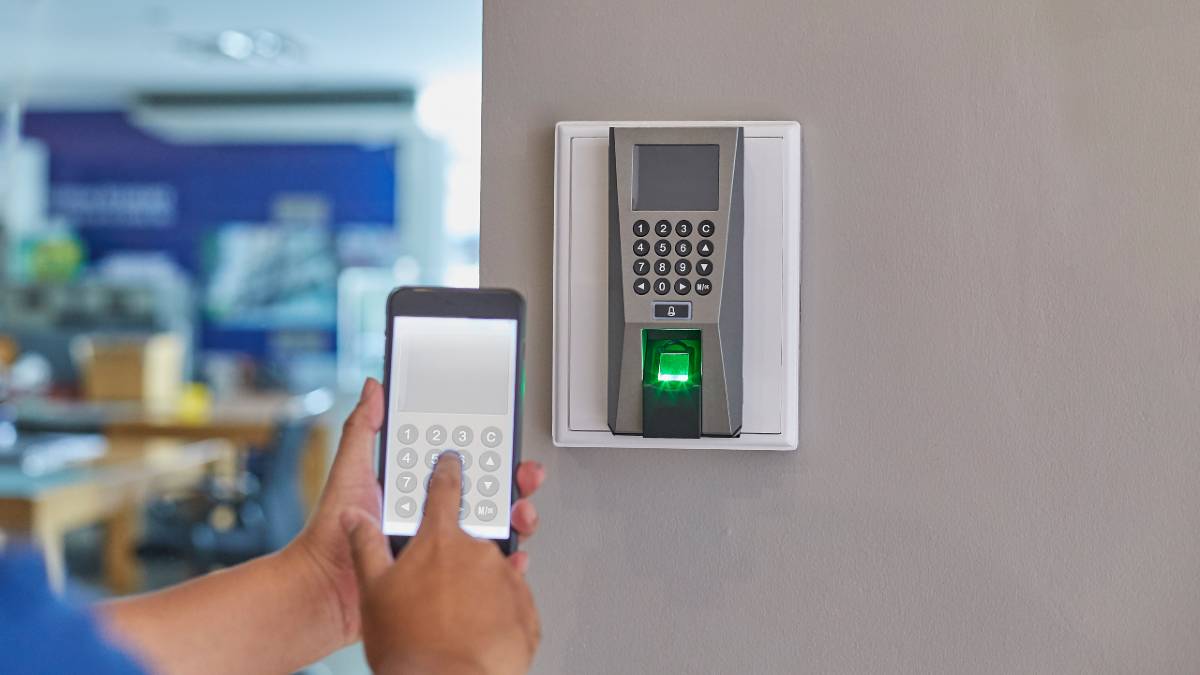
Covid-19 changed many paradigms in society and access protocols were no exception. Now people don't want to touch anything to check in, enter or leave buildings.
by Rogério Coradini*
The COVID-19 contingency was the starting point for multiple changes in all spheres of society, and access protocols were no exception. Now people don't want to touch anything to check in, enter or leave buildings.
On account of the pandemic, security chiefs and IT managers began to look for technologies that would allow them to comply with biosecurity standards and at the same time ensure secure access control for their employees and visitors. In this way, contactless solutions, new and existing, began to gain prominence in companies of all industries.
However, this paradigm shift also represented an unrepeatable opportunity for organizations: to turn biosecurity challenges into opportunities to update their access control systems.
Security and IT professionals struggle every day to provide a safe and comfortable experience for employees and visitors, although they do not always have the necessary technological resources to meet this objective. However, the pandemic pushed organizations to find solutions focused on this reality and modernize their systems.
While ensuring a safe return to workplaces had its own set of challenges, the ability to upgrade and modernize access control systems with contactless solutions made it possible to better combat threats and vulnerabilities stemming from an outdated technology infrastructure.
Contactless solutions and their benefits
Some of the modern technologies for contactless access stand out in automatic, revolving or sliding doors, which undoubtedly help to reduce contact at the entry and exit points of the different spaces. In addition, these elements can be integrated with non-contact credentials and readers to decrease surface contamination.
It is important to clarify that contactless technology covers both mobile and physical identifications – it should be remembered that a physical credential is personal and non-transferable, so it also fulfills this contactless function.
On the other hand, there are readers with long-range capability that take advantage of Bluetooth Low Energy (BLE) connections to offer remote reading performance. Thanks to this quality, BLE technology can further distance employees who would otherwise have to crowd around readers and doors.
The updated systems also allow for more hygienic protocols. For example: they can send credentials to any authorized device, anywhere, allowing employees and visitors to receive a credential without face-to-face interaction.
Regarding the issuance of physical credentials, it is worth highlighting an interesting trend that is being presented: it is the use of cloud-based card issuance platforms, which eliminate the need to visit a crowded issuance center; cards can be designed and sent from any office or campus, on any device, via a web interface.
These credentials can also be used to access networked computers, free up print jobs, and pay at vending machines. When combined with location services, they can even provide real-time building occupancy data to help with emergencies, as well as social distancing and contact tracing.
Mobile access is consolidated as a trend
IoT devices are increasingly being used in Latin America. According to Statista studies, this technology will reach 995.6 million units by 2023. This data provider also predicted that by 2025 IoT connections in Latin territory will be around 1,200 million.
In this context, where practically every citizen has a smartphone (some even have two), mobile access has been consolidating for several years as a significant trend in the different verticals of the continent.
Users simply press their smartphone to contactless access doors, buildings, and everything inside: from attendance control terminals to printers, computers, and workstations.
This technology also represents greater security, more adaptability to future developments thanks to greater possibilities of updating and better reading ranges.
Update, just around the corner
On the upgrade process, the region is going through a transition stage in which it is still extracting all the main benefits of using smart cards (Seos®), while opening the door to the future: mobile access control solutions.
While the industry recognizes the benefits of the digital age, many organizations evolve gradually from physical control. For this purpose, the market increasingly needs solutions that allow them to connect both worlds.
As for access control, this refers to readers who have the ability to operate all the different technologies used in the region: from 125 kHz proximity credentials to more advanced technologies such as Mifare®, iClass® and Seos.
Ultimately, the pandemic has catalyzed the knowledge and adoption of many contactless solutions, both new and existing, and the dedicated response from security professionals has been impressive. It is a reflection of the industry's ongoing commitment to continuously evolve and innovate to meet the ever-changing safety and security demands of modern times.
* Rogério Coradini, sales director of Physical Access Control Systems for Latin America and the Caribbean at HID Global.