 Do you want to design robust video surveillance systems? Get closer to multi-brand compatibility.
by Israel Austria*
In a market as competitive as today," it is practically an obligation for integrators to offer creative and varied solutions that fit the technological and economic needs of the client.
Years ago, it was normal to think that hiring a single supplier for all the solutions of a video surveillance system was a good alternative, because it reduced communication to a single person or manufacturer and ensured the functionality of all the components of the system.
This may still have an iota of validity in small installations, but the reality is that today, with the arrival of IP technology, protocols and open platforms, large projects – which by the way are those that position an integrator – are nourished by devices from different manufacturers.
This way of integrating represents a breakthrough for the industry. In principle because it is difficult for a single manufacturer to own the entire portfolio of solutions; in addition, because having more options will have greater possibilities to optimize resources and time, both for the installer and for the end user.
Open protocols
One of the best options that the current market has to work robust systems with solutions of different brands are open standards or protocols, since these guarantee the basic function of the device and can reduce the complexity and costs of surveillance facilities.
Thus, in 2008, camera manufacturers (Axis, Bosch and Sony specifically) created the ONVIF (Open Network Video Interface Forum) protocol, an open standard that provides interoperability between IP security devices such as cameras, video recorders, software and access control systems.
Although there was already an option called PSIA, which basically has the same principle of compatibility as ONVIF, it was the latter standard that took the lead in the industry and was adopted by most manufacturers.
Thanks to the availability of the ONVIF and PSIA standards, the basic levels of integration between hardware and software increase, which makes it easier to implement a system with IP video.
Hardware manufacturers, software vendors, and integrators can now focus more strongly on developing products and services to increase the value they offer their customers, because as long as software and devices are coupled to protocols such as ONVIF, the minimum function of a video surveillance system can be ensured: the video.
That said, it is important to note that being a generic standard, the protocol may not be compatible with some advanced functions of IP cameras or it will take some time for the new functions to be integrated into the standard, restricting the use of certain technologies.
In addition to offering video, the cameras have endless functionalities that represent an added value for customers: people counting analytics, such as access control elements, facial recognition, alarms, presence detectors and even commands as particular as shaking a camera in cases of rain.
In short, there are many examples where the manufacturer wants that in addition to the video, the equipment fulfills another mechanical or software function. Hence, the limitation we have with the protocols (call it ONVIF and PSIA) is that it will not have the ability to take advantage of, be compatible or understand those specific functionalities.
This, it could be said, goes against the trend of smart cameras, which allow the installation of downloadable applications, which gives the possibility of configuring dynamic systems with changing functionalities, according to the needs of each project.
In search of perfect interoperability
The entirety of the functions of a specific camera model, which has functions that are not covered by the ONVIF or PSIA standards, can only be leveraged using an optimized controller.
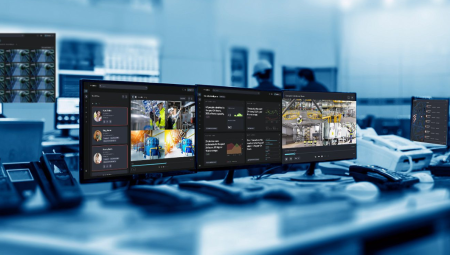
When a video management software (VMS) offers support to a camera, it means that it has programmed an optimized driver that allows the deployment of all the most important functions of a camera or other hardware device so that it can be fully managed with its software.
Naturally, the more manufacturers and devices have compatibility with the VMS, the greater the alternatives to offer the customer in a video surveillance project; a very important aspect to achieve maximum interoperability, efficiency and stability of a system.
Although it is difficult for software creators to keep up with all hardware manufacturers, there are companies that are dedicated to developing open management platforms that allow the convergence of all these technologies. This is possible thanks to alliances with different manufacturers for the development of drivers and controllers that ensure the compatibility of software and hardware.
An example of this industry dynamic is the Milestone Systems platform, which currently offers compatibility with more than 8,000 devices from 150 different manufacturers, a number that grows every year thanks to the strong relationship it has established with its solution manufacturing partners, giving way to driver packages that aim to keep the platform updated with respect to new models and functions of cameras and other devices. that are coming to market.
Well, I hope you liked this article. If you have doubts or questions write to my email: [email protected]
* By Israel Austria, Milestone Systems Solutions Engineer for Latin America.