 Real-time location systems (RTLS), invented in the late 90s, continue to evolve, both in their applications and in the technology with which they work.
By Mohsen Hekmatyar*
There is a growing need to track objects and people within a given building or geographic area in real time. Through the use of radio frequency (RF) or wireless technology and a system of active or passive tags, it is already possible to locate people or assets when necessary.
Establishing which type of RTLS system is best in a given situation depends largely on the value of the asset in question and the purpose for which the tracking is performed. For example, we perceive very differently the value of a paper towel stowage and a laptop that contains highly confidential information. Therefore, we implement different procedures to track both objects.
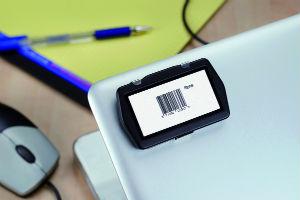
An active ID tag, applied to the laptop, tells us not only where it is within the tracking area, but also whether someone is trying to remove the tag to try to steal it. Although paper towels have a monetary value, they constitute an asset in a much lower risk situation than that of the laptop, therefore, it is possible to track the stowage less expensive using a passive label.
What needs to be taken into account when personal safety is at stake, as is often the case in an educational or hospital facility? In such situations, it is necessary to apply an even higher set of standards than those used to protect assets that are tracked with active radio frequency identification (RFID) technology.
Here are five best practices for implementing an RTLS system, which has an impact on personal safety, in educational facilities:
1. Make sure you have a specialized, highly available network
Every second is critical in situations that compromise personal safety. The various shootings that have recently taken place in educational facilities and that have left as a tragic result the loss of several lives remind us that every second counts. When implementing an RTLS system to track the whereabouts of a teacher in crisis or a nurse in distress, it is critical to have a specialized, highly available network.
A specialized, highly available network ensures that information is reliably transmitted at all times, without the interference of data from non-urgent activities. The network channels information that comes from different departments and devices, including RTLS tags. If all the data is running on the same network, a teacher who is downloading video for a class may be on the same network that is serving the RTLS system. Overloading the network with data from various competing sources for access can lead to a crash, as a result of which there is a delay in the transmission of critical and urgent data. Any delay in transmission can profoundly affect the outcome of emergency situations, such as when a teacher presses a panic button and that information is needed to locate her immediately.
2. Invest in a multi-application platform
Although at first a school or hospital may decide that they are only interested in tracking physical assets, over time their interest may expand to include tracking people through RFID credentials or security systems with an RTLS component. For long-term planning it is advisable to select a system that offers the possibility of incorporating applications as needed, in order to save time and costs.
Investing from the get-go in a multi-application platform would allow a facility to strengthen existing infrastructure. Having multiple vendors with different system configurations can cause interference between systems and represent additional costs and expenses. Instead of acquiring two separate systems that may interfere with each other in the network or require proprietary configurations, making an initial investment in a multi-application platform will allow, for example, a hospital to implement a child monitoring program in its psychiatric patient tracking system.
Similarly, schools have several asset tracking needs (computer tags, coercion buttons, even temperature tracking in cafeteria refrigerators) that can be met over time. Having a multi-application platform can help the educational institution avoid investing in several individual servers and redundant infrastructure.
3. Provide integration and interoperability with third-party systems
The preservation of personal safety and security is the most important thing about applications in educational facilities. The system must work with different communications, not only through the conventional workstation. In the event of an emergency, security personnel want to have the ability to track people and even property through their mobile devices and offer messaging services through various technologies, including text messaging, pagers, intercoms, and email. The system must be designed to support this level of interoperability
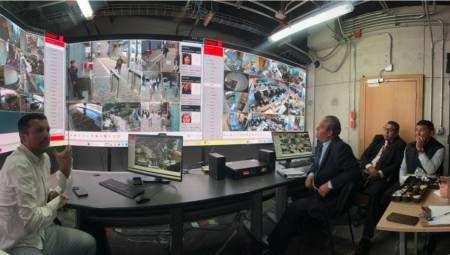
In addition, video integration becomes important, especially when you are tracking a person who is in a situation of coercion. Having the ability to receive an emergency call, locate that person, and then have the built-in security camera show their location and current situation is a fundamental part of a personal safety preservation system. Another application in which the system requires the integration of video is when it is used as a tool to carry out a post-incident analysis, for judicial purposes.
4. Ensure indoor and outdoor functionality
Incidents that compromise personal safety can occur outside the confines of a building that is equipped for RTLS tracking. Educational and hospital facilities have outdoor spaces, such as playing fields, parking lots, courtyards and paths between buildings, all of which require protection. Having a functional system in outdoor spaces is important to expand the protection capacity of personal safety. Choose a system that doesn't rely exclusively on a technology that can limit its outdoor functionality.
All components of the RTLS system must be designed to withstand the characteristic elements of a geographical area, such as extreme cold and snow or high humidity, heat and rain.
There must also be a guarantee that the infrastructure will support the system when power outages occur, which may involve the installation of solar power or microwave towers instead of a wired system.
Educational facilities are usually characterized by an open and spacious design. The RTLS system must be able to work with its own invisible perimeter, rather than actual physical barriers, or help minimize the number of barriers needed.
5. Support meeting stations for emergency situations
When an emergency occurs, building occupants are required to gather at a designated area, known as a meeting point, so first responders know who, or at least how many people, are still at risk inside the building.
An RTLS system should support emergency responses, offering the ability to report individuals on the property. In a school, each teacher can be provided with an RTLS-enabled credential, which allows system operators to quickly record the teacher's arrival at the meeting point. Teachers can also reach out with students, allowing the system to identify and receive alerts about all individuals at the station. Once safe at the meeting point, the teacher can inform the rescuers about a missing person.
The costs involved in providing each person with an RTLS-enabled credential can be met if an institution uses RTLS for different purposes, such as access control, or if it uses it in conjunction with a point-of-sale system for food.
As uses of RTLS increase (such as tracking students attending after-school programs), the advantages of investing in an RTLS system become more apparent.
If privacy concerns or complaints about continuous tracking arise, it is possible to select RTLS systems with regular tracking blocking options and instead use them only in the event of an emergency.
As the evolution of RTLS systems continues, thanks to technological advances, the analysis of these best practices will help in the selection of the ideal RTLS to preserve safety and personal integrity.
*Mohsen Hekmatyar is the Sales Director of Elpas, a technology provider for real-time location systems. Elpas is one of the brands of Tyco Security Products. For more information on Elpas' RTLS solution offering in Latin America, contact Pedro Pires at the [email protected] .