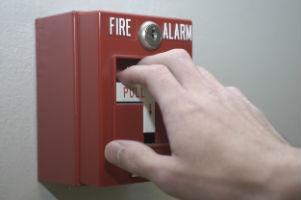
 We call false alarm the emergency indication of a subscriber when it does not exist. Many times an alarm can be identified as AF avoiding dispatch of the emergency to the enforcement authority.
by Modesto Miguez CPP*
The negative consequences of a false alarm can be:
* Death of individuals in traffic accidents, as a result of the urgency in the displacements of police mobiles in response to false alarms dispatched.
* Death of police personnel when facing the criminal act demanded, as a result of the habituation and overconfidence caused by repeated false alarms.
* Lack of availability of mobile and male state resources to cover real requirements of society, as they are attending so many dispatches due to false alarms.
* Squandering of the human and material resources of the state, especially of the Police.
* Disbelief in the reliability of the alarm system, with the consequent increase in the feeling of insecurity of the citizen and the discredit of the provider company (loss of subscribers).
* Increased costs in human and material resources for the lending company (more than U$S 50,000 per year per 1,000 subscribers).
How to avoid them?
Only when the causes are investigated thoroughly will it be possible to draw some conclusions and verify that each case is particular but that they all agree on two common denominators: The lack of "training" and "clear rules".
Both the first and the second must apply primarily to natural persons. Then each company must be responsible for the training, training and care of its staff and if not it does abide by the consequences.
Regarding the rules: if the objective is to design a compliant regulation that allows to really reduce the amount of False Alarms (FA), we must act on the people and not on the devices.
Some entities with old theories assign responsibility to the devices or equipment and say that the solution is to use approved equipment. They are the same ones who to justify some FA claim "technical failure", of course the team can not defend itself.
So: Why is the homologation of the equipment NOT necessary? First of all, it must be understood that problems and FAs are not caused by systems but by people, so responsibility for malfunction cannot be attributed to an apparatus but to those who inappropriately design, install or use it.
On the other hand, it is proven that a low-cost system with few features and even low quality, but installed with knowledge and using it responsibly, knowing the care and limitations of the system, will provide excellent results with a very low rate of AF.
On the contrary, an expensive system of the latest technology imported from the first brand ("approved") and with multiple features that is designed, programmed, installed or used inappropriately will be a source of problems, FA and will not provide the expected security.
It is the responsible technician who must choose the most appropriate system and technology for an electronic security system and may be restricted in your project if you can only choose your design within a limited list.
At present the enormous number of models and brands, the boom in technological development make the electronic security industry in the world today has a very difficult dynamic to accompany. It is practically impossible for a regulatory body to keep an updated list of approved equipment with the speed that the market requires.
The dynamics in the production of large-scale systems have allowed a significant reduction in costs allowing access to "security" to families who otherwise could not.
The "homologation of equipment" inevitably produces increases in costs that will be unfailingly transferred to users making a system inaccessible to many people who demand security.
We must accept that security is an inescapable obligation of the State and if it does not reach the people have the right to seek it in the private sphere. The state should not then block access to security for low-income families with its actions, but on the contrary, favor them.
Conclusion
With the obligation to homologate systems, the problem of AF is not solved and the population is reduced security. To solve the problem of AF excesses, the causes and levels of responsibility of the parties involved must first be known.
First level of responsibility
The user: It is the main responsible for security, who decides to hire and also the first FA generator, namely:
* Unannounced testing.
* Simulation to "measure how long it takes" the response of the Police.
* Poorly closed windows that produce false shots in infrared detectors.
* Loose pets.
* Drafts from broken glass or poorly closed openings.
* Give the keys to people who do not know the use of the systems.
*Multiple other causes that would be too long to list.
In general, the main cause of AF is the carelessness and disinterest on the part of the user in the responsible use of the alarm system. It is he who must "suffer" the first sanction but these must be done as simple calls for attention in the first repetitions so that the causes can be identified and corrected progressively, also the system of sanctions must contemplate that excessive repetitions are severely penalized.
It should be clarified that it is impossible to avoid the occurrence of AF, but if the repetitions can be reduced if things are done well. That is why emphasis should be placed on increasing sanctions very severely the greater the repetitions.
It is proven worldwide that the methodology of increasing sanctions proportional to the number of REPETITIONS of FA is the only thing that allows reasonable access to the availability of police mobiles. It is proven that "the most sensitive organ of the Human is the pocket".
Second level
The technician responsible for installation and maintenance. You must have the necessary knowledge and be enrolled because:
1. Learn about best practices for installation (IRAM 4175). The immediate application will be for the new alarms, for the old facilities it will be gradual and must adapt them as the first FAs are produced.
2. You must correctly advise and train the user regarding the correct use of the system and the precautions that must be taken into account in order not to produce FA.
3. You must perform the installations in such a way that allows the EC to perform false alarm filtering procedures.
4. It is the one who must inform the regulatory body and the EC of the causes of all the FAs that mobilized the Police unnecessarily.
5. You will receive warnings or even lose your tuition if you have an excessive amount of FA.
Third level
The remote control center (central station). It must be registered in a register of qualified companies.
Minimum technical requirements:
1. Comply with IRAM 4174
2. Perform any procedure or protocol that serves to avoid giving false notice to the authority.
3. Inform what is the phone number by which you will call 911 to give the verified alarm notice.
4. Have a technical manager.
5. They will not be able to retain the warning of a confirmed alarm longer than necessary to perform any authorized protocol for the recognition of alarms.
Fourth level
The State:
* No call from automatic dialers will be accepted.
* Each call request for police mobile for alarm assistance will only be taken into account if it comes from a company enabled and identified by the telephone number from which you call.
* If the call comes from an unregistered number, the information will be requested at the time of the caller and from where he calls, then an investigation procedure will be initiated to determine who is the one calling 911 and if it is an unregistered company, this will be severely sanctioned.
* A correct compliance with the previous point must be ensured without exceptions otherwise the companies will not be enabled and will continue to resort to the police to assist FA.
* The response of mobile phones with armed personnel or for alarm verification should not be authorized. Such private mobiles may only attend the place where the alarm originated in order to provide technical support, make a technical repair or instruct the user, but under no circumstances to replace the force of the state or repress "on their own" an alleged criminal,
* It will keep a record of each FA with the date of production, identifying the User with the user's name, ID, address, registration of the responsible technician and a unique and unrepeatable order number Eg: municipal departure number.
* If the responsible technician is unsubscribed, the users in his charge automatically stop receiving assistance until another technician is responsible for the operation of those users.
All technicians must have an enabling registration, for this at least take an exam where they demonstrate knowledge of the IRAM 4175 standard.
* Of the remote control centers (EC), Compliance with IRAM 4174 standard, Certificate of non-recidivism of the person in charge, Complete secondary electrical technician, electronic or related of the technical manager. This person in charge must know the related IRAM standards and protocols for filtering false alarms.
* Dear reader, writing to [email protected] I will gladly answer your doubts or discrepancies about the opinions expressed in this article.