 For centuries we have had the dream of being able to live with smart devices. Michelangelo, Jules Verne, and many other great thinkers had this vision, but it preceded the technology of their time. With Moore's law and all that we have developed, isn't it time for this dream to come true?
By Martin Gren*
After many false beginnings, the smart home is slowly emerging and, although we do not have the insightful refrigerator of the Jetsons, we have for example automatic thermostats to stipulate our preferences in the home and control heating and cooling.
Another example: I have had my automatic lawn mower for more than ten years, but while I am a happy user, technology is still not very common in this regard.
In the electronic security industry, the responsibilities of the security guard have remained more or less the same, because technology cannot match the skills of the human brain.
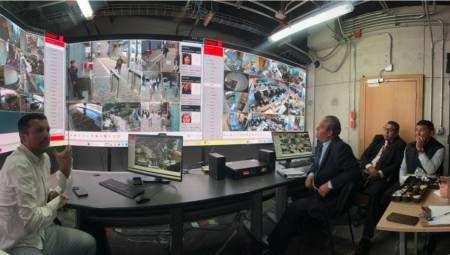
But advances in camera technology and software are increasing the efficiency of security guards since, for example, they can monitor by video from smartphones or tablets; on the other hand, cameras currently proactively send alerts; and this is just the beginning.
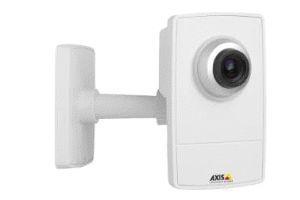
Network cameras, based on IP, are not restricted to low image resolution like analog ones. With HDTV cameras you can achieve much more video detail, such as the HD TV you can have in your living room.
But to this day we have gone a little further from the concept "more pixels is better" and we are focused on delivering greater image usability in all light scenarios and environments. Thanks to better processing power and the incorporation of software in the camera, IP cameras are entering the market with increasingly better sensitivity to light.
There has been so much talk about advanced analytics that people tend to forget the value of basic analytics. After all, what is the value of a camera when someone has covered the lens with gum, lipstick, or spray paint?
With two-way communication, network cameras can send alerts to operators about tampering or other failures. In the same way, we see that it increasingly improves motion detection and today it can be expected that it does not generate false triggers as it happened previously, caused by the turning on and off of the lights.
With thermal network cameras, people and animals can be detected with high precision in places where it is supposed to be impossible, allowing the technology to make an ideal combination with analytics.
Network cameras communicate in both directions, providing the ability to be integrated with other devices such as access control, points of sale and more.
With the intelligence and best processing power of cameras, embedded applications such as peoplecounting, cross line detection and advanced video motiondetection can now be used; and even more, advanced applications that were previously only possible with a server or dedicated computer, such as license recognition, facial recognition, and full VMS suites.
I think we're going to see more applications emerge in the coming years as more software developers start using open camera platforms as their new playground.
Let's hope that all of these technological trends will change our society to make a smarter and safer world. The great thinkers of the past would be proud of what we have accomplished, but they would be envious of not having access to this advanced technology. Some of them would surely have been extraordinary software developers today.
* Martin Gren is Co-founder of Axis Communications, a leading network video market company, Axis is leading the way towards a smarter, safer, safer way in the world – driving the shift from analog to digital video surveillance. Offering network video solutions for professional installations, Axis products and solutions are based on an innovative open technology platform. Axis has more than 1,000 dedicated employees in 40 countries around the world and collaborates with partners covering 179 countries. Founded in 1984, Axis is a Sweden-based IT company listed on NASDAQ OMX Stockholm under the name AXIS. For more information about Axis, visit the www.axis.com