

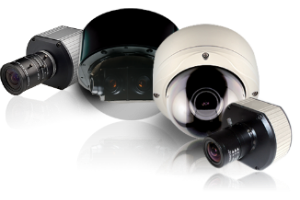
 High-definition resolution and megapixel are not at all the same. Below we will see some of the considerations that we must have in this regard.
by Raúl Calderón*
The popularity of IP-based video systems continues to grow widely in the video surveillance market and one of the advantages it offers is the ability to capture high-resolution images by means of megapixel video. The use of HDTV standards, which is widely used in the consumer video market, is also booming.
The images produced by this new generation of cameras are often collectively referred to as high-definition (HD) or megapixel images. Since the terms HD and megapixel indicate a higher level of performance in imaging compared to traditional analog images, they are very often thought to be exactly the same. But there is a difference.
In fact, HD broadcast (or consumer) resolution should not be considered the objective in video surveillance. Megapixel cameras offer a higher resolution than HD broadcast resolution, and this deserves an explanation.
Megapixel vs. HD
HD resolution could be considered a subset of megapixel. HD is defined by specific resolutions at frame rates with a specific aspect ratio. Any camera with a resolution of more than one million pixels is by definition a megapixel camera. The lowest resolution of the megapixel range in the security market is approximately 1.3 megapixels, which provides a resolution of 1280 x 1024 pixels (or 1.3 million pixels), and can reach resolutions of up to 10 megapixels (3,648 x 2,752 pixels).
The range of megapixel cameras continues to expand to suit the requirements of various applications. For example, Arecont Vision has expanded its range of megapixel cameras to include 1.3, 1080p, 2, 3, 5, 8 and 10 megapixel products, and will soon include 20-megapixel solutions.
HD refers to cameras with a standardized resolution of 720p or 1080p. The numbers 720 and 1080 indicate the horizontal resolution. Thus, the 720p HD camera resolution provides images of 1280 x 720 pixels (921,600 pixels, not megapixel), and 1080p HD cameras provide a resolution of 1920 x 1080 pixels, or 2.1 megapixels. The HD video format also uses an aspect ratio of 16:9 (instead of 5:4 or 4:3) and the frame rate is standardized to 60, 50, 30 or 25 fps (depending on the TV).
IP video systems are booming
According to a report by TechNavio Insights, IP surveillance is going to grow considerably among end users and large organizations. The advantages of software-controlled functionality and control, scalability, and wide video availability are often seen as contributing factors to this growth.
However, among the most prominent performance features of IP surveillance is the ability to provide a wide range of video resolutions. With H.264 compression and programmable resolutions and streaming, the new standard for video resolution can be defined simply as "everything the application demands". With IP/megapixel video, cameras assigned to cover critical areas can now capture any level of resolution up to 10 megapixel images (3,648 x 2,752 pixels, almost five times the resolution of a 1080p camera).
Thanks to the ability to adjust current megapixel cameras to specific surveillance locations in different resolutions, cameras of different resolutions can be combined on the same network. In this way, the main areas can be viewed and recorded with a higher resolution quality, while the secondary areas are viewed at lower resolution and at slower frame rates.
Video analytics can also be applied to enable megapixel streaming only when it is automatically activated. Thanks to this method, valuable bandwidth is conserved to optimize existing network connections and recorder storage space.
The superior resolution provided by megapixel cameras also allows system designers to use fewer cameras to cover larger areas without losing detail, reducing infrastructure and cabling costs. In addition to reducing the initial installation costs of a system, these advantages directly translate into a higher return on investment (ROI) and reduce the total cost of ownership.
The performance versatility of the resolution is just one of the advantages of IP megapixel video. Another factor contributing to the rapid rise of megapixel imaging technology is the ease of connecting the system to the network. Previously, each and every camera had to have a unique coaxial cable directly connected to the recorder, which increased wiring costs exponentially.
However, the network infrastructure allows the connection of several cameras with fewer cables, and the use of Power-over-Ethernet (PoE) even allows to supply power to the cameras through the same CAT-5 cables that are used to transmit video and control signals (instead of having to have localized power or a distributed power supply). It is a very efficient and simple installation solution.
In addition, the superior resolution provided by megapixel cameras allows you to use highly detailed and accurate digital PTZ (swivel, tilt and zoom) functions on live or recorded images. As a result, megapixel cameras virtually eliminate the need for mechanical PTZ cameras, which are often expensive and have mechanical parts prone to breakdown.
Many integrators (and users) have a false perception that megapixel IP systems are too difficult to implement. It is true that these systems are not "plug-and-play" in the traditional sense, but partnerships between camera vendors such as Arecont Vision and various DVR and VMS vendors have paved the way for simplified integration of systems that fit the definition of "plug-and-play" into an IP network.
Standards initiatives such as PSIA and ONVIF make the possibility of plug-and-play with little programming or no programming at all increasing. In addition, there is a wide range of megapixel cameras currently available with selectable resolution and frame rates suitable for general surveillance applications. These options provide system designers with a high level of flexibility and confidence in their designs.
The move to megapixel technology
Advances related to H.264 video compression allow the bandwidth and storage requirements of megapixel images in IP-based systems to be comparable to those of standard resolution images. Megapixel cameras are also comparable in price to standard resolution cameras.
When the possibility of using fewer megapixel cameras to cover larger areas than analog cameras is raised, the result will be corresponding savings in infrastructure and labor costs. All these reasons make IMS Research foresee a significant increase in the installation of network video surveillance systems and that more than half of the network cameras supplied in 2014 will be high definition or megapixel resolution.
Whether you prefer megapixel cameras or their HD subset according to your specific needs, today's wide range of high-resolution cameras provides a powerful range of imaging tools for industry professionals. It is clear that the best systems are a direct result of the superior quality image capture made possible by these high-resolution camera technologies.
*Raúl Calderón is the Senior Vice President of Marketing for Arecont Vision.









Hola Roberto, como lo indica el autor, "la resolución HD broadcast (o de consumo) no se debe considerar el objetivo en la videovigilancia. Las cámaras megapíxel ofrecen una resolución superior a la resolución HD broadcast, y esto merece una explicación".
Es decir que sugiere considerar con mayor relevancia el número de megapixeles en una cámara por encima de la resolución HD.
Saludos.