
 Many will not yet know what the four letters mean, but I must tell you that it is the buzzword in most large new or existing construction projects.
By Germán Alexis Cortés H.
Obtaining LEED certification involves applying design and construction strategies that reduce or eliminate the negative impact of buildings on the environment and its occupants, to make the project sustainable. It is talking about the same issue of green construction, of modern and efficient buildings, of human awareness about the future of our planet and its current resources.
The Electronic Security Guild, to which you already belong, helps to obtain a good amount of points to achieve certification. When implementing an integrated safety system, many of the recommendations required for LEED Certification (Leadership in Energy and Environmental Design) must be met.
The certification is divided into 6 groups of topics: Sustainable Sites, Water Use Efficiency, Energy and Energy Saving, Indoor Environment Quality, Materials and Resources, and Innovation in Design.
Each group has requirements that must be met in the project and contributes points, which when added together give the final score. Out of 69 total points, electronic system networks can contribute almost 40%.
Within the policies of the US Green Building Council, to obtain a basic LEED certification, at least 26 points must be added. If you pass 33 you receive the Silver certification, with 39 points you get the Gold certification and from 51 onwards the project is certified as Platinum.
The certification is valid for new and existing projects. However, it is obvious that it will be much easier to achieve a certification of this type in a new project, where you must plan from the same design, the efficiency of your spaces and systems.
In a project already built, significant changes must be made to adapt a structure designed in the last century, to the new trends in efficiency, energy care and the environment.
The topic follows the logical trend of convergence of electronic subsystems supported on a data network. After all, a long time ago the massive telecommunications companies accustomed us to the fact that the same pair of copper cables can easily and efficiently coexist with telephone signals, data, television, audio and related services.
So the first thing you should think about is that the security guild, the control guild and the IT guild, must work more and more together, therefore the word Integration must be very familiar. Then you should get rid of the notion of a traditional closed security system and open your mind to the possibility of interaction with multiple professionals, who do different things, but who all have a concept in common: Technological Efficiency.
If you decide to participate in a project that aims at LEED certification, you must start learning about efficiency, energy savings, types of lighting, automated control, effective water management, air conditioning control, bioclimate, sustainable architecture and a thousand details that perhaps you never thought of or that you thought corresponded to another professional.
Now you have a lot to do with this. The elements of electronic security support the work of each design and gradually become confused with computer networks and control.
Let's review, then, how electronic security subsystems can be involved in each LEED group.
* Sustainable Sites: Perimeter protection of the property. Light sensors and outdoor lighting control.
* Water use efficiency: Flood sensors and rainwater control. Measurement of water consumption.
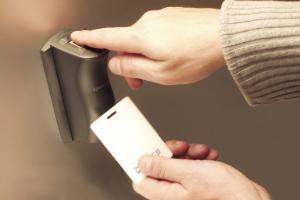
* Energy and Atmosphere: Control and Monitoring of all energy. Additional review of the building's basic systems. Measurement of energy consumption. Automation of lighting and air conditioning through presence or access control systems.
Cable savings and PoE usage. Energy management through scenarios and timers. HVAC control. CO2 detection. Control and management over the efficient operation and operation of income, expenses and permanence on site.
Temperature Control in conjunction with access and video surveillance systems. Integration of subsystems under a general control software. Supervision, Commissioning and training of all subsystems.
* Indoor Environment Quality: Digital climate monitoring. Door status monitoring allowing access or denying it. Supervision of main and secondary income, through alarms. Supervision of internal risks such as fire, flood and intrusion. Energy adjustment through lighting and temperature variables. Registration of income, expenses and permanence of regulars or visitors.
* Materials and resources: Locally purchased equipment and infrastructure.
* Innovative Design: Strategic planning of a group of subsystems that significantly improve the internal operation and the level of safety and comfort. Ambient sound systems and digital signage, without noise pollution. Flexible design. Long-term event log.
As we can see, all subsystems that are normally involved in an Electronic Security design fulfill important functions in LEED certification.
A project manager who aims to become LEED certified, the first thing he should do is surround himself with highly trained and experienced professionals, where he can not leave out the Electronic Engineer who will provide a good part of the expected compliance.
The methodology of planning for 70% and executing at the fixed rate at only 30%, is perfectly reflected in a project that wants to be LEED certified.
The topic is very broad and exciting, but we do not have enough time and space at the moment to show it in detail. I suggest you research, learn and analyze much more of the subject.
Remember that there is a world out there much bigger than you imagine and that many more opportunities are waiting for you where you can show how much you are worth.
To contact the author write to [email protected]