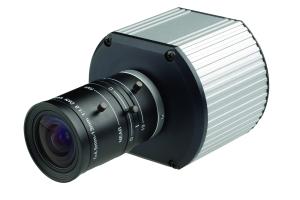
 As security and network video surveillance systems gain traction, so has the use of megapixel cameras for generic applications.Raul Calderon*
The latest generation of Megapixel cameras is demonstrating better cost-effectiveness and better video performance. A few years ago, and due to technological limitations related to bandwidth and storage, Megapixel resolution video was used only for specialized applications. However, there is now a great commercial interest in Megapixel technology, for any type of application thanks to optimal efficiency, which also corresponds to a wide reduction in costs. As a result, Megapixel cameras today are changing the process by which video surveillance systems are specified, executed, and justified.
Let's take a look at the ways in which Megapixels and IP technologies can be combined to achieve affordable systems:
* Megapixel cameras can improve functionality and reduce costs. Networked systems now allow the implementation of Megapixel cameras, which offer image technology and functionality far superior to analog cameras. A single Megapixel camera can typically be used instead of conventional analog or multiple standard definition cameras. Fewer cameras means fewer cables, less software licensing costs, as well as lower installation costs.
The use of these Megapixel cameras can take the place of PTZ devices; users can rotate, tilt or magnify the image digitally in real time while getting a full recording of the field of view. Archived videos can provide 4 to 30 times more accurate detail than standard definition cameras, depending on the megapixel resolution chosen. Overall, Megapixel cameras provide a higher return on investment (ROI) than conventional cameras in the long term and, in many cases, even in the short term.
* Standardized IT-based components. Megapixel-based IP video systems are configured using the same concepts as IT systems, including servers, network switches, digital storage, etc. This allows Megapixel cameras to be easily integrated with other video surveillance and security devices with extreme cost-effectiveness. The use of H.264 compression has reduced costs in relation to bandwidth, server CPU capacity and storage, which has allowed a reduction in the total cost of a Megapixel system.
Competition among suppliers has also led to lower prices and accelerated the development of new technologies to further improve product functionality. These trends have contributed to improving system performance while reducing overall costs.
* Software is taking a leadership role. Because the "brain" of IP video systems is in the software, it is much easier to upgrade a system once it is at full capacity. Software updates are available through simple online downloads and at a much more efficient price than changing a computer.
* Scalability provides greater flexibility. One of the biggest intrinsic advantages of networking is scalability. With an analog system, adding a camera or altering the location of a camera requires a lot of effort, labor and expense: from physically moving the camera, to installing new wiring from the headboard to the new location of the camera, installing a local power source and adding processing hardware, such as multiplexers and/or new DVRs.
With a Megapixel IP system, you can add or move a camera by simply mounting it and connecting it to a structured cable to distribute all the data and bidirectional current of the video. The configuration of additional cameras and the corresponding servers, as well as the storage of all this is managed by a video management system (VMS) from the user interface. In most cases an IP address is automatically assigned when the new network device is detected, and that's it.
* Ability to use existing infrastructure. Networked systems employing Megapixel IP surveillance cameras can often use existing infrastructure, either over the Internet, over WiFi, or over a corporate network. In any case, the existing network infrastructure helps to eliminate the need to create a parallel network only for the video surveillance system.
* Lower costs derived from wiring. Structured cabling, specifically CAT5/6, is less expensive than coaxial cabling. It weighs less, is much less bulky, and has a faster transmission speed. Wiring is also simplified by Power-over-Ethernet (PoE), when power is supplied to the cameras by the same cable used for video and data signals, thus eliminating the need for a separate power supply for the camera. As a result, there is no longer a need to provide localized power at each camera location, resulting in a significant reduction in labor, equipment and service costs.
* Intelligent systems are less expensive to operate (and easier to use). Networked systems with high-resolution Megapixel cameras, capable of capturing large amounts of data, are ideal for server-based video analysis, and basic for creating intelligent systems and improving overall security while simplifying operations. Megapixel cameras are the best option, when the tracking of large spaces is required while offering recorded information that allows us any subsequent action with a superior quality.
Paying staff to observe monitor panels, often with hundreds of cameras, is expensive and impractical. With Megapixel cameras, intelligent systems can do an optimal job of detecting changes in a video frame, based on user-defined parameters that automatically notify the right personnel. This allows fewer operators to be used (cost reduction) while better responding through the real-time benefits of IP video systems.
Overcoming misconceptions about megapixels
A productive debate about the business use of Megapixel Technology requires us to uncover some typical misconceptions about the technology. We can think of a few.
* Misconception: Megapixel cameras are too expensive. Comparing the price of a Megapixel camera with the price of an analog or standard IP camera is not everything. To compare apples with apples, you need to calculate the necessary resources and compare the total number of cameras, along with the total infrastructure needed to "hold" them. This approach to assessing costs clearly reveals the efficiency and cost savings of Megapixel cameras. In addition, it is also a cheaper possibility if we compare it with the Analog + Codec option and even with some VGA IP.
* Misconception: Megapixel video takes up too much bandwidth and storage. H.264 video compression has eliminated concerns about bandwidth and storage related to Megapixel video, and can reduce the costs of high-quality Megapixel resolution video system. The H.264 offers video quality equivalent to the well-known JPEG compression method.
The main difference between the two is that the H.264 allows a significant reduction in bandwidth while providing the same video quality. Reduced bandwidth translates into a lower cost of security installations. As a result, the requirements for network equipment and disk storage are reduced. H.264-based cameras produce smaller files, which means that the VMS server uses lower CPU capacity and gets higher system efficiency.
* Misconception: H.264 compression carries a "hidden cost". A common myth about H.264 is the so-called "hidden cost"," a mistaken belief that because the computational complexity of the H.264 encoder is high, the decoding resources needed must also be high, and even higher for Megapixel video. Actually, the opposite statement is correct: The H.264 actually requires less computing power to decompress files. The computational coding complexity of H.264 lies in the camera. In addition, the decompression of Megapixel H.264 video with VMS software is similar to JPEG.
Establishment of business arguments
A challenge for security professionals is to demonstrate the value of high-quality video to their company's executives, using management and security parameters that are specific to their company and industry. Expressing the technical capability and benefits of new technologies to the management of the company in terms of benefits is the main task of security professionals in today's corporate world. Knowledge is fundamental, both the knowledge of technologies and their capabilities, as well as the knowledge of how they can influence the profitability of the company.
When it comes to limitations on business spending, security professionals should carefully consider both the initial cost of new technologies and the expected ongoing expenses. Above all, one should focus on the value that technology can bring to their company. The technology can amortize your purchase price thanks to reduced costs or better efficiency such as superior image quality and better forensic information.
These technologies demonstrate their value by protecting business assets, improving loss prevention, defending against costly liability claims, and making simple security operations more efficient. Here are some suggestions for communicating with management about the cost of the system:
* Be specific with cost savings. Create a spreadsheet that compares the costs of a system that uses Megapixel cameras versus standard or analog IP cameras. Focus on the specific impact of using fewer cameras or eliminating the need for mechanical PTZ devices.
Consider all expenses, including saving on infrastructure, reducing the number of components (cameras, housings, cables), savings on installation and brackets, and savings from the operator. Prepare your case to present the benefits of technology in terms of operational advantages for the company, as well as the long-term total cost of ownership.
* Emphasize better image resolution They say that "a picture is worth a thousand words",and the modern equivalent could be "a Megapixel image is worth a million words". The quality of a Megapixel image is a great selling tool for technology. Viewing live and recorded Megapixel images is one of the best ways to exploit the commercial interest of the new system. Try comparing a recorded standard definition or analog image with a Megapixel image and zoom in on a portion of it to demonstrate the forensic utility of the video recorded in Megapixel.
The implementing regulation
Each customer's request and image quality expectations must correspond to the appropriate Megapixel camera. While a 5MP camera might be a great option in some projects, it's not necessarily ideal for all options. If an app requires a higher frame rate or different light sensitivity, for example, a 1.3MP camera, 2MP 3MP might be a better choice. Attention to application requirements and location expectations are important steps in choosing the right Megapixel camera. It's also critical to find an experienced installer or integrator.
Like all management personnel in today's economy, security professionals have to justify every penny spent on security. Although it is difficult to project the cost savings provided by greater security, in relation to the protection of assets and personnel, the return on investment capacity of the project in relation to the savings and efficiencies related to the use of Megapixel cameras compared to conventional imaging devices, it is easy to perceive. Therefore, we urged distributors and users to compare the overall performance advantages of Megapixel cameras and calculate the overall profitability they provide. The results could not have been clearer.
* Raúl Calderón is the Vice President of Marketing at Arecont Vision.