
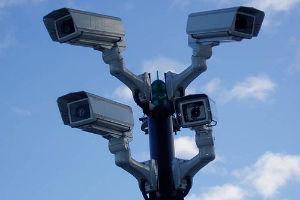
 With the growing importance that security has taken on, video surveillance has seen rapid growth over the past decade. While this market is currently dominated by analog solutions, IP surveillance is hot on their heels.
By: Vivotek
IP surveillance refers to the transmission of digital media over IP networks. Making use of digital and network communication technologies, this system offers the advantages of both fields. Digital technologies allow IP surveillance to offer superior video quality to analog CCTV systems. Audio and video compression techniques can be applied to reduce bandwidth and storage space requirements, and since data can be recorded on digital storage media, there is a substantial reduction in storage costs. Additionally, the data can be automatically analyzed to provide more useful information about some behaviors.
Networking technologies give IP surveillance the benefits of anytime, anywhere remote access as long as there is an Internet connection. IP surveillance systems can be easily expanded by connecting small systems together over IP networks, and can incorporate new technologies such as Power over Ethernet and Wireless LAN. Because they support open standard Internet protocols, IP surveillance systems are compatible with a company's existing network infrastructure.
Among these benefits, superior video quality, especially for megapixel technology, is the most important motivation that will encourage continued migration to IP.
Development of megapixel surveillance
Compared to other types of network cameras, megapixel cameras will have a stronger growth dynamic. Thus, networked megapixel cameras are expected to become the dominant trend in IP surveillance in the future.
Benefits of networked megapixels
* Wide coverage
The factors contributing to the explosive growth of networked megapixel cameras are their capabilities to offer wider coverage and exceptional detail. A 2-megapixel network camera can cover an area 6 times larger than a VGA network camera. With a 2-megapixel camera that compensates for 6 VGA cameras, installation costs can be substantially reduced.
* Exceptional detail
When monitoring an area, a megapixel camera offers superior image quality compared to a standard resolution camera. As illustrated below, in the comparison between a VGA image, 1.3MP and 2MP, the license plate in the 2MP image can be easily identified, but not in the case of VGA resolution. Thus, in applications where accurate identification is required, a megapixel camera image can provide detailed information that is obscure when using a VGA camera. The best number of pixels also demands the application of ePTZ, which will be studied later.
Megapixel Challenges
Although megapixel cameras possess amazing growth dynamics, bandwidth, storage, and CPU load issues must be solved before they actually spread.
* Bandwidth and storage requirements
During transmission, a megapixel image takes up much more bandwidth than a standard VGA image due to the large weight of the file. It also requires more storage space; as a result, customers have to expand their bandwidth and storage space, increasing installation costs.
* CPU load
Before transmission the image must be encoded in megapixels, and when it reaches the background PC or server, the CPU must decode and resize the image for live viewing. Due to the high number of pixels and the large size of the image, encoding and decoding can significantly increase the CPU load, leading to the possibility of system breakdown or system performance.
To fully counteract these problems, a total solution must be designed that involves managing bandwidth and CPU load. Some IP surveillance vendors solve these problems by touting the H.264 protocol, a compression technology that offers high bandwidth efficiency. However, this only solves part of the problem. With the H.264, the file size of an image in megapixels can be substantially reduced by 90% resulting in substantial bandwidth and storage savings. Unfortunately, the CPU load problem persists.
Real solutions with maximum value
An IP surveillance configuration includes network cameras on the interface and central administrator software on the background processor, with the connection of both parties by an IP network. Network cameras capture and encode the images and transmit them over the Internet in the form of video sequences. When the video streams are received by the central administrator software, they will be deployed to a device for live viewing and stored on a recording device. Video streams for live viewing must be decoded and scaled down to the appropriate size before they can be displayed, thus increasing the CPU load.
New technologies include image cropping and ePTZ to simplify image capture, H.264 compression for encoding, and adaptive sequencing of activities and multiple sequences for simultaneous video transmission. Additionally, on-board storage is added to the camera for more efficient data storage.
* Crop images
In many cases, the images from the camera end up containing a lot of unnecessary details, such as fixed backgrounds. Therefore, it can be a waste of bandwidth and storage space to transmit the entire view in megapixel resolution with the data redundant. The image cropping functionality allows users to crop unnecessary information and simply stream video from the white region for viewing or storage. As a result, bandwidth and storage requirements, as well as CPU load, can be substantially reduced.
* ePTZ
ePTZ, also known as electronic pan/tilt/zoom, allows users to select a target region for close-up shots by simply clicking on the camera's video signal on their screen. By simply encoding and transmitting the image from the target region rather than the entire image in megapixel resolution, ePTZ enables greater efficiency in bandwidth usage and CPU management. The electronic pan/tilt/zoom function also prevents the megapixel camera from suffering mechanical wear, as it contains no moving parts.
* H.264 compression
Another way to make more efficient use of bandwidth is to use compression technology with a higher compression index. MJPEG and MPEG-4 are currently the main compression standards for IP surveillance, but the H.264 standard will soon surpass MJPEG and MPEG-4 due to their superior compression efficiency.
H.264 is a high-performance video compression standard that boasts a much higher compression rate than MJPEG or MPEG-4, significantly reducing file sizes and preserving valuable network bandwidth. With a 90% reduction in file size, a 2MB reduction can be reduced by up to 20KB with H.264, a 50% reduction in storage or bandwidth requirements compared to MPEG-4 technology. As such, the uncompromising image quality and lower bandwidth and storage space required make the H.264 the ideal system for megapixel cameras.
* Storage on board
Secondary recording devices such as PCs or NVRs have wide use in routine surveillance. However, streaming video unchanged on secondary storage devices for continuous recording will consume a lot of bandwidth. To reduce bandwidth requirements, a more efficient method is to store video images in the camera, such as on an SD/SDHC card, and have them transmitted only when an event occurs or when the operator needs to access the recorded data. The network is then used by streams for live viewing, event-triggered recording, or backup creation. Onboard storage enables continuous recording while ensuring more efficient use of bandwidth resources and storage space. It also ensures continuous recording, even when the network is disconnected.
With the rapid advancement of technologies and the capacity of memory cards, storage in the interface in the camera itself will become a major trend. An SD card with a maximum capacity of 4GB announced in 2000 can only save snapshots, but the 32GB SDHC card released in 2005 can continuously record 1Mbps video images for three days. 2009 saw the development of the 2TB SDXC card, which can store 1MB images continuously for up to 6 months and is large enough to meet most consumer demands.
* Adaptive sequence of activities
During normal monitoring, there is no need to receive high-definition images, only recognizable ones. Therefore, transmitting an image in megapixels at high frame rate would consume too much bandwidth. However, during event-triggered recording, high-quality images and smooth video sequences are needed; in this case, a high frame rate is needed.
Adaptive sequence of activities is a technology designed to use bandwidth intelligently. Dynamically allocate bandwidth usage with a configurable frame rate based on content importance. To mention one case, during normal monitoring the frame rate can be programmed low, for example, 1 frame/sec., to prevent video streams from taking up bandwidth. In a situation triggered by an event, the frame rate will increase its level, for example, to 30 frames/sec., to allow for smooth, high-quality video signals. The adaptive sequence of activities can optimize bandwidth usage during monitoring while ensuring superior image quality during recording.
* Multiple sequences
Imagine how much workload must be imposed on the CPU if only video streams could be streamed at full frame rate or in megapixel resolution. Apart from the sequence for storage, the central administrator software must process the video stream into megapixels for live viewing at the same time, including decoding and resizing the images to fit the viewing environment. This can lead to unnecessary consumption of CPU power. If a stream is encoded in H.264, it will consume even more CPU power due to the complexity of the H.264 standard.
Multiple streams allow each video stream to be streamed in a different resolution, frame rate, and image quality based on individual quality or bandwidth demands. As a result, the camera can simultaneously transmit a small image in CIF format for real-time monitoring and a large megapixel image for storage. The CIF image can be displayed directly on the screen without much decoding or subsequent scaling up, thereby reducing the CPU load radically. In addition, since different devices, such as PCs and mobile phones, have different requirements for image sizes, resolutions, and frame rates, multiple sequences give users greater flexibility to handle images from cameras on different platforms.
Due to the difficulty of transmitting, recording and playing video streams in megapixels, network cameras must be flexible enough to transmit sequences optimized for specific applications in order to avoid system overload. That's where multiple sequences come in, which are expected to eventually become a standard specification for megapixel surveillance.
Conclusion
With the trend of network cameras towards higher resolutions due to the demands of superior image quality, megapixel cameras are poised to change the world stage. However, the bandwidth, storage, and CPU load issues faced by megapixel cameras need to be resolved beforehand.
A true megapixel surveillance solution is based on the synergy of many elements, from image capture, to sequencing, to storage. The development of H.264 contributes to significant bandwidth efficiency, but only solves part of the problem.