
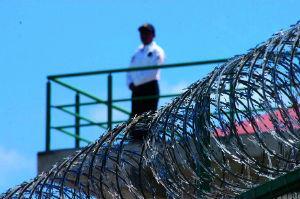
 The management of visitors to prisons is a practice that in many of these schools is limited to a paper record and the retention of an identity document. As these are facilities that require a high level of security, it is key to have a visit management system that guarantees that the person who entered is the same as the one who left the establishment.
By: Alejandro Espinosa*
It is well known that prisons in Latin America have significant problems that include security in the entry and movement of prison staff and visitors inside prisons. In this sense, family members or lawyers are the ones who usually find it most difficult to enter to visit inmates, since in many cases they must undergo long waits to enter and perform the verification of their identity on multiple occasions, an exhausting process for the visitor and inefficient for prison staff.
It should be noted that in Latin America there are a significant number of maximum security prison establishments, this is how in Mexico there are three, in Colombia four and Argentina, the country with the most prisons of this type, has eight of them; this is not counting medium-security prisons and urban correctional facilities, all of which have large populations of inmates.
This is reflected in a very significant number of visitors that forces prison staff to tighten access control, causing long waits and repetitive registrations that are often recorded on paper and in some cases are signed by the visitor, this being a practice that facilitates in some way identity theft.
Medium and maximum security prisons are widely recognized for strict searches and for the requirement to leave an identification document and a detailed record of the visitor. This situation can be mitigated by implementing a visit management system that facilitates the entry and exit of those who recurrently go to prisons, such as lawyers or family members.
Taking into account the high security nature of this type of facilities, it is essential that the system has a two-factor authentication identification method, which guarantees that the person who entered is the same as the one who is going to leave and thus prevent possible identity theft.
One way to identify returning visitors is through smart cards that employ a frequency of 13.56 MHz and an encryption algorithm that protects the information contained in it.
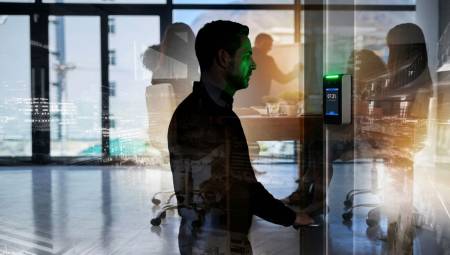
In a complementary way, biometric technology is a powerful tool that facilitates the correct identification of the person visiting a penitentiary center and is a tool that can be integrated into the visitor management system.
Fingerprint records are the most widely used around the world and in different applications to authenticate the identity of a person. Currently, fingerprint reader technology makes it possible to capture images of the unique features found below the surface of the skin, as is the case with Lumidigm readers, further raising the certainty of correct authentication.
This means that smart card technology must have, in addition to the two-factor authentication, enough memory to store biometric user templates, such as iCLASS cards with HID Global's SEOS technology that can additionally be customized with features that make it difficult to counterfeit, such as holograms or prints with optically variable inks.
Combining these technologies as a method of identification it is possible to speed up the entry and exit of visitors from a penitentiary center, since with the credential delivered by the center and their fingerprint, the person verifies their identity immediately before the system and thus avoids the long registration process each time they enter and the retention of identity documents, which can be easily lost.
Finally, prison staff can also take advantage of secure access control technology to make their work easier. With smart cards combined with biometric technology, they can validate their identity more quickly and securely by entering, for example, restricted areas. They can also use the cards in other types of administrative applications, among which the control of shift schedules can be mentioned.
Using the visitor management system, the security of the penitentiary center will not be compromised because in case of loss of a card, the system will allow it to be blocked immediately so that it cannot be used again, thus alerting the prison staff to carry out a thorough verification of the identity of those who try to enter the campus, thus avoiding impersonation.
*Alejandro Espinosa Figueroa holds a degree in Industrial Design from the Universidad Autónoma Metropolitana de México. He has 22 years of experience in the electronic security and identification industry and in the last nine years he has worked at HID Global, where he has collaborated in the commercial area in several Latin American countries and as head of sales of the products of the IAM business unit (Identity Access Management) for Mexico of the company.