In this first installment we will talk about the types of false alarms, the need to prevent them and the importance of providing central monitoring customers with quality and safety standards.
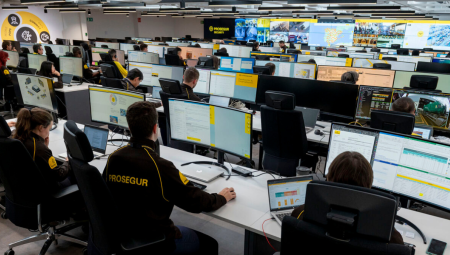
Alarm monitoring centers in Latin America, with honorable exceptions, operate under undefined standards and provide disparate services, where the only one affected is the end user, since services are offered under restricted central architectures in terms of the number of reception lines; the hardware that composes them is limited, in most cases it is only the receiver of alarms, and the training of both the structure and the one who operates them is limited to the essentials.
By Horacio Cantú
There are basically two standards to consider: the American and the European, where regardless of the broad requirements for the installation and operation of the plant, standards are handled for the control of false alarms, that is, once a central monitoring station has been started, you also have to start a false alarm program, and not as in the vast majority of cases start false alarm programs, since you have the problem that the cost of solving them is very high. One of the standards handles four false alarms per control per year, which means that a plant that has 1000 cannot have more than 4000 false alarms per year, that is, 11 false alarms per day; maintaining this number allows priority signals to be operated efficiently and plant operation to remain healthy; this process can only be carried out if you have a well-parameterized automation system and that this same system controls the standard.
To reach these levels you have to be very clear that there are basically three types of false alarm signals that must be analyzed: false alarms by operation, false alarms by installation and false alarms by design.
False alarms
Each and every one of these false alarms are the responsibility of the monitoring company and / or the installation company if they are handled separately, since false alarms by operation must be translated as the responsibility that the monitoring company has to give training to the user on the use of the system, as well as the responsibility of that use, because if these false alarms are presented, the monitoring company must have the mechanisms to react quickly and train users in the operation of the system. A point that prevents this type of false alarms is to execute the procedures of delivery of the equipment at the end of the installation in a very clear way and certifying that all users understood its operation.
For the second source of false alarms, which is related to installation problems, it is necessary to certify that all the elements and devices are installed according to the indications marked by the manufacturer, taking into account the conditions and the environment where they are installed; for example for infrared sensors, heat sources, oscillating incandescent light and so for each of the detection devices and technologies, that is, they must be correctly installed in accordance with the manuals and limitations of the technologies. To prevent these false alarms, the technical capacity of the installer must be certified and a supervision procedure must be carried out at the end of the installation.
The third source of false alarms is design; this represents the conjunction of the correct operation between the installation and the operation, so that the installer must certify that the system behaves as scheduled; for example, certifying that the input and output times are sufficient for the user, that infrared detection sensors are not an impediment to activating the system, etc.
As you can see in general, false alarms are the responsibility of the vast majority of monitoring companies. It is true that eventually there are users who intentionally misuse the system, but if you can develop an efficient monitoring system, it will take high credibility among your customers and cases of misuse will constitute the exception.
New technologies risk or benefit?
In recent years manufacturers and wholesale distributors report an increase in the number of central stations sold according to previous years, which leads me to think that the installation of the vast majority is being relaxed and technically unsustainable, because some of them receive transmissions of TCP / IP, GPRS, which makes me think about the potential problems and risks that this involves referring specifically to the architecture of the central, where they should take into account, bandwidths, access technologies, APN'S, VPN'S. DNS'S, types of IP's, etc.
Taking into account that the extremes touch and that the good involves the bad, we must think about the great benefits that these technologies give us and the great risks that it entails if this is not done well.
The responsibility of setting up a monitoring center goes beyond the recurring monthly income, which until today has constituted the attractiveness of the business. Many of the owners of power plants openly state that they "live on their income" which is true, but I would like to see in the same way the pride of providing a service, serious, committed, well structured and then say "I live to give security to my customers"; and that this is true, perhaps manufacturers and wholesale distributors should apply a deep questionnaire to the one who wants to buy a monitoring center and then force him to take a certification, as many of the manufacturers of telecommunications equipment oblige their customers, as is the case of Cisco the telecommunications giant, and that provokes the professionalization of the sector.
Today let's take the time to reflect on this responsibility and understand that the profitability of a plant is not given by the number of customers I require to reach my break-even point, but by the technical level I need to develop to provide a quality service.
What in the industry has been called convergence, is nothing other than the integration of electronic security systems in the world of telecommunications and computing, and that is in itself another issue that has caused the architecture of monitoring centers to be modified, as the different technologies resulting from this integration result in monitoring and supervision options with a level that was previously difficult and expensive to achieve.