International. Electronic access control (EAC) systems are often installed on building doors or gates as part of an overall physical security program.
EAC acts as a digital checkpoint, selectively restricting entry to a building or zone to only authorized persons, thereby adding a critical layer of protection for the people and assets inside. The level of access a person has will vary depending on their security status or the location they are trying to enter. EAC will also regulate the times and conditions within which access is allowed.
New technologies, new users
Access control once meant locked doors and photo IDs. The modern EAC is much more advanced and now features technologies such as identifying biometric markers that recognize people by their fingerprints, irises or facial features, and cloud-based systems that offer off-site credentials and monitoring, along with simplified integration with multiple companies. -Site networks.
Just as EAC technology has advanced, so has its reach. In addition to its traditional user base of enterprises, hospitals, and schools, EAC is now deployed in industrial organizations facing growing workplace threats. These threats range from violence and theft to vandalism and invasion. Large manufacturing plants typically have multiple entrances, underscoring the need to control access. More doors mean greater vulnerability to security breaches.
Another unique risk for industrial plants is heavy machinery on site. Imagine an unauthorized person entering a restricted manufacturing area without proper personal protective equipment and training. This person can suffer serious injuries or even die if they come into contact with machinery moving at high speed.
Faster response to threats
By installing EACs, an industry organization greatly limits these threats. EAC gives an organization a better chance of spotting suspicious activity at an entry and allows their security team to respond faster to prevent a potential breach. Another advantage of EAC is that it can track employees as they move to and from the building or within designated zones.
The most advanced systems will scan IDs, record visiting times, and store the identifying information of each person requesting access to a facility. High-end systems can run an instant background check on visitors and alert security personnel to visitors who may pose a threat if allowed to enter.
Automated security
Access control is often referred to as the first line of defense. It is a component of a comprehensive physical security program that incorporates video surveillance, alarms, parameter gates, proximity sensors, key controls, security guards and notifications. Access control is one piece of the puzzle, but an essential piece to completing the latest physical security plan. Automation and networking tie it all together.
A big advantage of IP-based EAC is that it can be networked, allowing for successful automation and integration within the building automation system (BAS), especially when that system is cloud-based. Cloud software acts as an orchestrator, while on-site network switches provide the connectivity needed between devices for automation. Cloud-based systems support a large number of access points and multiple sites, as no on-premises servers or storage equipment are needed. The cloud also allows users to gain visibility into access control activity from multiple manufacturing sites simultaneously from a centralized location.
The old lock-and-key access control is costly, both in time and labor. The automated EAC eliminates wasted time in repetitive and tedious processes that are typically done manually, such as visitor registration, incident notification, and auditing. This can reduce the number of security guards a facility needs while increasing database accuracy by eliminating human error.
Movement tracking
During a workplace crisis, an automated EAC system will continue to track employee movement. Imagine a hostage situation in the workplace where employees are missing. The whereabouts of employees can be shared in real time with law enforcement to ensure their safety.
Or what if a manufacturer suspects an employee is stealing. The automated EAC will provide a detailed audit trail of the entry points that person uses during specific time periods. Or let's say an industrial accident occurs. Management can go back and get a report that matches the time frame of the incident to get a better idea of what happened, along with a video of the event to share with OSHA officials.
As mentioned above, the cloud allows for easier and faster integration of EACs with other BAS systems and for better system administration.
Let's look at the example of a fired employee. In a local system without a network connection, the former employee could mistakenly retain access to the building for months, creating a potential security risk. A cloud-based system will automatically deprovision the former employee's credentials.
EAC connectivity
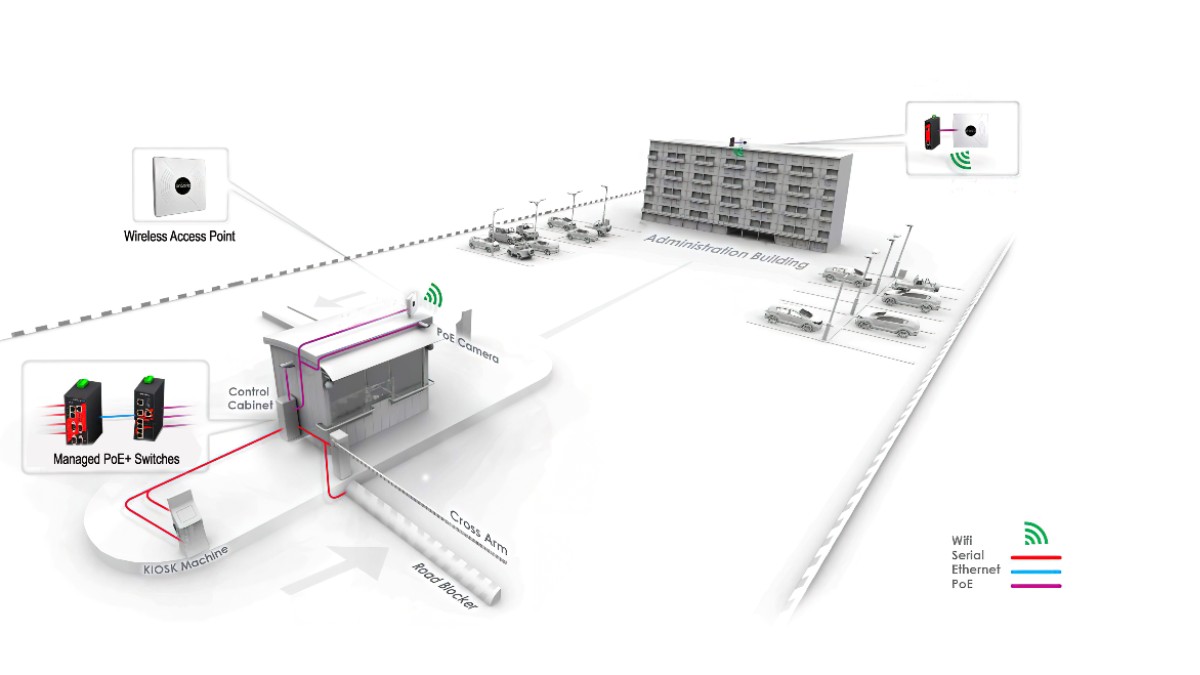
In a traditional access control system there is dedicated cabling that supports communication between components. In contrast, EAC system components are Ethernet-based with components connected to a single local or wide area network for communication, usually via a network switch that enables two-way communication so that devices can exchange data. This is useful when a software update is required, as the management system can automatically send the update to all devices on the network simultaneously.
Network connectivity also allows the management system to collect data from each device on the network to allow a single view of all security personnel activity. In addition, a PoE switch, managed or unmanaged, can supply power to connected devices, so there is no need to plug the device into a power outlet.
If there is a power failure or other emergency, devices can continue to get PoE power as long as the network has a backup power supply. Control is also simplified. Security teams manage, monitor, and control the system on-site or remotely using a mobile device with a secure web browser. Traditional systems may not be compatible with remote or mobile security management solutions.
Answer from Antaira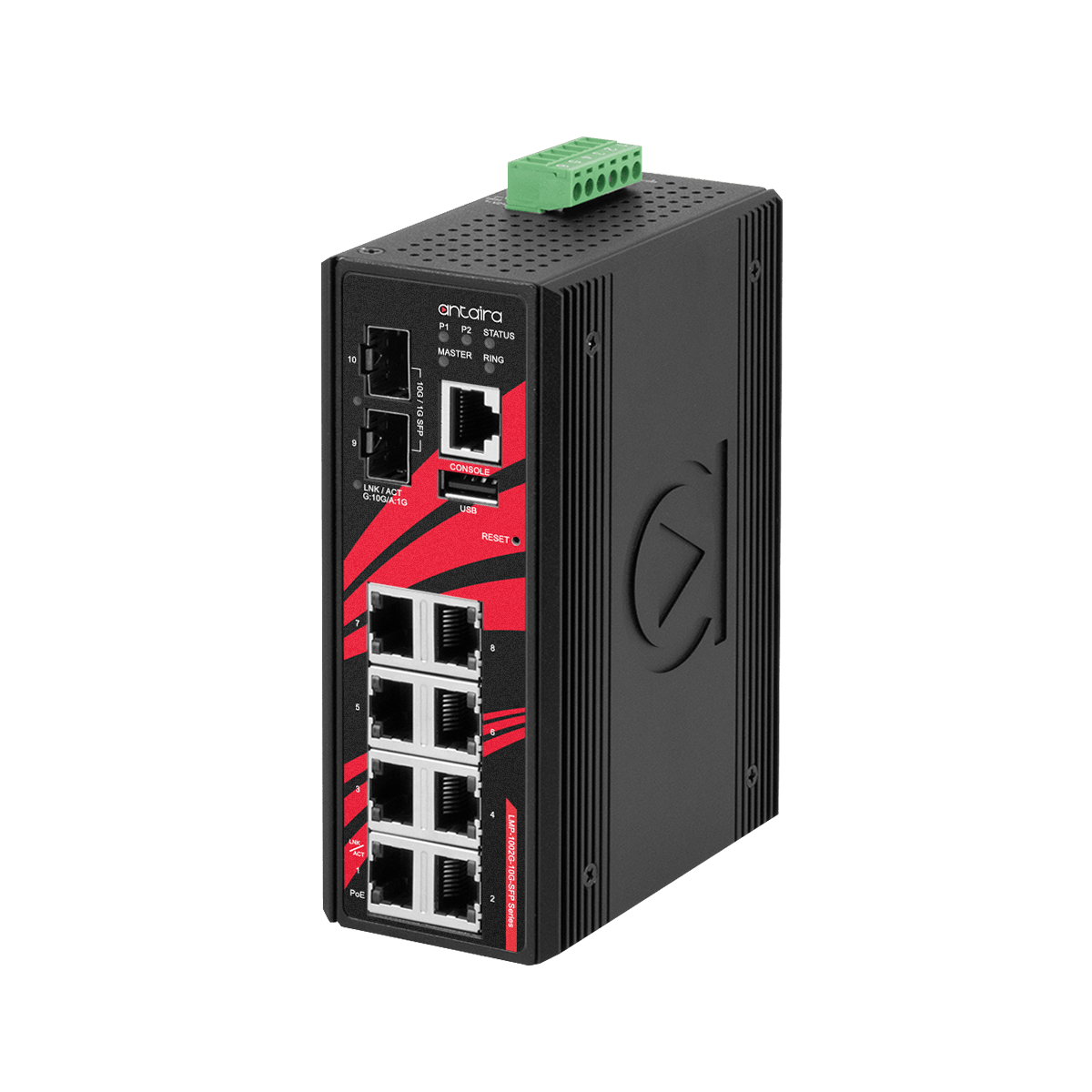 Antaira manufactures network switches designed specifically for harsh industrial environments. Antaira switches go beyond the performance limitations of standard devices by incorporating rugged aluminum enclosures with IP30 rating, wide operating temperatures, redundant power, and protection against ESD, EFT, and overvoltages. Certain models are certified for Class I, Div. 2 hazardous areas found in petrochemical, chemical, utility, wastewater and mining applications. And for those who need higher wattage PoE for power-hungry IP cameras, Antaira now offers IEEE802.3bt compatible switches for up to 90W per port.
* Article by Henry Martel, Field Engineer, Antaira Technologies.