
 United States. The National Institute of Standards and Technology (NIST) developed a series of new biometric research data, ranging from fingerprints to facial photographs to iris scans.
Stripped of identifying information and created expressly for research purposes, the data is primarily designed to test systems that verify an individual's identity before granting access, whether to another room or another country. There are few resources available to help developers evaluate the performance of the software algorithms that form the heart of these systems, and NIST data will help fill that gap.
"All of this comes back to reproducible research," said NIST computer scientist Greg Fiumara. "The data will help anyone who is interested in testing the error rates of biometric identification systems."
The files, which are available on the NIST website, are organized into three special databases (SDs). Numbered SD 300, SD 301 and SD 302, they represent the first of what is intended to be an expanding collection of biometric resources.
While all three databases contain various types of data collected at different times, two of them contain information collected during the nail-to-nail fingerprint challenge, an IARPA-funded competition that NIST helped design and conduct.
One of the new features, SD 301, is important for being the first "multimodal" dataset NIST has released. Multimodal means that an individual's different biometric markers, in this case the face, fingerprints, and iris scanning, are all linked together so that they can be used together for identification by systems that use a combination of identification approaches, such as a photograph of the individual's face in addition to their fingerprints.
"This opens up possibilities for types of multimodal research that haven't been done before," Fiumara said. "We want to get a more secure and accurate identification, as multimodal systems are harder to fake."
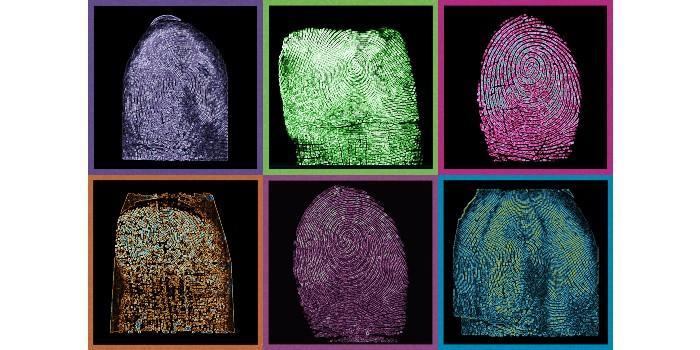
SD 302 contains fingerprint data from a few hundred people gathered by a mix of eight commercially available devices and prototypes.
The data collected during both parts of the Nail to Nail challenge includes prints taken with contactless fingerprint devices, a technology that could simplify and speed up print collection as it improves.
"It also includes latent fingerprint data, in which footprints are left while handling everyday objects," Fiumara said. "It's hard to get latent data collected realistically and expertly."
All individuals represented in the two sets have given their formal consent for the inclusion of their biometric and demographic data and their distribution for use in advanced research, Fiumara said. The data has been deleted to identify information such as your names and places of residence.
They complete the SD 300 datasets, a collection of fingerprints taken from 900 old ink cards. All registration cards have been stripped of identification data and are of individuals who have now passed away. According to Fiumara, one benefit of the data is to help manufacturers assess how well their modern systems can produce results that will be interoperable with printed ink records, which will remain important to the criminal justice system for some time.
Collectively, the group of three SDs contains data retained with compression with no loss of file grade, a step forward, Fiumara said, because research datasets in the past often did not retain this level of fidelity to the original image.
Each dataset in the series has an accompanying user guide, which provides background on collection methods and other useful details for researchers.
Source: National Institute of Standards and Technology.